1982–present · United States, Japan, Worldwide
Cyberpunk Cinema
Also known as Tech-noir, Cyberpunk film, High-tech-low-life cinema
A visual mode of dystopian high-tech futures—rain-soaked neon megacities, holographic signage, and a teal-and-magenta haze—fusing noir shadow with maximalist electric color.
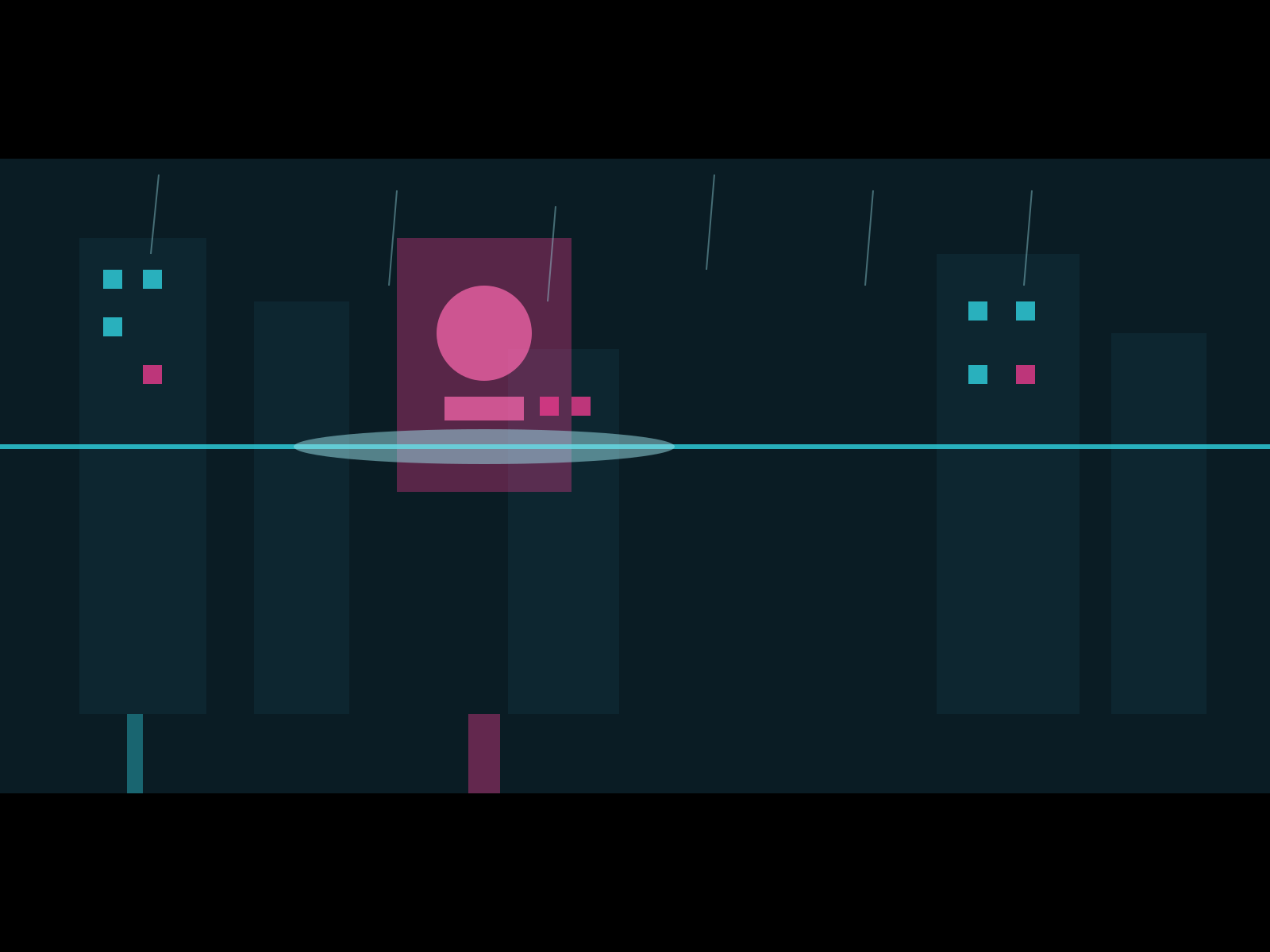
Original specimen, not a historical artifactOriginal specimen evoking the Cyberpunk Cinema look. Owned; source: Design Style Book (original).
Across disciplines
- Graphic Design: Vaporwave
About the style
Cyberpunk cinema crystallized with Blade Runner in 1982 and the 'high tech, low life' ethos of the cyberpunk literary movement, picturing near-future dystopias of corporate megacities, artificial humans, and decaying urban sprawl. Its imagery fuses noir's low-key shadow with overwhelming artificial light: perpetual night and acid rain, towering neon and holographic advertising in multiple languages, volumetric haze pierced by hard shafts, and dense, layered production design stacking technology atop grime. Palettes lean toward electric teal-and-orange or magenta-and-cyan, with steam, smoke, and reflective wet surfaces multiplying every light source. Anamorphic flares and deep, cluttered frames convey claustrophobic scale. Drawing on neo-noir and the synthetic glow of vaporwave, it spans Blade Runner, Ghost in the Shell, The Matrix, and Blade Runner 2049, remaining a perpetually relevant template for screen futures rather than a closed historical period.
Notable examples
- ▸Blade Runner (Ridley Scott, 1982)
- ▸Ghost in the Shell (Mamoru Oshii, 1995)
- ▸Blade Runner 2049 (Denis Villeneuve, 2017)
Anatomy of Cyberpunk Cinema
The numbered markers call out the design elements that define this style. Hover or tap a marker to see its breakdown.
Original specimen, not a historical artifactOriginal specimen evoking the Cyberpunk Cinema look. Owned; source: Design Style Book (original).
Towering animated signage and holographic ads in mixed scripts saturate the background, the defining 'high tech, low life' texture.
Atmospheric smoke and rain make every beam visible, so hard shafts of colored light carve through the dense, glowing air.
Cool cyan shadows set against hot magenta or orange highlights give the frame its signature electric, synthetic color contrast.
Horizontal blue streak flares from point lights stretch across the widescreen frame, marking the futuristic, lens-aware look.
How Cyberpunk Cinema connects
Styles form a network, not a tree. Explore the direct neighbours below — click any to travel the map one hop at a time.
- Evolved from
- Parallel / cross-current
- Influenced by
- Reaction against
Hover or tap a style to preview it.
Evolved from Neo-Noir — tech-noir extends noir shadow into dystopian futures
Parallel / cross-current Vaporwave — shares the synthetic neon teal-and-magenta glow
Influenced by Anime — Ghost in the Shell and Akira shaped the visual template
Anime influenced by Cyberpunk Cinema — sci-fi anime and cyberpunk cinema co-developed the neon dystopian look
Dogme 95 reaction against Cyberpunk Cinema — a manifesto rejecting effects-driven artifice for raw realism
Describe it like this
Prompt-ready vocabulary for describing or re-creating the Cyberpunk Cinema look. Tap a word to collect it in Designdeas.
Get copy-ready Cyberpunk Cinema AI prompts →