

 1740s–1900s
Gothic Revival
A 19th-century revival of medieval Gothic forms — pointed arches, soaring verticality, and rich ornament — applied to churches, universities, and civic landmarks.
RevivalHistoricist
A visual style reference
Design Style Book is a visual reference for the world's design styles — what defines each one, when and where it appeared, the real work that shows it best, and the words to describe it.
1740s–1900sA 19th-century revival of medieval Gothic forms — pointed arches, soaring verticality, and rich ornament — applied to churches, universities, and civic landmarks.
 1830s–1900s
A grand, symmetrical classicism taught at the École des Beaux-Arts in Paris — monumental facades layered with sculpture, columns, and richly worked stone.
 1890–1910
A short-lived but radical style of flowing, organic line — whiplash curves, plant and vine motifs, and ornament fused with structure.
 1840s–1900
A dense, polychrome commercial idiom built on chromolithography, crowding trade cards and advertisements with ornate borders, layered display faces, and saturated color.
 1860s–1900s
A reform movement in book design led by William Morris's Kelmscott Press, reviving dense medieval page architecture with hand-drawn borders, woodcut ornament, and unified type-and-image craft.
 1890–1910
The poster and print language of the Belle Époque — sinuous 'whiplash' line, idealized women wreathed in flowers and flowing hair, ornamental borders, and hand-drawn lettering fused into a single decorative whole.
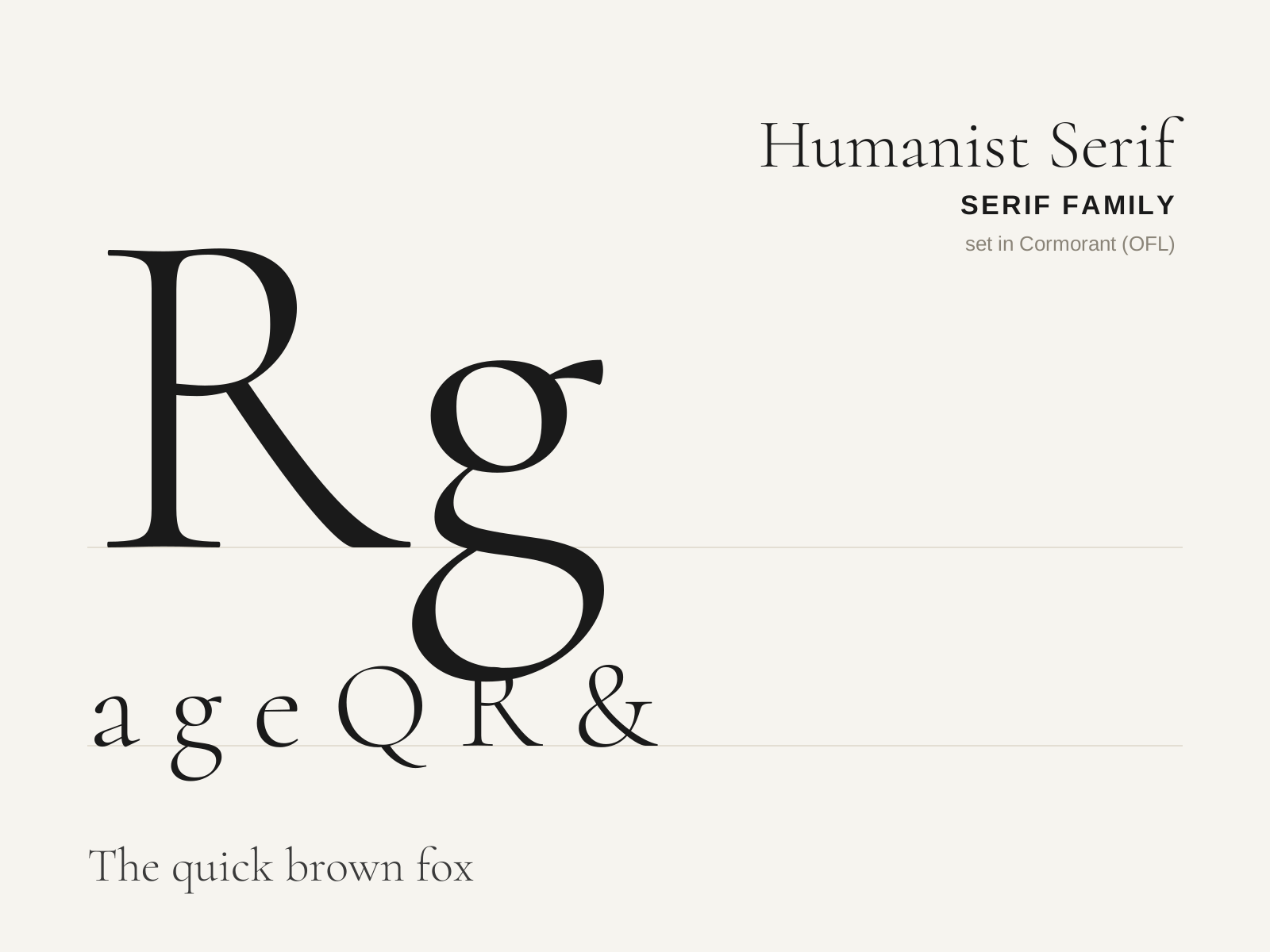 1460s–1490s
The earliest roman printing types, cut in Renaissance Italy to imitate the humanist scribal hand. Warm, sturdy, and unmistakably pen-formed, with a strongly slanted stress and a sloping crossbar on the lowercase e.
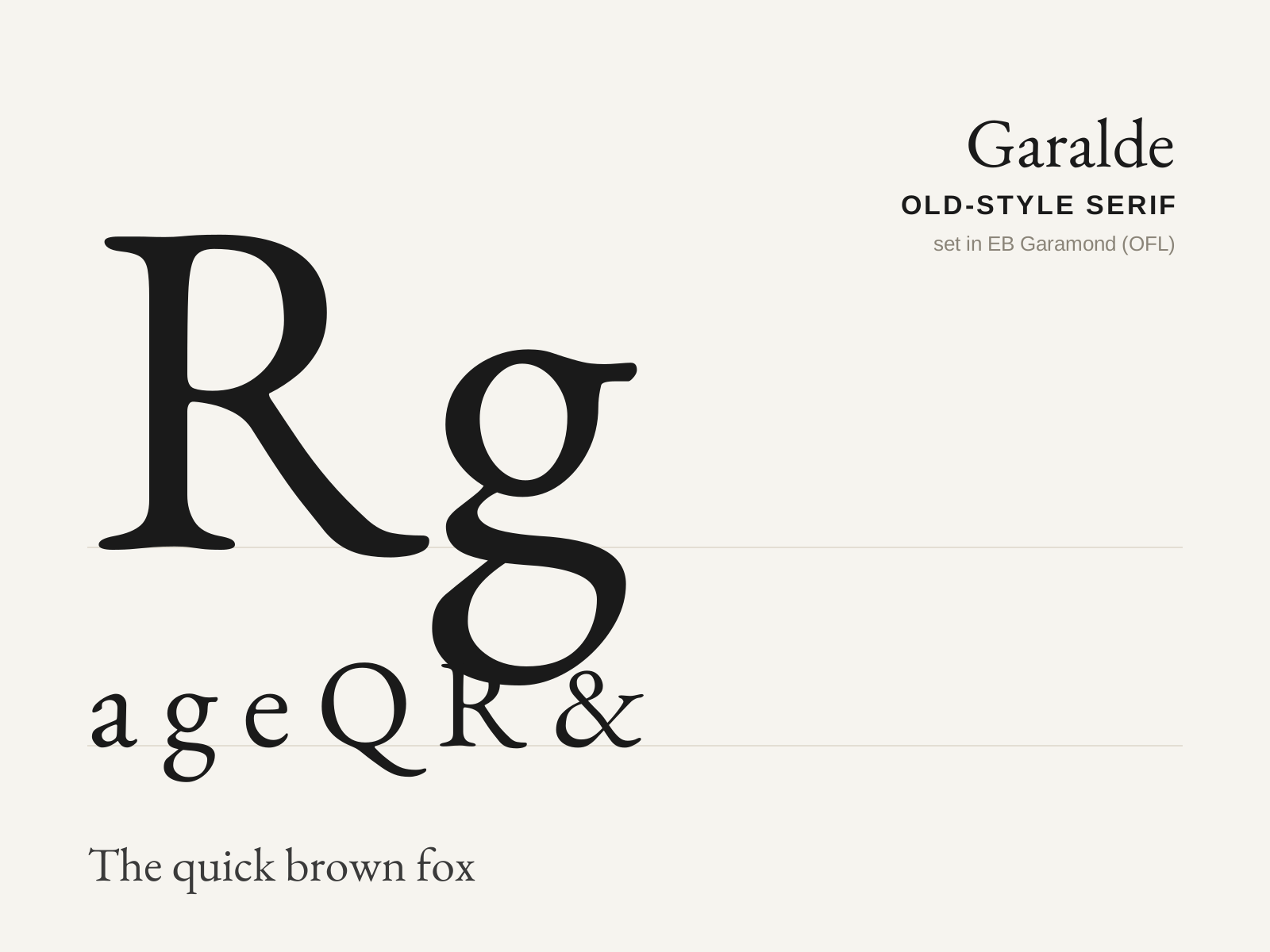 1490s–1700s
The classic old-style serif — humanist roots refined by Aldus Manutius and the French punchcutters, with moderate stroke contrast, bracketed serifs, and an inclined stress that recalls the broad-nib pen.
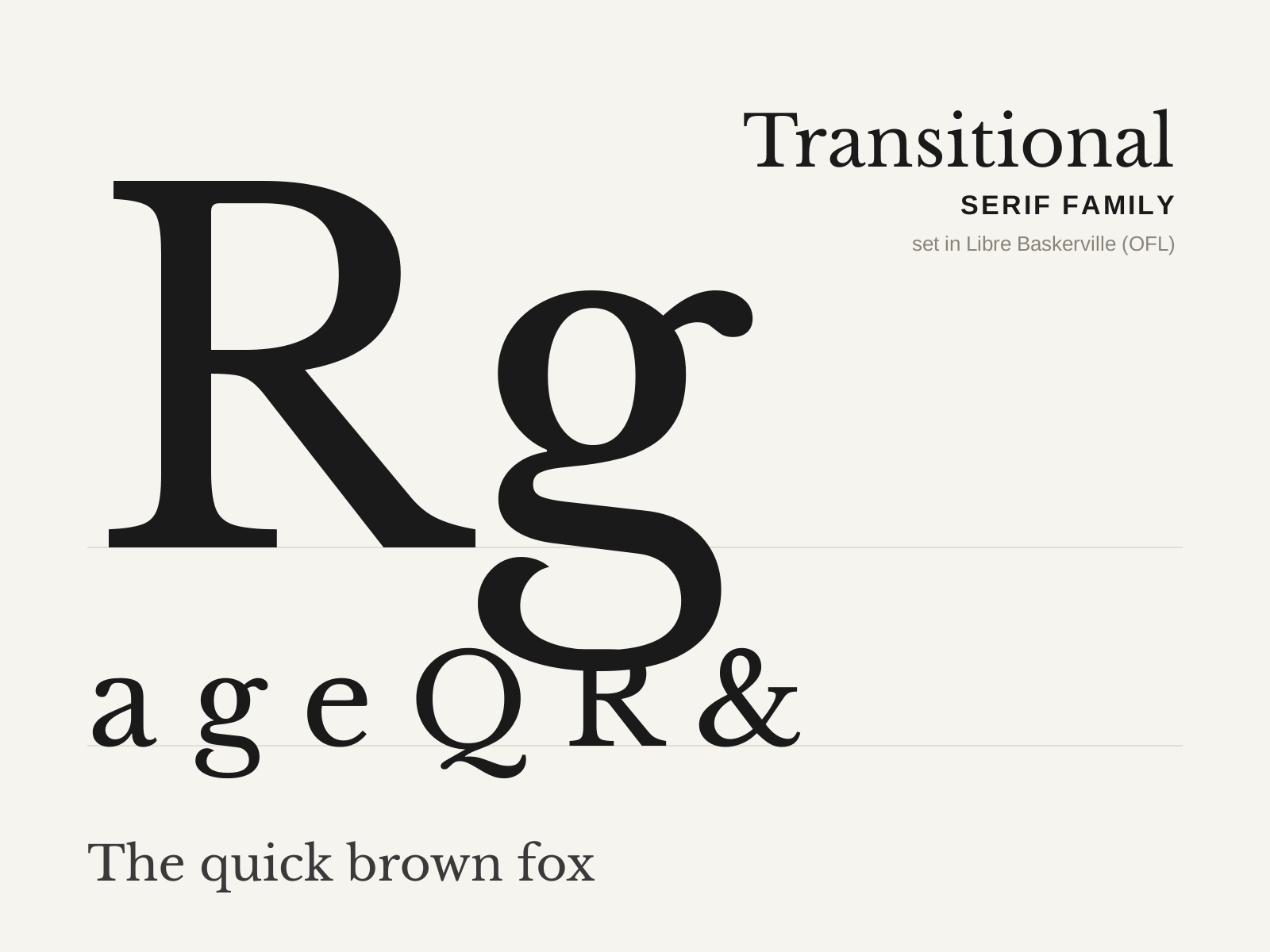 1690s–1790s
The bridge between the pen-formed old-styles and the rationalist Didones. Contrast sharpens and the axis swings toward vertical, yielding crisper, more even letterforms still warmed by bracketed serifs.
 1850s–1900s
Mass-produced furniture of steam-bent solid beech pioneered by Michael Thonet — light, cheap, knock-down chairs like the iconic No. 14 that put industrial production at the service of an elegant, minimal line.
 1790s–1860s
Furniture made by the Shaker religious communities — spare ladder-back chairs, peg-rail storage, and built-ins whose honesty, light weight, and total absence of ornament made utility itself the only decoration.
 1860s–1910s
British furniture and household objects reviving honest handcraft as a moral answer to shoddy industrial goods — vernacular forms, visible joinery, and the truthful use of oak, rush, and hammered metal led by William Morris.
 1600s–1750
The theatrical court interior of absolutist Europe — grand enfilades dripping with gilt, marble, ceiling frescoes and mirror, staged for awe.
 1715–1770
The intimate, asymmetric French salon of the Louis XV era — pastel boiserie, gilded scrollwork, shellwork curves and mirrored grace.
 1760s–1830
The ordered, antiquity-inspired interior that swept away Rococo — symmetrical rooms with classical orders, urns, swags and restrained color.
 1919–present
An animation technique using jointed black cut-out figures shot in flat profile against backlit translucent backgrounds, producing graceful shadow-theater motion in pure silhouette.
 1937–1967
The lush hand-painted cel animation of the classic Hollywood studios, defined by full fluid motion, painted backgrounds, multiplane depth, and warm storybook color.
.jpg&w=3840&q=75) 1920s–1930s
1920s–1930sThe earliest American cartoon style, with bendy boneless limbs, pie-cut eyes, white-gloved hands, and bouncy rhythmic motion, drawn in simple black-and-white rounded shapes.
 2000s–present
A bold, ink-heavy tattoo style built entirely from solid black areas and dense graphic patterning, with roots in tribal and ethnographic tattooing.
 1990s–present
A tattoo technique that builds shading and tone entirely from thousands of individual black dots, creating soft gradients and luminous geometric patterns.
 2000s–present
A precise tattoo style composed of crisp lines, triangles, hexagons, and repeated shapes arranged into balanced symmetrical constructions.