Deconstructivist Product Design vs Memphis Design
Deconstructivist Product Design was influenced by Memphis Design — shared Memphis's rejection of resolved 'good-design' form.

Deconstructivist Product Design
Furniture and objects that fracture, distort, and expose process — raw welded steel, collisions of parts, and unresolved forms that reject smooth resolution and clean geometry.
- Fractured, distorted, and asymmetric forms
- Raw welded or beaten metal with visible process
- Collision and disassembly of familiar typologies
- Tension and instability over harmony
- Furniture treated as sculpture or limited experiment
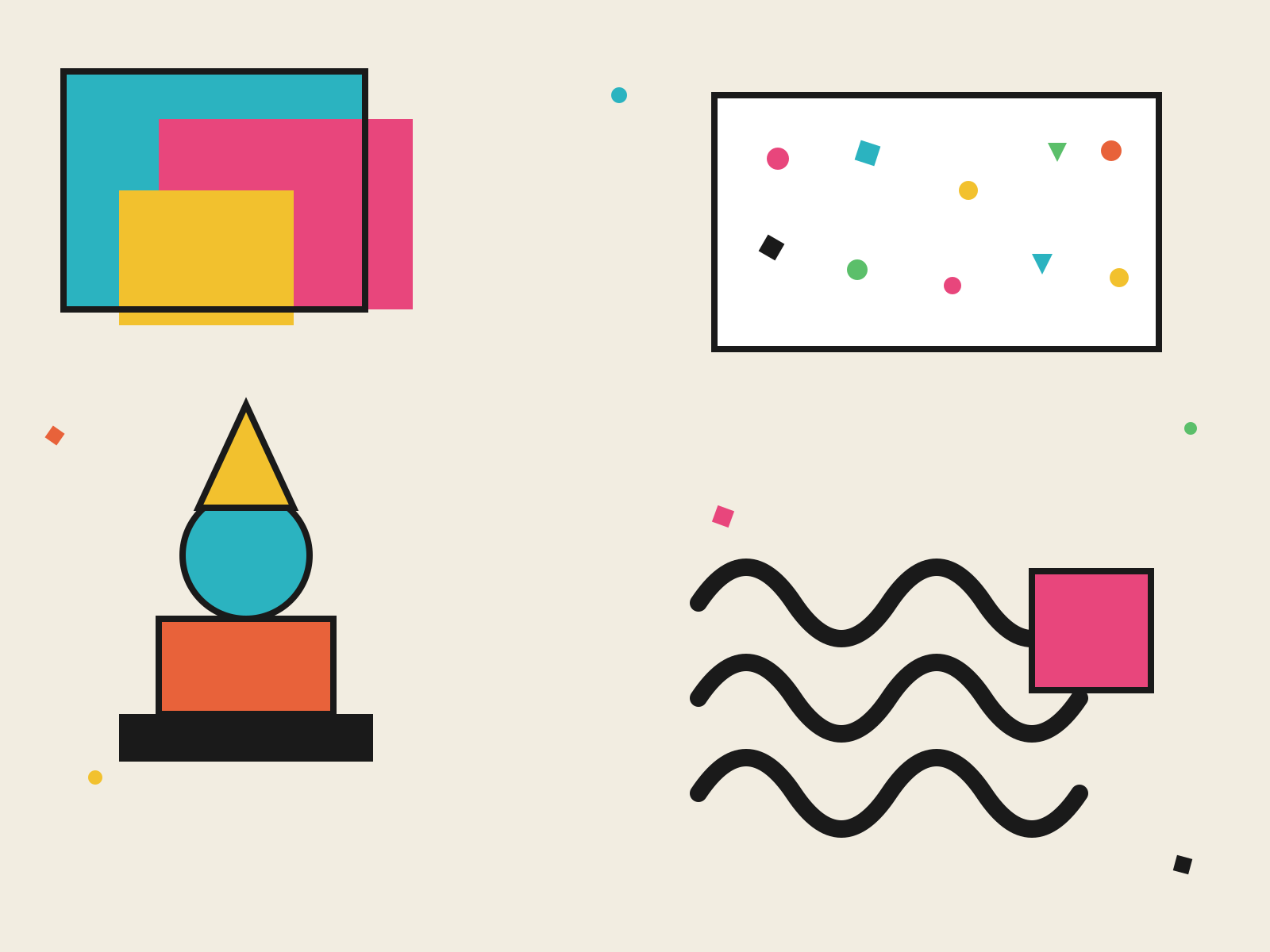
Memphis Design
The exuberant, anti-functionalist furniture and objects of Ettore Sottsass's Milan collective — clashing color, plastic laminates, squiggles, and terrazzo that mocked 'good taste' and good-design orthodoxy.
- Bold, deliberately clashing saturated color
- Cheap printed plastic laminate and terrazzo surfaces
- Stacked geometric primitives in unstable, asymmetric compositions
- Signature squiggle ('Bacterio') and grid patterns
- A pointed rejection of function-led modernist 'good design'
At a glance
| Deconstructivist Product Design | Memphis Design | |
|---|---|---|
| Era | 1980s–1990s | 1981–1988 |
| Discipline | Industrial Design | Industrial Design |
| Region | United Kingdom, United States, Germany | Italy |
| Family | Deconstructivism | Postmodernism, Anti-Design |
| Formal traits | fractured, raw, asymmetric, sculptural | colorful, geometric, laminate, playful |
More comparisons
Advertisement