c.1957–1972 · France, Belgium, Italy
Situationist Graphic
Also known as Détournement, Situationist International graphics
The subversive collage strategy of the Situationist International—hijacking comics, ads, and photo-romans with radical captions to turn spectacle against itself.
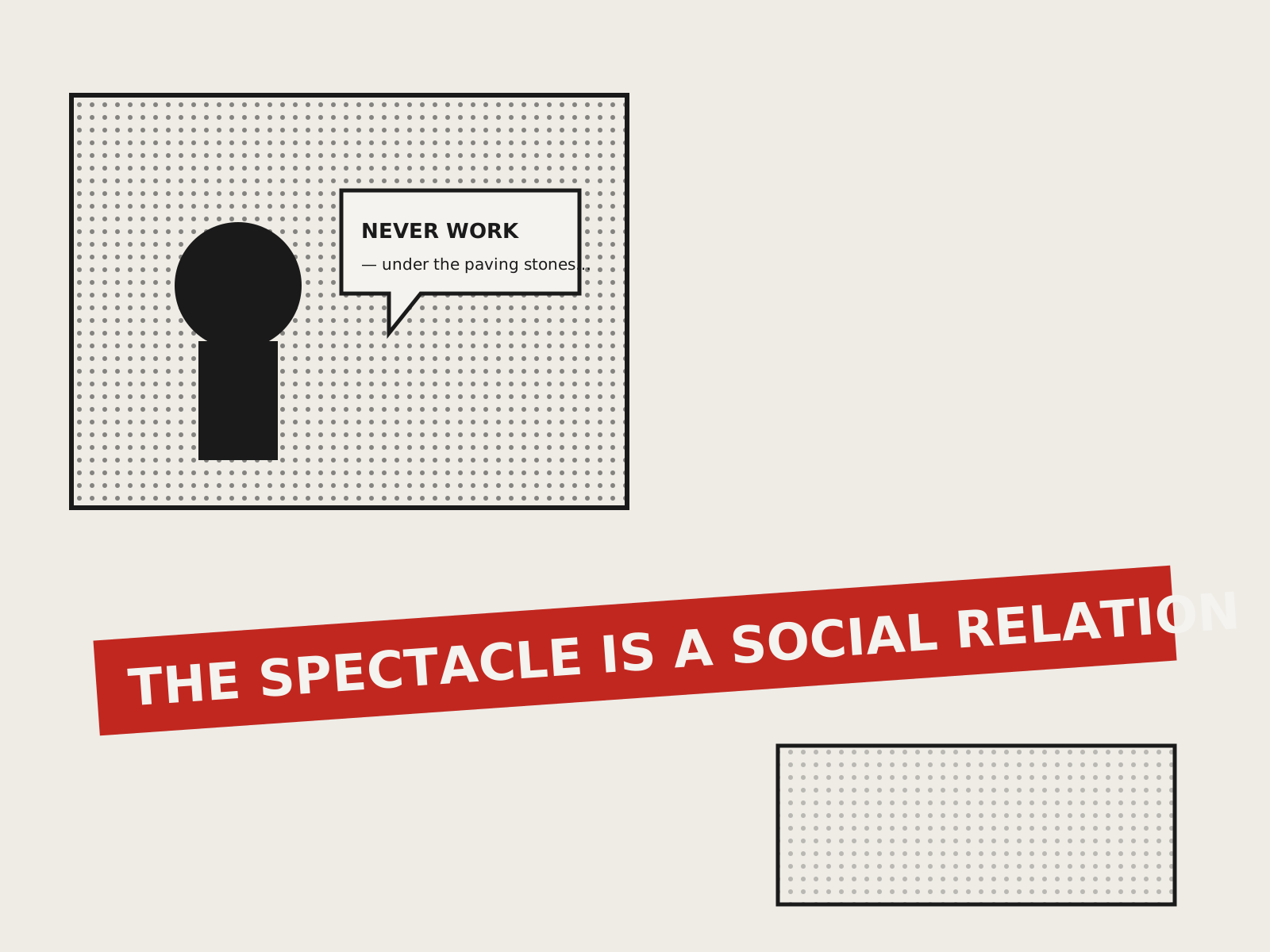
Original specimen, not a historical artifactOriginal specimen in the Situationist Graphic style. Owned; source: Design Style Book (original).
About the style
Situationist graphics grew from the Situationist International (founded 1957) and its key tactic of détournement: the rerouting of existing mass-media images toward critical, often revolutionary ends. Rather than design from scratch, Situationists lifted comic-strip panels, advertisements, film stills, and photo-romans and overwrote their speech bubbles and captions with theory, slogans, and incitements, exposing the 'society of the spectacle' by speaking through its own pictures. The aesthetic is therefore deliberately appropriated and low: cheap offset and mimeograph reproduction, found halftone imagery, hand-lettered or typewritten interventions, and the deadpan clash between glossy commercial pictures and dense political text. This collision peaked in the publications around May 1968 Paris, whose wall posters and detourned comics gave protest culture an enduring template later absorbed by punk, culture jamming, and adbusting.
Notable examples
- ▸Guy Debord & Asger Jorn, Mémoires (1959)
- ▸André Bertrand, Le Retour de la Colonne Durutti détourned comic (1966)
- ▸May 1968 Paris wall posters and Atelier Populaire ephemera
Anatomy of Situationist Graphic
The numbered markers call out the design elements that define this style. Hover or tap a marker to see its breakdown.
Original specimen, not a historical artifactOriginal specimen in the Situationist Graphic style. Owned; source: Design Style Book (original).
A lifted comic panel keeps its drawing but its dialogue is replaced with radical theory, turning entertainment into subversive commentary.
A glossy advertisement is captioned to attack the consumer desire it sells, exposing the spectacle by speaking through its own image.
Coarse reprinted press and film images supply ready-made mass-media pictures whose familiarity makes the hijacking land harder.
Hand-lettered or typewritten slogans stamped across the picture collapse author and source, the core gesture of détournement.
How Situationist Graphic connects
Styles form a network, not a tree. Explore the direct neighbours below — click any to travel the map one hop at a time.
- Evolved from
- Parallel / cross-current
Hover or tap a style to preview it.
Evolved from Dada Graphic Design — détournement extends Dada photomontage into political critique
Parallel / cross-current Punk Graphic Design — its cut-up appropriation fed punk's visual language
Describe it like this
Prompt-ready vocabulary for describing or re-creating the Situationist Graphic look. Tap a word to collect it in Designdeas.
Get copy-ready Situationist Graphic AI prompts →