Classic Film Noir vs Giallo
Giallo was influenced by Classic Film Noir — murder-mystery plotting and shadowed killers.

Classic Film Noir
A 1940s–50s cycle of American crime dramas defined by low-key chiaroscuro, deep shadow, wet night streets, and morally shadowed worlds of detectives, femmes fatales, and doomed men.
- Low-key chiaroscuro lighting with hard sources and deep, enveloping shadow
- Venetian-blind and window-frame shadow patterns striping faces and walls
- Rain-slicked night streets with neon and wet-pavement reflections
- Canted Dutch angles and unbalanced, claustrophobic compositions
- High-contrast monochrome with figures emerging from pooling blackness
Giallo
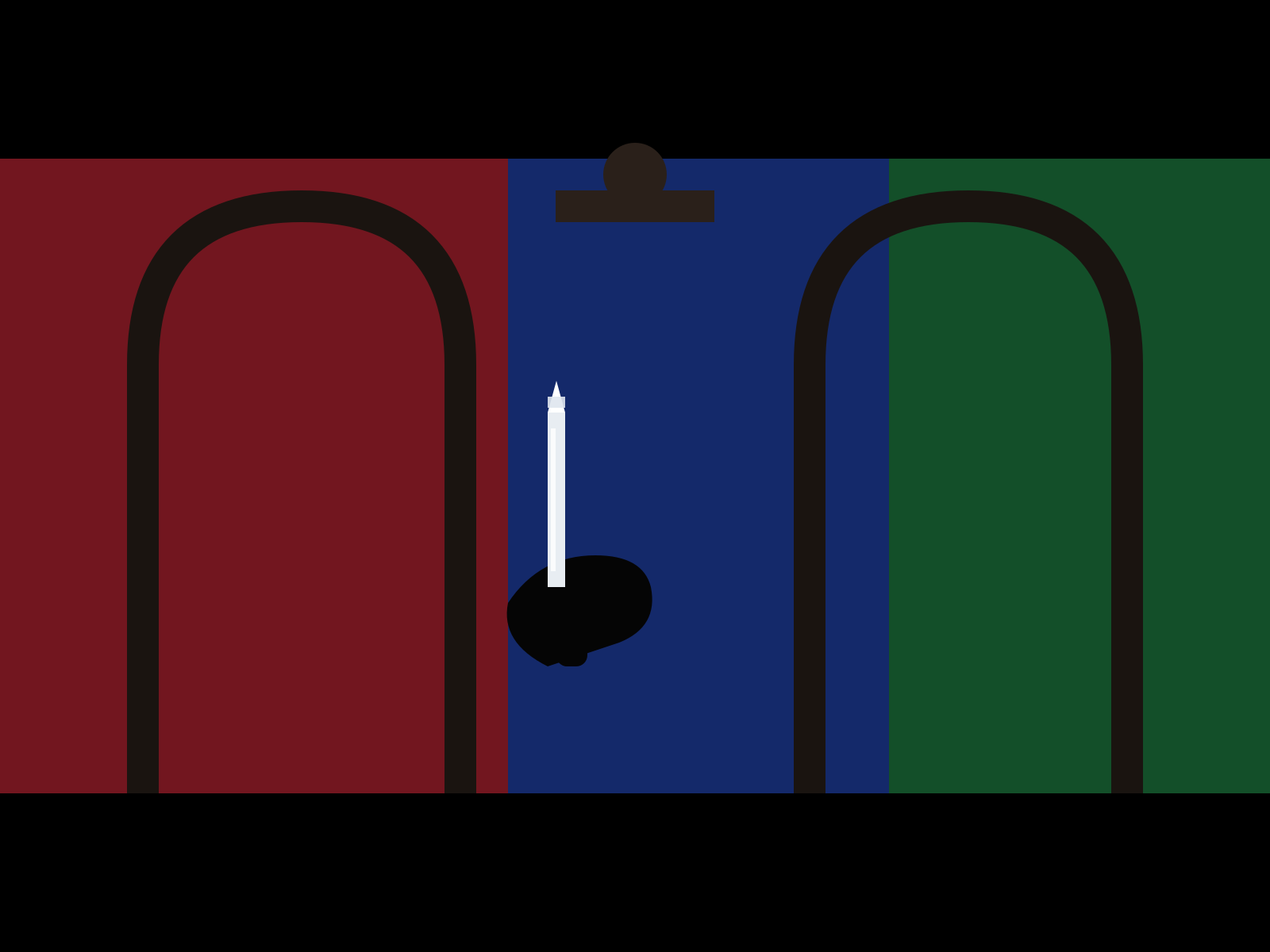
Italian thriller-horror defined by lurid saturated gel lighting, black-gloved killers, baroque set design, and stylized, fetishistic violence shot with roving subjective camerawork.
- Saturated colored-gel lighting flooding rooms in red, blue, and green
- Prowling, voyeuristic subjective point-of-view camerawork and snap zooms
- Extreme close-ups of eyes, black-gloved hands, and gleaming blades
- Baroque, ornate architecture and lavish décor framing the violence
- Operatic, stylized blood-red set pieces favoring artifice over realism
At a glance
| Classic Film Noir | Giallo | |
|---|---|---|
| Era | 1940–1959 | 1963–1982 |
| Discipline | Cinematography | Cinematography |
| Region | United States | Italy |
| Family | Noir, Crime | Horror, Thriller |
| Formal traits | low-key, chiaroscuro, high-contrast, venetian-blind-shadows | color-gels, saturated-color, subjective-camera, high-contrast |
More comparisons
Advertisement