German Expressionist Cinema vs Giallo
Giallo evolved from German Expressionist Cinema — inherited expressionist shadow and stylized menace.

German Expressionist Cinema
A Weimar-era movement that externalized psychological dread through distorted painted sets, jagged shadows, and stark chiaroscuro, turning the screen into a subjective mindscape.
- Extreme low-key chiaroscuro—single hard sources carving subjects out of deep blackness
- Distorted, hand-painted sets with leaning walls and forced, unnatural perspective
- Shadows painted directly onto scenery or thrown as menacing, oversized cast forms
- Tilted, looming camera angles that estrange and destabilize the viewer
- Grotesque, stylized makeup and angular, anti-naturalistic performance
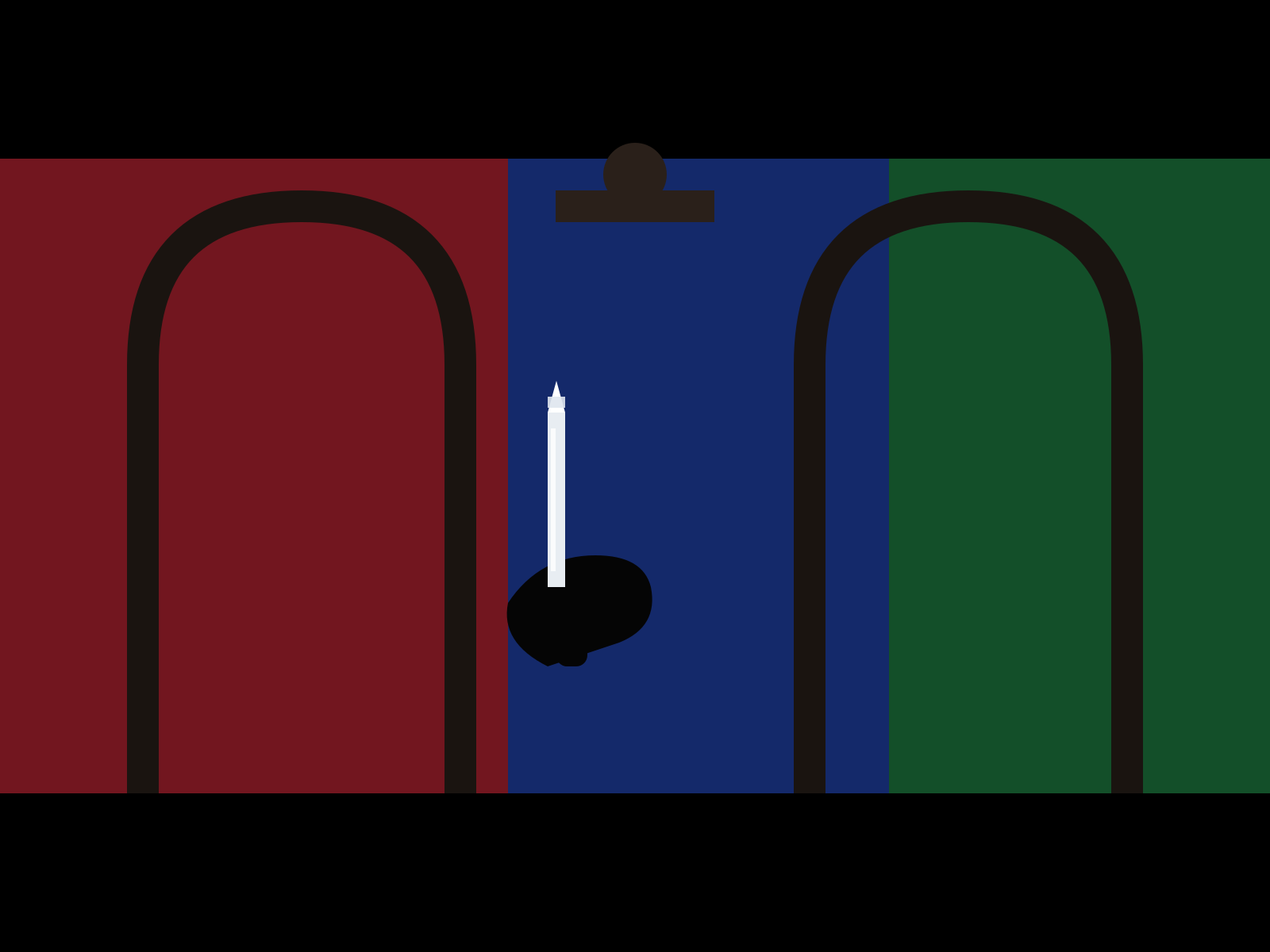
Giallo
Italian thriller-horror defined by lurid saturated gel lighting, black-gloved killers, baroque set design, and stylized, fetishistic violence shot with roving subjective camerawork.
- Saturated colored-gel lighting flooding rooms in red, blue, and green
- Prowling, voyeuristic subjective point-of-view camerawork and snap zooms
- Extreme close-ups of eyes, black-gloved hands, and gleaming blades
- Baroque, ornate architecture and lavish décor framing the violence
- Operatic, stylized blood-red set pieces favoring artifice over realism
At a glance
| German Expressionist Cinema | Giallo | |
|---|---|---|
| Era | 1919–1931 | 1963–1982 |
| Discipline | Cinematography | Cinematography |
| Region | Germany (Weimar Republic) | Italy |
| Family | Expressionist, Horror | Horror, Thriller |
| Formal traits | low-key, chiaroscuro, high-contrast, distorted-sets | color-gels, saturated-color, subjective-camera, high-contrast |
More comparisons
Advertisement