Deconstructivism vs Grunge Graphic Design
Grunge Graphic Design is the cross-discipline counterpart of Deconstructivism — a parallel 1990s deconstruction of structure and order.

Deconstructivism
Fragmented, dynamic forms that break the grid — twisted volumes and unstable, angular geometries that look caught mid-motion.
- Fragmented, non-orthogonal geometry
- Twisting, tilting, or colliding volumes
- Distorted surfaces and the appearance of instability
- Sculptural metal or glass skins
- Computer-aided complex curves and angles
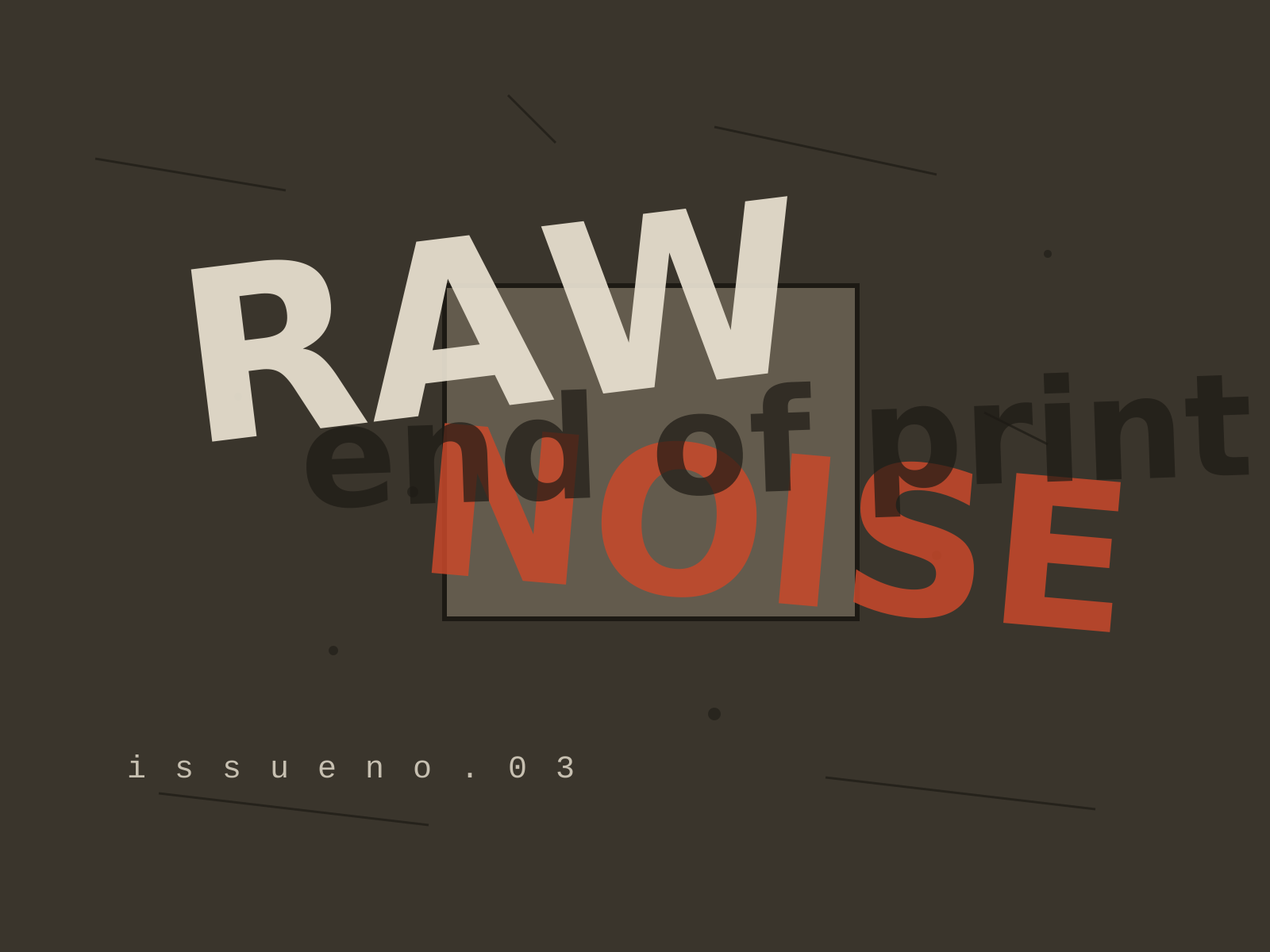
Grunge Graphic Design
The deconstructed, anti-legible typography of the 1990s, where text was layered, distressed, and shattered into texture in defiance of every readability rule.
- Layered, overlapping type pushed to near-illegibility
- Scanned grime, distressed textures, and photocopied dirt
- Shattered or abandoned grids and chaotic composition
- Torn, fragmented letterforms that bleed and overlap
- Expressive, intuitive layout over readability
At a glance
| Deconstructivism | Grunge Graphic Design | |
|---|---|---|
| Era | 1980s–present | c. 1990–1999 |
| Discipline | Architecture | Graphic Design |
| Region | United States, Worldwide | United States, United Kingdom |
| Family | Postmodernism, Contemporary | Postmodern, Digital |
| Formal traits | fragmented, angular, non-orthogonal, dynamic | distressed, layered, grid-breaking, anti-legible |
More comparisons
Advertisement