c. 1990–1999 · United States, United Kingdom
Grunge Graphic Design
Also known as Deconstructed Design, Dirty Design
The deconstructed, anti-legible typography of the 1990s, where text was layered, distressed, and shattered into texture in defiance of every readability rule.
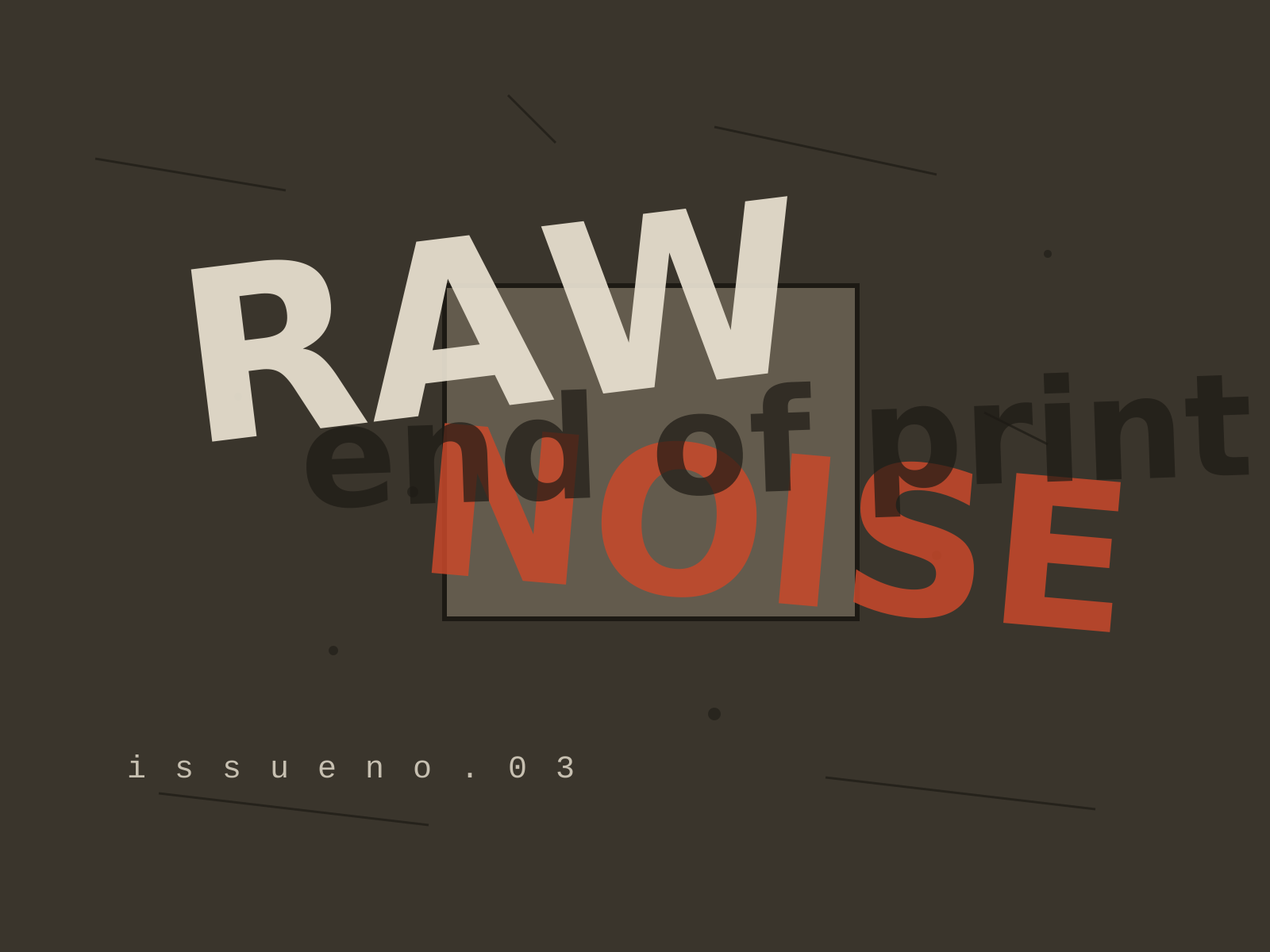
Original specimen, not a historical artifactOriginal specimen in the 1990s grunge / deconstructed style. Owned; source: Design Style Book (original).
Across disciplines
- Architecture: Deconstructivism
About the style
Grunge graphic design took the digital tools of the early Macintosh era and turned them toward chaos, treating legibility as optional and emotion as paramount. David Carson, art-directing Ray Gun magazine, became the movement's figurehead, layering distressed type, smashing the grid, and famously setting an entire interview in a dingbat font because he found the content dull. The aesthetic embraced grime: scanned textures, photocopied dirt, torn and overlapping layers, ransom-note echoes, and type that bled, fractured, and overlapped into near-illegibility. Neville Brody's Fuse project pushed deconstruction in a more systematic direction, questioning the alphabet itself. Enabled by Photoshop and desktop publishing, grunge prized expressive intuition over the clarity modernism had demanded, and it came to define the look of 1990s alternative music, skate culture, and youth media before its excesses faded into cliché.
Notable examples
- ▸David Carson — Ray Gun magazine (1992–95)
- ▸David Carson — The End of Print (1995)
- ▸Neville Brody — Fuse typographic project (1991–2000)
Anatomy of Grunge Graphic Design
The numbered markers call out the design elements that define this style. Hover or tap a marker to see its breakdown.
Original specimen, not a historical artifactOriginal specimen in the 1990s grunge / deconstructed style. Owned; source: Design Style Book (original).
Headlines and body text layer and collide, prioritizing mood and texture over readability.
Scanned dirt, scratches, and photocopied noise overlay the page to make it look weathered and raw.
Text and images are placed intuitively with no underlying alignment, abandoning the modernist grid.
Characters are torn, cut, and bled into one another so words dissolve into visual texture.
How Grunge Graphic Design connects
Styles form a network, not a tree. Explore the direct neighbours below — click any to travel the map one hop at a time.
- Evolved from
- Influenced by
- Reaction against
- Parallel / cross-current
Hover or tap a style to preview it.
Evolved from Postmodern Graphic Design — took New Wave's broken grid into full digital deconstruction
Influenced by Punk Graphic Design — inherited punk's distressed, anti-professional, cut-up energy
Reaction against Swiss Style — the antithesis of Swiss legibility — readability treated as optional
Parallel / cross-current Deconstructivism — a parallel 1990s deconstruction of structure and order
Y2K Aesthetic reaction against Grunge Graphic Design — answered 1990s grunge grime with glossy, optimistic polish
Describe it like this
Prompt-ready vocabulary for describing or re-creating the Grunge Graphic Design look. Tap a word to collect it in Designdeas.
Get copy-ready Grunge Graphic Design AI prompts →