Pixel Art vs Vaporwave
Pixel Art is the cross-discipline counterpart of Vaporwave — 8-bit nostalgia shared with the vaporwave revival.
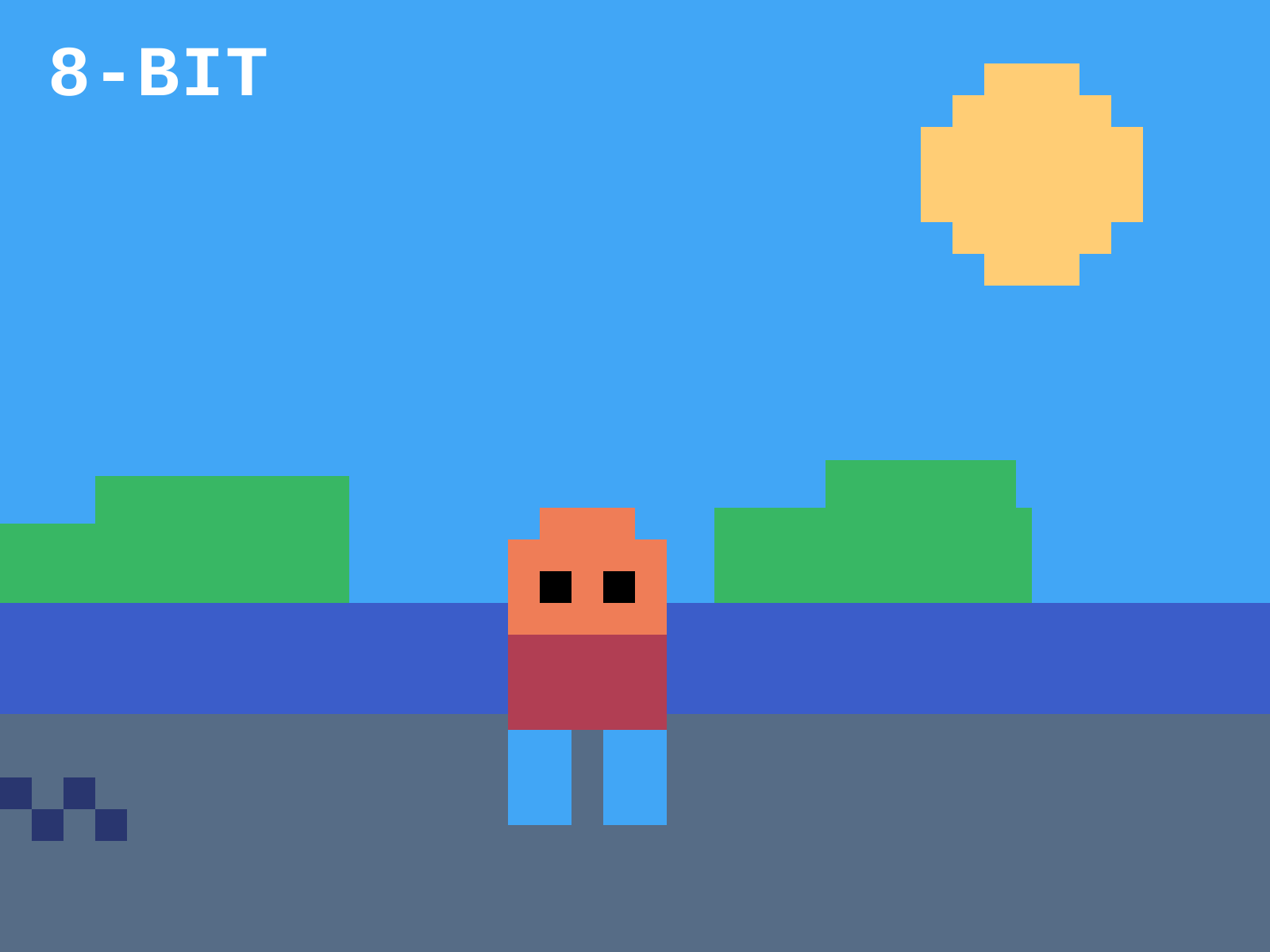
Pixel Art
Imagery built pixel by pixel on a deliberate grid, with limited palettes and hand-placed dithering—born of early video-game hardware and revived as a beloved aesthetic.
- Visible individual pixels on a grid
- Strictly limited color palette
- Hand-placed dithering for shading
- Tight, readable sprite silhouettes
- Deliberate, manual anti-aliasing

Vaporwave
An internet-born visual style that fuses glitch art, classical Roman busts, retro 1980s–90s computer graphics, and Japanese text into a nostalgic, ironic dreamscape of dead consumer futures.
- Pink-and-cyan gradient palettes and neon sunsets
- Classical marble Roman and Greek busts as motifs
- Retro 3D wireframe grids, checkerboards, and palm trees
- Japanese katakana/hiragana text captions
- Glitch artifacts and recycled 1980s–90s computer graphics
At a glance
| Pixel Art | Vaporwave | |
|---|---|---|
| Era | 1980s–present | c. 2011–present |
| Discipline | Graphic Design | Graphic Design |
| Region | Japan, United States, Global | Internet, Global |
| Family | Digital, Vernacular/Pop | Digital, Vernacular/Pop |
| Formal traits | pixelated, limited-palette, dithered, low-resolution | glitch, gradient, retro-3d, collage |
More comparisons
Advertisement