1980s–present · Japan, United States, Global
Pixel Art
Also known as 8-bit Art, 16-bit Art
Imagery built pixel by pixel on a deliberate grid, with limited palettes and hand-placed dithering—born of early video-game hardware and revived as a beloved aesthetic.
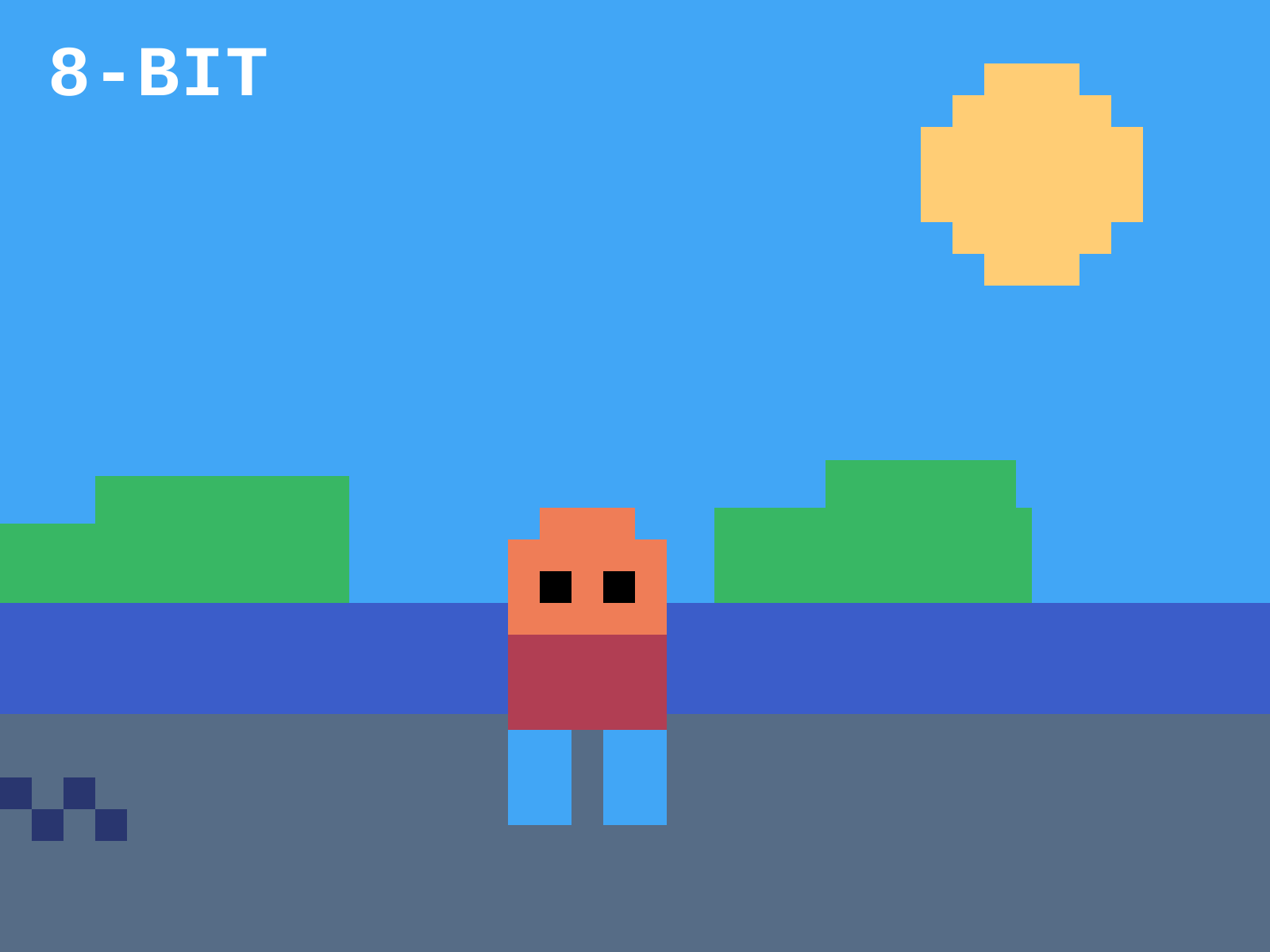
Original specimen, not a historical artifactOriginal specimen in the Pixel Art style. Owned; source: Design Style Book (original).
About the style
Pixel art is the practice of constructing images one pixel at a time on a visible grid, a discipline born of the severe memory and color constraints of 1980s and 1990s game consoles and home computers. With only a handful of colors per sprite, artists developed sophisticated techniques—careful anti-aliasing, hand-placed dithering to simulate extra shades and gradients, and tight, readable silhouettes—to wring expression from minimal resolution. The 8-bit NES and 16-bit Super Nintendo and Sega Genesis eras defined the canonical look, with iconic sprites like Mario and characters from countless arcade games. Though hardware long ago outgrew the constraints, pixel art persists as a deliberate stylistic choice in indie games, illustration, and animation, prized for its nostalgic charm, clarity, and the visible craft of every placed pixel. It is now a thriving contemporary art form rather than a mere technical limitation.
Notable examples
- ▸Shigeru Miyamoto / Nintendo — Super Mario Bros. sprites (1985)
- ▸Capcom — Mega Man character sprites (1987)
- ▸Eric Barone — Stardew Valley pixel art (2016)
Anatomy of Pixel Art
The numbered markers call out the design elements that define this style. Hover or tap a marker to see its breakdown.
Original specimen, not a historical artifactOriginal specimen in the Pixel Art style. Owned; source: Design Style Book (original).
Every image is built from discrete square pixels left plainly visible rather than smoothed away.
Old hardware allowed only a few colors per sprite, so palettes are tight and chosen with care.
Checkerboard pixel patterns simulate extra shades and gradients the limited palette couldn't otherwise show.
Sprites use clean, bold outlines so characters stay legible at tiny sizes on low-res screens.
How Pixel Art connects
Styles form a network, not a tree. Explore the direct neighbours below — click any to travel the map one hop at a time.
- Parallel / cross-current
- Influenced by
Hover or tap a style to preview it.
Parallel / cross-current Vaporwave — 8-bit nostalgia shared with the vaporwave revival
Low-Poly influenced by Pixel Art — an aesthetic born of digital-rendering constraint
Compare side by side
Describe it like this
Prompt-ready vocabulary for describing or re-creating the Pixel Art look. Tap a word to collect it in Designdeas.
Get copy-ready Pixel Art AI prompts →