1920–1939 · France, United States
Art Deco Graphics
Also known as Style moderne (graphic), Jazz Age poster design
The streamlined, glamorous poster style of the Jazz Age — bold geometric stylization, dramatic flat color, airbrushed volume, and elegant geometric lettering selling ocean liners, trains, and modern luxury.
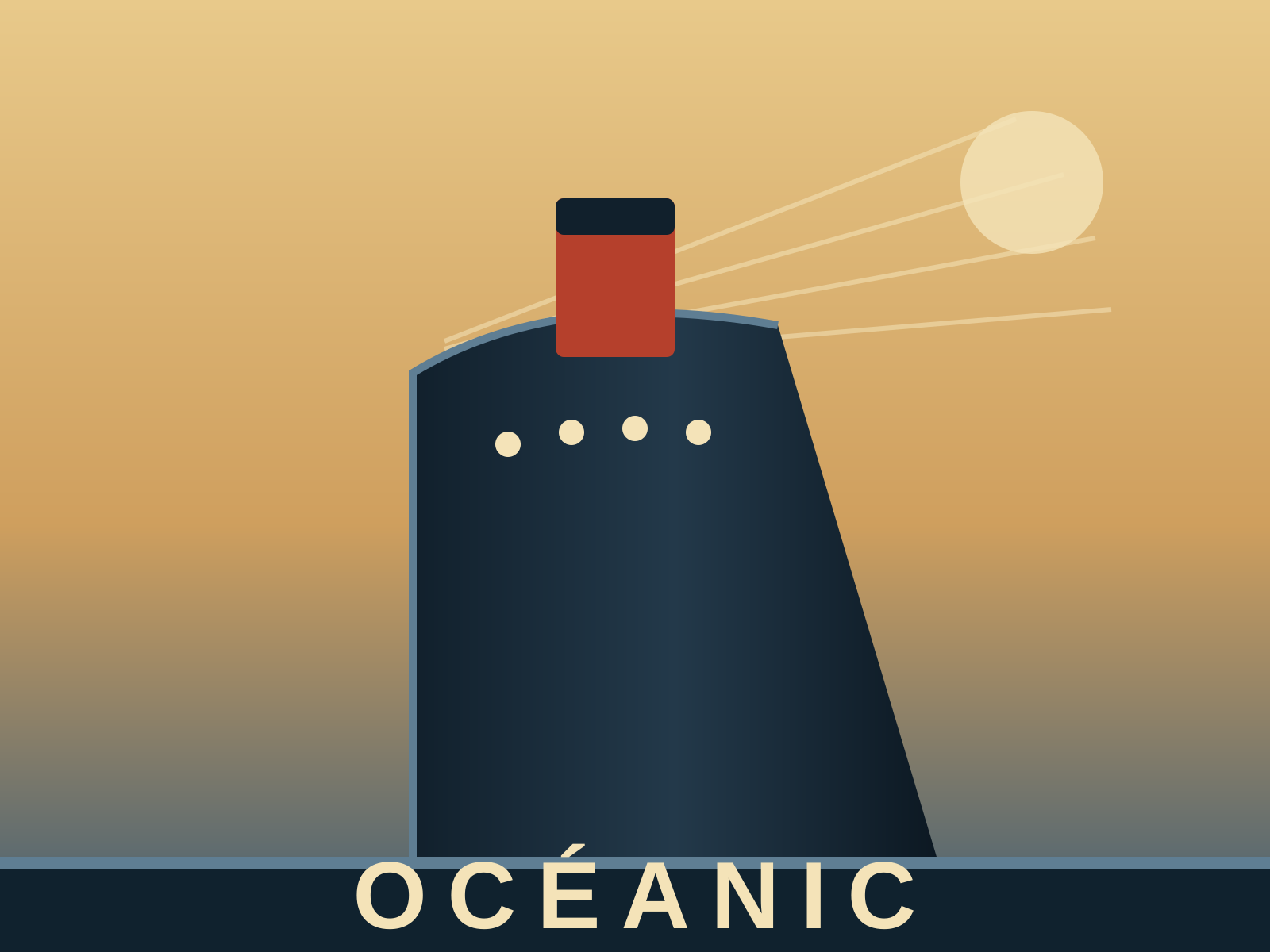
Original specimen, not a historical artifactOriginal specimen in the Art Deco poster style. Owned; source: Design Style Book (original).
Across disciplines
- Architecture: Art Deco
- Architecture: Streamline Moderne
- Cinematography: Wes Anderson Style
- Typography: Peignot
About the style
Art Deco graphics gave the interwar decades their image of speed, luxury, and machine-age glamour, translating the decorative style launched at the 1925 Paris Exposition into posters, advertising, and packaging. Its supreme practitioner was A.M. Cassandre (Adolphe Mouron), whose travel posters reduced ships, trains, and locomotives to monumental, near-abstract geometric forms — the towering bow of the Normandie, the rushing rails of Nord Express, the cubist Dubonnet campaign. The style favored bold flat planes of color, strong diagonals and streamlined curves, simplified silhouettes, airbrushed gradients suggesting chrome and volume, and sleek custom geometric sans-serif lettering integrated into the image. Sunbursts, zigzags, stylized speed lines, and a glamorous Jazz Age subject matter — ocean liners, aviation, fashion, nightlife — recur throughout. Where the Bauhaus pursued austere function, Art Deco embraced elegance, ornament, and commercial seduction, making it the era's dominant popular style and a lasting shorthand for vintage sophistication.
Notable examples
- ▸A.M. Cassandre — Normandie ocean-liner poster (1935)
- ▸A.M. Cassandre — Nord Express railway poster (1927)
- ▸Jean Carlu — advertising and propaganda posters (1930s)
Anatomy of Art Deco Graphics
The numbered markers call out the design elements that define this style. Hover or tap a marker to see its breakdown.
Original specimen, not a historical artifactOriginal specimen in the Art Deco poster style. Owned; source: Design Style Book (original).
A ship's bow is simplified into a towering, near-abstract geometric form seen from a dramatic low angle.
Elegant streamlined sans-serif type is drawn to match the image and integrated into the composition.
Strong diagonal thrusts and streamlined rays convey motion, modernity, and luxury travel.
Bold areas of flat color are shaded with smooth gradients to suggest gleaming chrome and volume.
How Art Deco Graphics connects
Styles form a network, not a tree. Explore the direct neighbours below — click any to travel the map one hop at a time.
- Parallel / cross-current
- Influenced by
- Evolved from
Hover or tap a style to preview it.
Parallel / cross-current Art Deco — the poster-and-advertising wing of the same Art Deco style
Parallel / cross-current Streamline Moderne — shared the late-Deco streamlined, aerodynamic machine-age look
WPA Poster influenced by Art Deco Graphics — borrowed Deco geometry, streamlining, and dramatic perspective
Mid-Century Modern Graphic Design influenced by Art Deco Graphics — absorbed Deco's bold silhouettes and streamlined geometry
Mid-Century Travel Poster evolved from Art Deco Graphics — Deco geometry applied to selling the journey
Wes Anderson Style parallel / cross-current Art Deco Graphics — shares flat, symmetrical decorative framing and coordinated period palettes
Raygun Gothic influenced by Art Deco Graphics — streamlines Deco/Moderne geometry into atomic-age forms
Peignot parallel / cross-current Art Deco Graphics — an icon of 1930s French Art Deco graphic design
Describe it like this
Prompt-ready vocabulary for describing or re-creating the Art Deco Graphics look. Tap a word to collect it in Designdeas.
Get copy-ready Art Deco Graphics AI prompts →