c. 1945–1970 · United States
Mid-Century Modern Graphic Design
Also known as American Modernism, Corporate Modernism
Postwar American graphic design that married European modernist rigor with Madison Avenue optimism, building the visual language of the corporate logo, the trademark, and the witty conceptual poster.
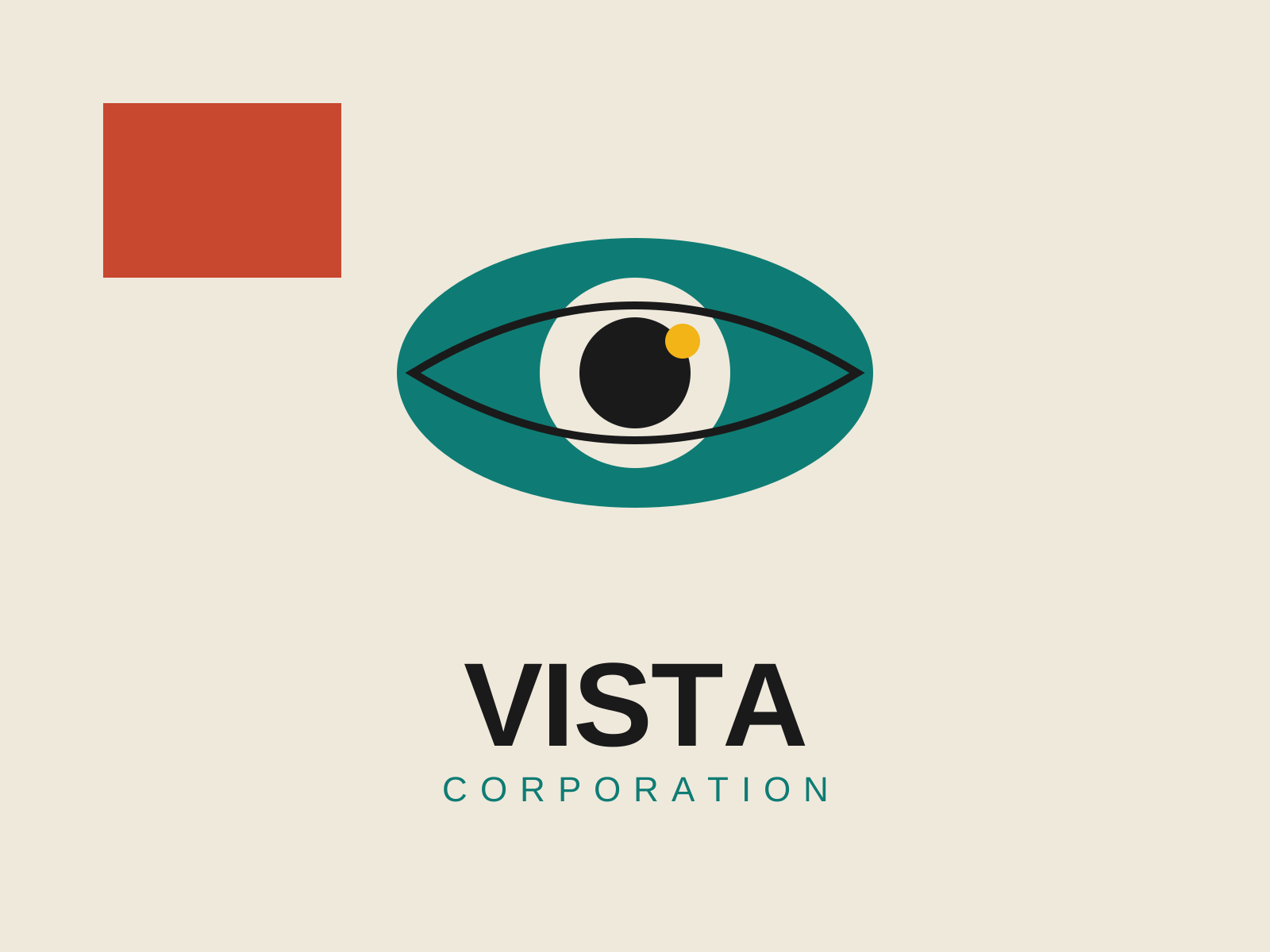
Original specimen, not a historical artifactOriginal specimen in the mid-century modern / corporate-modern style. Owned; source: Design Style Book (original).
Across disciplines
- Architecture: Mid-Century Modern
About the style
Mid-century modern graphic design emerged as American designers absorbed European modernism — the Bauhaus, Constructivism, and the International Typographic Style — and recast it for a booming consumer and corporate culture. Figures like Paul Rand, Saul Bass, Lester Beall, and Alvin Lustig prized the single clear idea: a logo or poster should communicate through one memorable, often playful conceptual gesture rather than ornament. The work favored geometric simplicity, generous white space, hand-cut paper collage, flat unmodeled color, and a confident mix of sans-serif type with expressive scale shifts. This was the era that professionalized the trademark and the corporate identity program, giving IBM, Westinghouse, and Container Corporation of America coherent visual systems that signaled progress and trust. Saul Bass extended the sensibility into film with kinetic title sequences and reductive poster imagery built from bold silhouettes, and the style remains the template for how brands signal clarity and intelligence.
Notable examples
- ▸Paul Rand — IBM logo (1956)
- ▸Saul Bass — The Man with the Golden Arm poster & titles (1955)
- ▸Lester Beall — Rural Electrification Administration posters (1937–41)
Anatomy of Mid-Century Modern Graphic Design
The numbered markers call out the design elements that define this style. Hover or tap a marker to see its breakdown.
Original specimen, not a historical artifactOriginal specimen in the mid-century modern / corporate-modern style. Owned; source: Design Style Book (original).
A logo distilled to one clever visual idea, designed to be recognized instantly and to reproduce at any size.
Solid, unmodeled fields of color with no gradient or shading emphasize graphic clarity over realism.
Clean sans-serif type, often with dramatic scale contrast, completes the identity with confidence and restraint.
Generous empty margins let the single idea breathe and signal modern sophistication.
How Mid-Century Modern Graphic Design connects
Styles form a network, not a tree. Explore the direct neighbours below — click any to travel the map one hop at a time.
- Parallel / cross-current
- Influenced by
- Evolved from
Hover or tap a style to preview it.
Parallel / cross-current Mid-Century Modern — the graphic counterpart to mid-century modern architecture and product design
Influenced by Bauhaus Graphic Design — Americanized the Bauhaus programme via its emigrating teachers
Influenced by Plakatstil — inherited the reductive object-poster logic and the integrated logotype
Influenced by Art Deco Graphics — absorbed Deco's bold silhouettes and streamlined geometry
Modernist Logo Design evolved from Mid-Century Modern Graphic Design — the trademark wing of postwar American modernism
Describe it like this
Prompt-ready vocabulary for describing or re-creating the Mid-Century Modern Graphic Design look. Tap a word to collect it in Designdeas.
Get copy-ready Mid-Century Modern Graphic Design AI prompts →