1980s–1990s · United States
Cranbrook Deconstruction
Also known as Deconstructivist Typography, Cranbrook School
Theory-driven, fractured typography from the Cranbrook Academy of Art, where text is layered, dispersed, and visually interrogated under the influence of French poststructuralism.
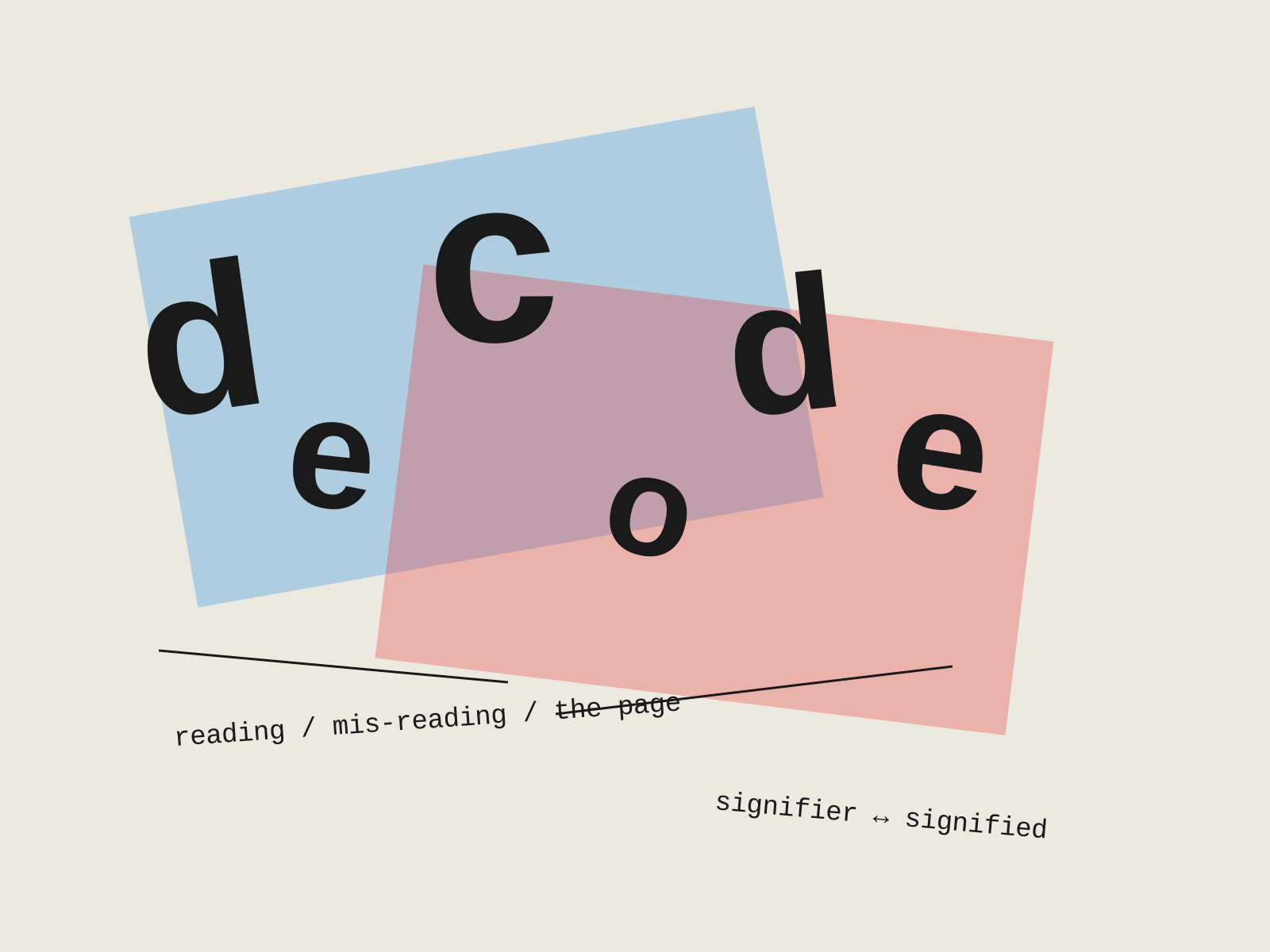
Original specimen, not a historical artifactOriginal specimen in the Cranbrook Deconstruction style. Owned; source: Design Style Book (original).
Across disciplines
- Architecture: Deconstructivism
About the style
Cranbrook deconstruction names the experimental typographic work that emerged from the graphic design program at Cranbrook Academy of Art near Detroit, led by Katherine McCoy through the 1980s and early 1990s. Steeped in poststructuralist theory—Derrida, Barthes—McCoy and her students treated the page as a site for questioning how meaning is constructed, layering text, dispersing words across the field, and pairing typography with reader-response theory. The resulting work is dense, fractured, and intentionally challenging: overlapping type, interrupted reading paths, and visual structures that foreground language itself. McCoy's 1989 'Typography as Discourse' poster epitomizes the approach. Often controversial for prizing concept over conventional legibility, the Cranbrook output profoundly shaped postmodern American graphic design and the broader deconstructivist wave of the period.
Notable examples
- ▸Katherine McCoy — 'Typography as Discourse' poster (1989)
- ▸Cranbrook Academy of Art — graduate design program work (1980s)
- ▸Edward Fella — experimental lettering and flyers (late 1980s)
Anatomy of Cranbrook Deconstruction
The numbered markers call out the design elements that define this style. Hover or tap a marker to see its breakdown.
Original specimen, not a historical artifactOriginal specimen in the Cranbrook Deconstruction style. Owned; source: Design Style Book (original).
Multiple strands of type overlap on one plane, forcing the reader to disentangle competing voices.
Words scatter across the page rather than sitting in tidy columns, questioning linear reading order.
The work is explicitly informed by Derrida and Barthes, treating layout as an argument about meaning.
Visual structure deliberately breaks the eye's flow to make the act of reading self-aware.
How Cranbrook Deconstruction connects
Styles form a network, not a tree. Explore the direct neighbours below — click any to travel the map one hop at a time.
- Evolved from
- Influenced by
- Parallel / cross-current
Hover or tap a style to preview it.
Evolved from Postmodern Graphic Design
Influenced by Emigre Digital Type
Parallel / cross-current Deconstructivism
Describe it like this
Prompt-ready vocabulary for describing or re-creating the Cranbrook Deconstruction look. Tap a word to collect it in Designdeas.
Get copy-ready Cranbrook Deconstruction AI prompts →