c. 1970s–1990s · Switzerland, United States
Postmodern Graphic Design
Also known as New Wave, Swiss Punk
The rule-breaking reaction against rigid Swiss modernism, fracturing the grid with tilted type, layered transparency, and an embrace of complexity, ambiguity, and digital experimentation.
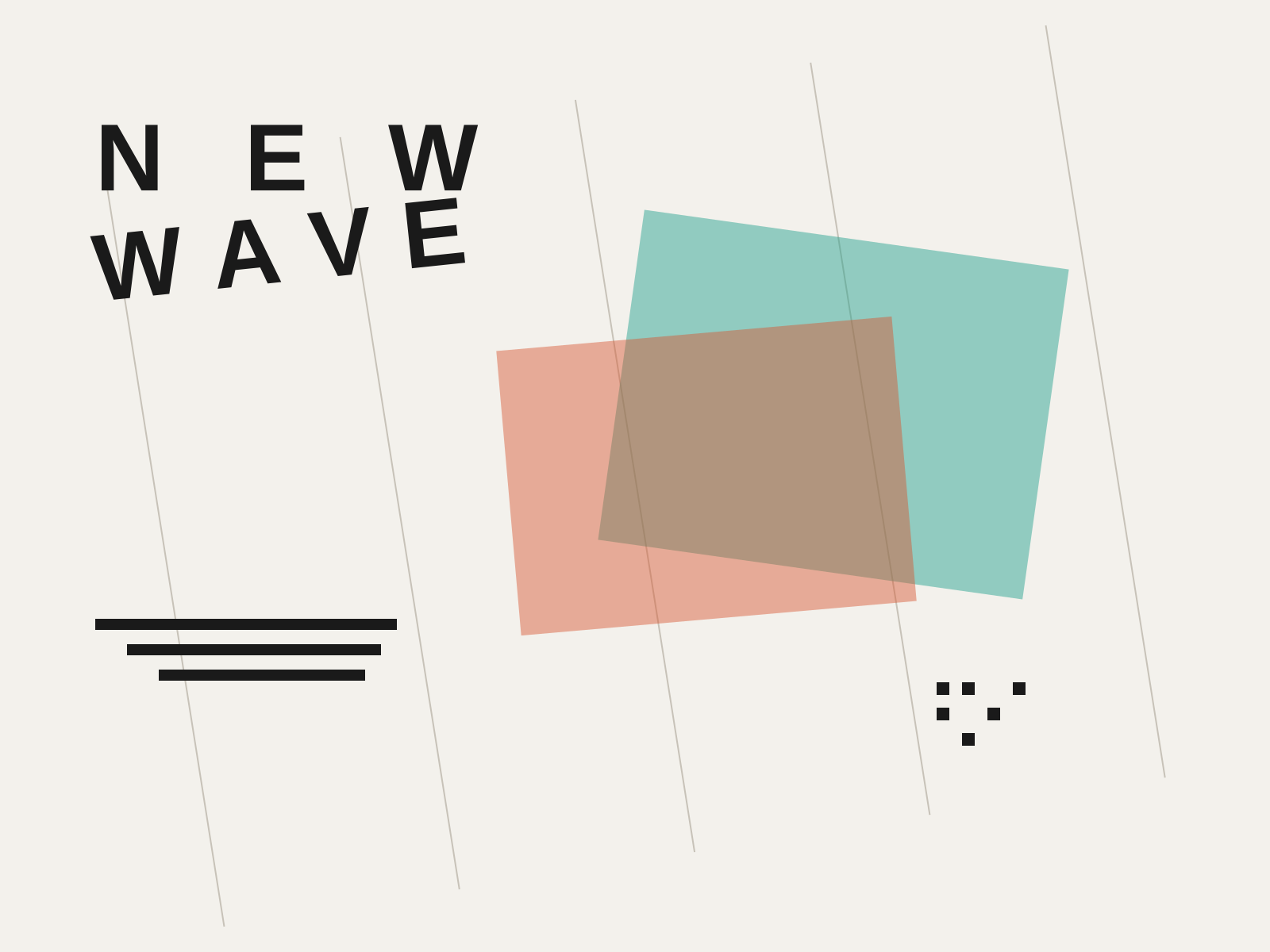
Original specimen, not a historical artifactOriginal specimen in the postmodern / New Wave style. Owned; source: Design Style Book (original).
Across disciplines
- Architecture: Postmodern Architecture
- Architecture: Deconstructivism
About the style
Postmodern graphic design, often called New Wave, began as Wolfgang Weingart's deliberate rebellion against the rigid order of the Swiss International Typographic Style he had been trained in. Teaching in Basel, Weingart loosened the grid, varied letterspacing wildly, tilted type, and introduced expressive layering, encouraging students to question modernism's claim to neutral universal clarity. His American students and followers — April Greiman, Dan Friedman, and others — carried the ideas to the United States, where Greiman fused them with the emerging Macintosh to pioneer 'hybrid imagery' blending video, digital noise, and print. The style favored layered transparency, stepped rules and bars, exaggerated letterspacing, diagonal axes, and a knowing collision of textures that celebrated complexity over reduction. It treated communication as playful and contingent rather than objective, and dismantled the authority of the modernist grid, opening the door to the digital deconstruction and grunge typography of the following decade.
Notable examples
- ▸Wolfgang Weingart — Typografische Monatsblätter covers (1970s)
- ▸April Greiman — 'Does It Make Sense?' Design Quarterly 133 (1986)
- ▸Dan Friedman — Typographics teaching work (1970s–80s)
Anatomy of Postmodern Graphic Design
The numbered markers call out the design elements that define this style. Hover or tap a marker to see its breakdown.
Original specimen, not a historical artifactOriginal specimen in the postmodern / New Wave style. Owned; source: Design Style Book (original).
The orderly modernist grid is broken and rotated so type and images sit on diagonal, unstable axes.
Overlapping semi-transparent color fields create depth and intentional visual complexity.
Wildly varied gaps between letters turn typography into an expressive, rhythmic texture.
Thick and thin ruled lines, often stepped or staggered, structure and decorate the page at once.
How Postmodern Graphic Design connects
Styles form a network, not a tree. Explore the direct neighbours below — click any to travel the map one hop at a time.
- Reaction against
- Parallel / cross-current
- Influenced by
- Evolved from
Hover or tap a style to preview it.
Reaction against Swiss Style — broke the Swiss grid it grew out of — 'Swiss Punk'
Parallel / cross-current Postmodern Architecture — the graphic wing of the broader postmodern revolt against modernist purity
Deconstructivism parallel / cross-current Postmodern Graphic Design — parallel deconstruction of the modernist grid in print
Memphis Graphic Style influenced by Postmodern Graphic Design — shared the postmodern revolt against modernist good taste, pushed toward pattern and play
Grunge Graphic Design evolved from Postmodern Graphic Design — took New Wave's broken grid into full digital deconstruction
Emigre Digital Type influenced by Postmodern Graphic Design
Cranbrook Deconstruction evolved from Postmodern Graphic Design
Compare side by side
Describe it like this
Prompt-ready vocabulary for describing or re-creating the Postmodern Graphic Design look. Tap a word to collect it in Designdeas.
Get copy-ready Postmodern Graphic Design AI prompts →