2000s–present · Global
Glitch Art
Also known as Databending, Datamosh
The aesthetic of digital error—RGB channel shifts, datamoshed smears, scanlines, and corrupted-signal artifacts deliberately induced or simulated for expressive effect.
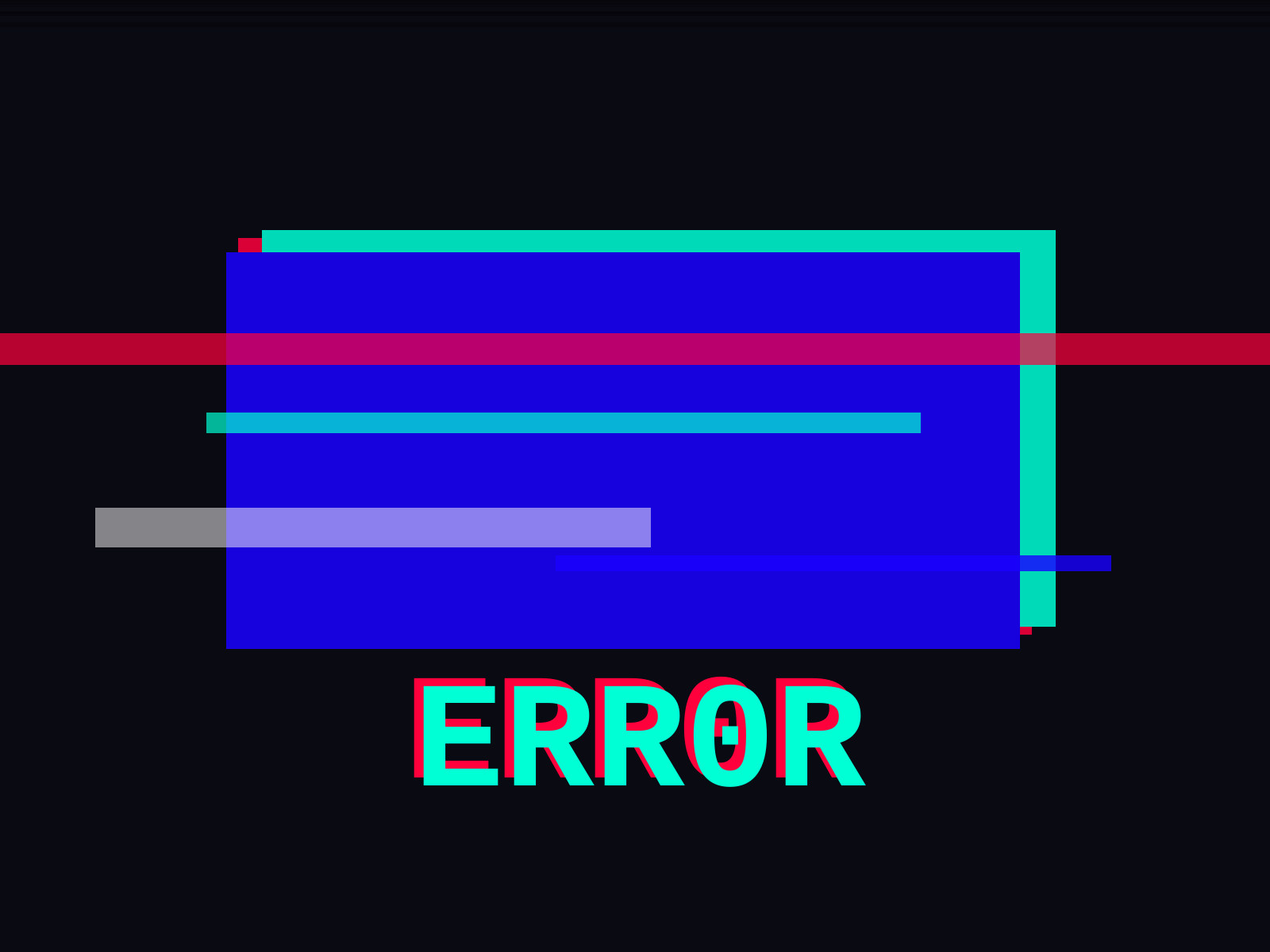
Original specimen, not a historical artifactOriginal specimen in the Glitch Art style. Owned; source: Design Style Book (original).
About the style
Glitch art aestheticizes the breakdown of digital and analog systems, turning compression errors, signal corruption, and data malfunction into intentional visual style. Its techniques include 'databending' (editing a file's raw data to corrupt the image), 'datamoshing' (exploiting video compression to make frames smear and bleed), RGB channel separation, scanlines, and pixel-sorting. Roots run through video-feedback and broken-television experiments of earlier decades, but the form matured in the 2000s as artists like Rosa Menkman theorized and practiced it, and as it spread into music videos, album art, and mainstream advertising. The look signals technological anxiety, instability, and the materiality of the digital, oscillating between authentic system failure and carefully simulated corruption. Today glitch is both a fine-art practice and a ubiquitous design effect for conveying edgy, broken-signal energy.
Notable examples
- ▸Rosa Menkman — 'The Glitch Moment(um)' (2011)
- ▸Takeshi Murata — 'Monster Movie' datamosh video (2005)
- ▸Kanye West — 'Welcome to Heartbreak' datamosh music video (2009)
Anatomy of Glitch Art
The numbered markers call out the design elements that define this style. Hover or tap a marker to see its breakdown.
Original specimen, not a historical artifactOriginal specimen in the Glitch Art style. Owned; source: Design Style Book (original).
Separating and offsetting the red, green, and blue channels creates the signature chromatic ghosting.
Exploiting video compression makes motion bleed and frames melt into one another in fluid smears.
Horizontal lines and signal static evoke broken CRT screens and corrupted analog transmission.
Algorithmically reordering pixels along rows produces streaked, liquid bands of displaced color.
How Glitch Art connects
Styles form a network, not a tree. Explore the direct neighbours below — click any to travel the map one hop at a time.
- Influenced by
Hover or tap a style to preview it.
Influenced by Vaporwave
Influenced by Dada Graphic Design — databending as a digital heir to Dada chance and photomontage
Compare side by side
Describe it like this
Prompt-ready vocabulary for describing or re-creating the Glitch Art look. Tap a word to collect it in Designdeas.
Get copy-ready Glitch Art AI prompts →