Dada Graphic Design vs Glitch Art
Glitch Art was influenced by Dada Graphic Design — databending as a digital heir to Dada chance and photomontage.

Dada Graphic Design
The anarchic, anti-art graphic language of Dada, which invented photomontage and ransom-note typography — slicing apart mass-media photographs and mixed type to mock a civilization that had marched into world war.
- Photomontage from cut-up press photographs and headlines
- Ransom-note typography mixing clashing fonts and sizes
- Chance-based, deliberately disordered composition
- Satirical, anti-establishment content
- Mechanomorphic drawing and mass-media collage
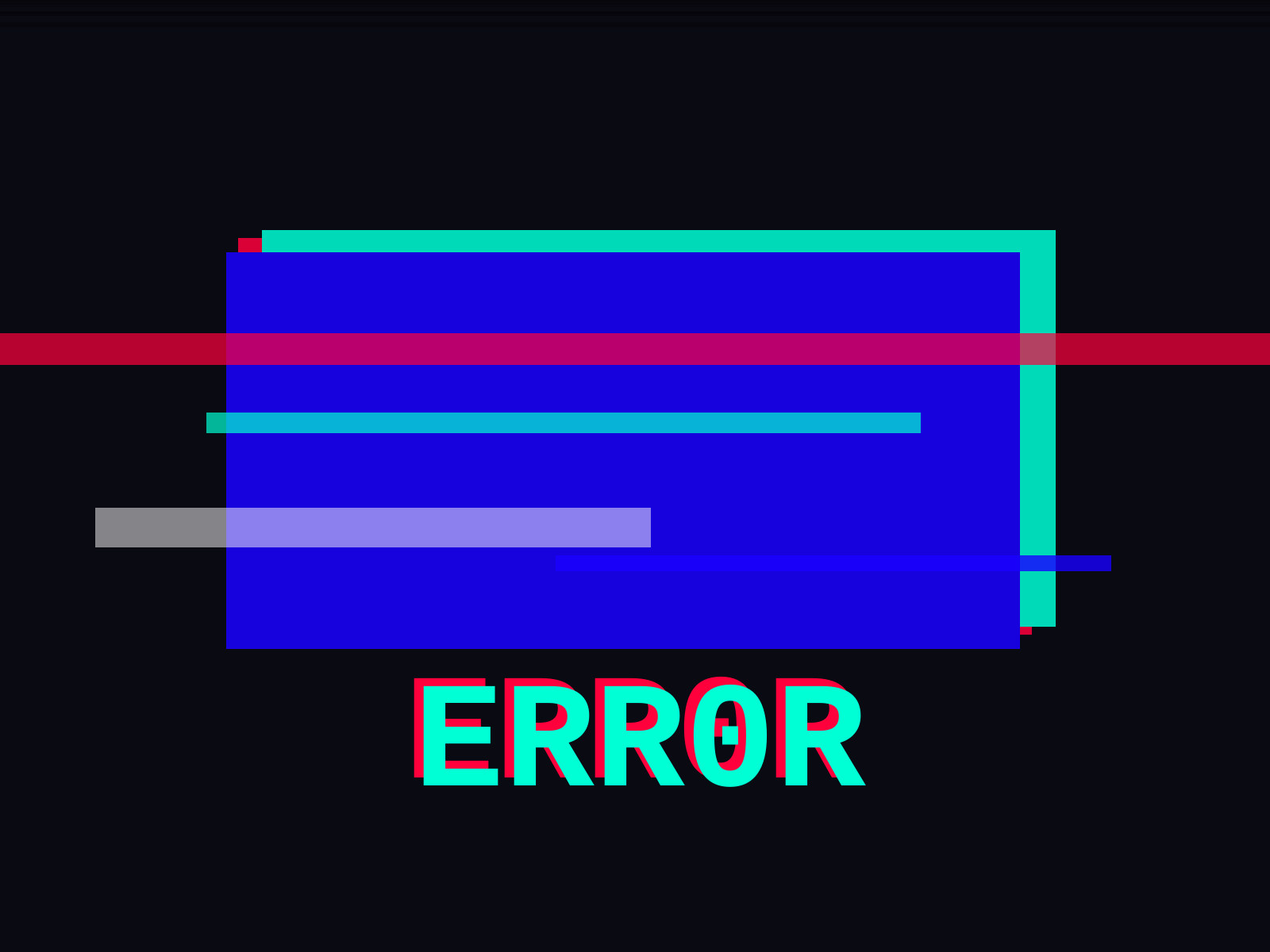
Glitch Art
The aesthetic of digital error—RGB channel shifts, datamoshed smears, scanlines, and corrupted-signal artifacts deliberately induced or simulated for expressive effect.
- RGB channel shift / color separation
- Datamosh smearing and frame bleed
- Horizontal scanlines and signal noise
- Pixel-sorting and blocky compression artifacts
- Corrupted, displaced image fragments
At a glance
| Dada Graphic Design | Glitch Art | |
|---|---|---|
| Era | 1916–1924 | 2000s–present |
| Discipline | Graphic Design | Graphic Design |
| Region | Switzerland, Germany, France | Global |
| Family | Avant-Garde, Modernism | Digital, Experimental |
| Formal traits | photomontage, collage, mixed-type, anti-compositional | channel-shift, datamosh, scanline, corrupted |
More comparisons
Advertisement