1960s–1970s · United Kingdom, Europe, United States
Op Art Graphic Design
Also known as Optical Art, Retinal Art
Precise geometric patterns engineered to shimmer, swell, and vibrate on the page through pure optical illusion. Hard-edged black-and-white or clashing color fields that seem to move while standing still.
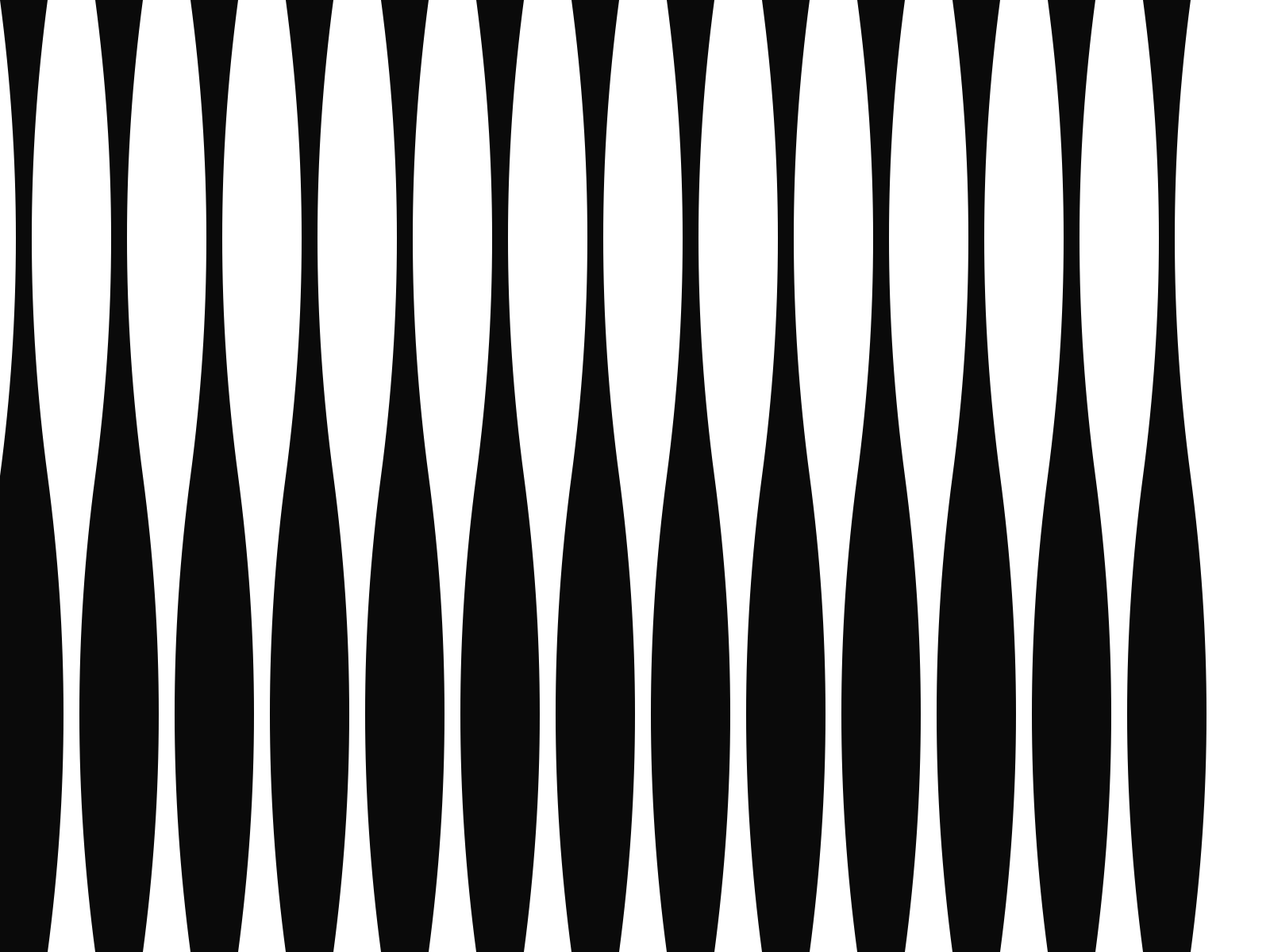
Original specimen, not a historical artifactOriginal specimen in the Op Art Graphic Design style. Owned; source: Design Style Book (original).
About the style
Op Art exploited the mechanics of human vision to make static, hard-edged patterns appear to flicker, pulse, and warp. Bridget Riley built undulating fields of black-and-white stripes and waves that destabilize the eye, while Victor Vasarely deployed gridded deformations and color-contrast cells toward what he called a kinetic plasticity. The shared method was rigorous geometric repetition — lines, dots, checks, and concentric forms — subtly distorted to trigger moiré effects, afterimages, and illusory depth. Brought to wide attention by MoMA's 1965 exhibition The Responsive Eye, the look swept into graphic design, fashion, and album covers as a crisp, vibrating signature of the mid-1960s. Its disciplined optical patterning remains a touchstone for purely visual, content-light geometric design.
Notable examples
- ▸Bridget Riley — Movement in Squares (1961)
- ▸Victor Vasarely — Vega series (1960s)
- ▸MoMA — The Responsive Eye exhibition (1965)
Anatomy of Op Art Graphic Design
The numbered markers call out the design elements that define this style. Hover or tap a marker to see its breakdown.
Original specimen, not a historical artifactOriginal specimen in the Op Art Graphic Design style. Owned; source: Design Style Book (original).
Tightly repeated lines or stripes set up an optical buzz, making a flat surface seem to flicker and move.
A regular grid is subtly deformed so flat cells read as swelling or receding three-dimensional bulges.
Overlapping or near-aligned patterns generate shimmering moiré bands that the eye cannot hold still.
Stark black-and-white edges maximize the retinal afterimage and instability central to the effect.
How Op Art Graphic Design connects
Styles form a network, not a tree. Explore the direct neighbours below — click any to travel the map one hop at a time.
- Influenced by
Hover or tap a style to preview it.
Influenced by Constructivist Graphics
Influenced by Bauhaus Graphic Design
Describe it like this
Prompt-ready vocabulary for describing or re-creating the Op Art Graphic Design look. Tap a word to collect it in Designdeas.
Get copy-ready Op Art Graphic Design AI prompts →