Constructivist Graphics vs Op Art Graphic Design
Op Art Graphic Design was influenced by Constructivist Graphics.

Constructivist Graphics
The hard-edged revolutionary graphics of the Soviet avant-garde — bold red and black diagonals, dynamic photomontage, and sans-serif type marshalled like engineering to build a new socialist visual culture.
- Restricted red, black, and white palette
- Bold diagonals and overlapping geometric planes
- Dynamic photomontage integrated with type
- Heavy sans-serif, often Cyrillic, lettering
- Composition treated as load-bearing construction
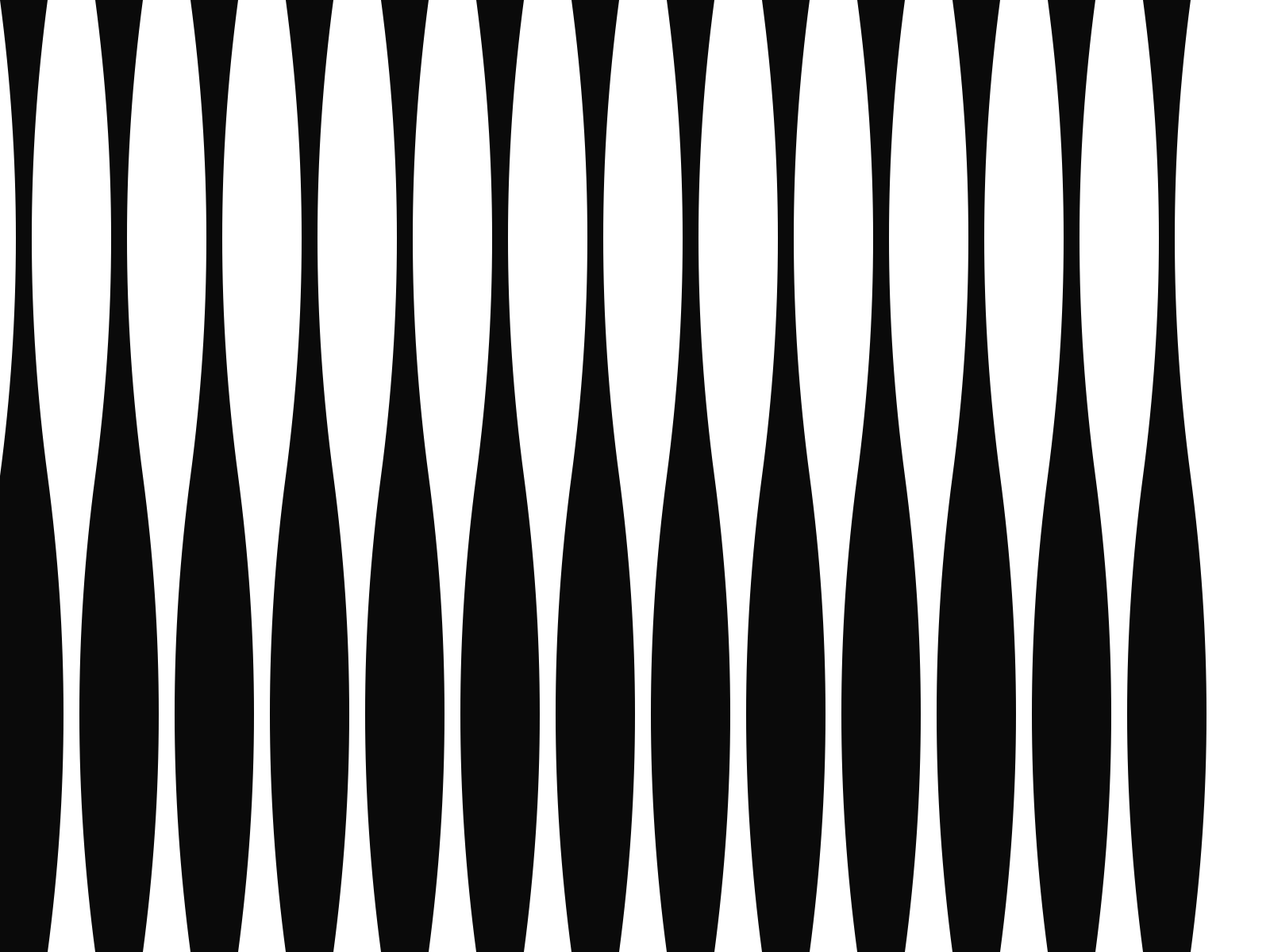
Op Art Graphic Design
Precise geometric patterns engineered to shimmer, swell, and vibrate on the page through pure optical illusion. Hard-edged black-and-white or clashing color fields that seem to move while standing still.
- Precise repeated geometric line and grid patterns
- Optical vibration, moiré, and afterimage effects
- Hard-edged high-contrast black and white
- Illusory swelling, warping, or depth
- Mathematical regularity with subtle deformation
At a glance
| Constructivist Graphics | Op Art Graphic Design | |
|---|---|---|
| Era | 1919–1934 | 1960s–1970s |
| Discipline | Graphic Design | Graphic Design |
| Region | Soviet Union | United Kingdom, Europe, United States |
| Family | Avant-Garde, Modernism | Op |
| Formal traits | diagonal-dynamism, geometric, photomontage, red-black-white | geometric, optical-vibration, high-contrast, grid-based |
More comparisons
Advertisement