1950s–1960s · Poland
Polish Poster School
Also known as Polska Szkoła Plakatu, Polish School of Posters
A celebrated postwar Polish movement that made the poster an art of painterly metaphor and surreal invention. Hand-painted, allusive, and personal, these film and theater posters prized poetic ambiguity over commercial directness.
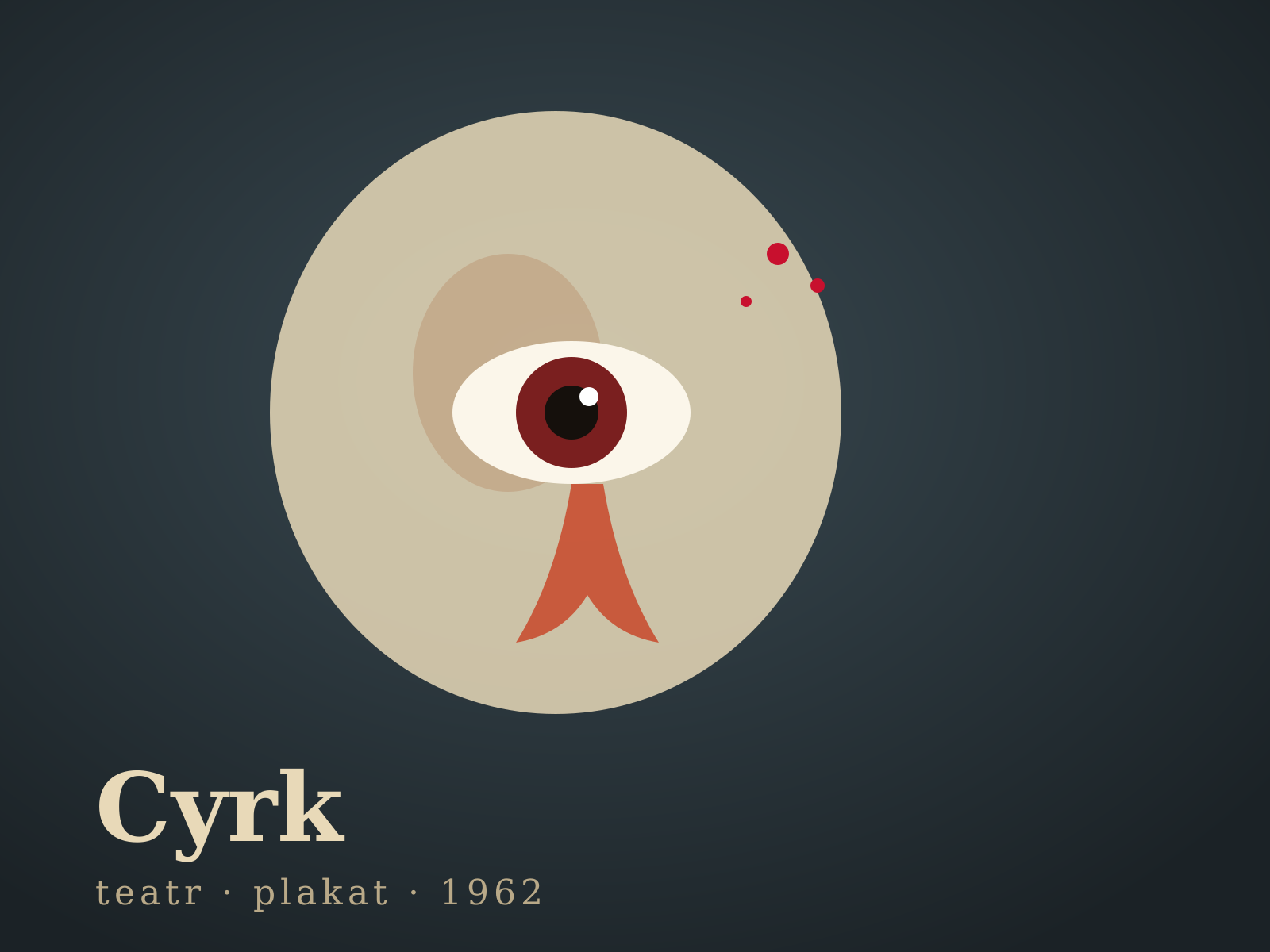
Original specimen, not a historical artifactOriginal specimen in the Polish Poster School style. Owned; source: Design Style Book (original).
About the style
The Polish Poster School emerged in 1950s and 1960s communist Poland, where a state-run cultural sector and the absence of Western-style advertising freed designers to treat the poster as fine art rather than salesmanship. Working largely for films, theater, circus, and concerts, artists such as Tadeusz Trepkowski, Henryk Tomaszewski, Jan Lenica, Wojciech Zamecznik, and Waldemar Świerzy developed a painterly, metaphoric idiom: hand-drawn and hand-lettered, surreal, often somber or wry, condensing a film's mood into a single poetic image rather than literal illustration. The style favored collage, expressive brush and ink, symbolic compression, and a distinctive integration of irregular hand lettering. Insulated from the commercial conventions of the West and encouraged by international competition success, the school won global acclaim and influenced poster design everywhere. It matters as proof that the poster could be a vehicle for individual artistic voice and ambiguity.
Notable examples
- ▸Tadeusz Trepkowski — 'Nie!' (No!) anti-war poster (1952)
- ▸Henryk Tomaszewski — theater and film posters (1950s–1960s)
- ▸Waldemar Świerzy — film posters including 'Midnight Cowboy' (1973)
Anatomy of Polish Poster School
The numbered markers call out the design elements that define this style. Hover or tap a marker to see its breakdown.
Original specimen, not a historical artifactOriginal specimen in the Polish Poster School style. Owned; source: Design Style Book (original).
Rather than show the film, the poster offers one poetic symbol — a falling bomb shaped from a ruined city — to evoke its meaning.
Titles are brushed or drawn by hand in irregular, characterful letters that belong to the image rather than to a typeface.
Gouache, ink, and collage give surfaces a handmade, fine-art texture far from the slick mechanical look of Western advertising.
Unrelated objects are fused or recombined in dreamlike ways, leaving the viewer to decode the connection.
How Polish Poster School connects
Styles form a network, not a tree. Explore the direct neighbours below — click any to travel the map one hop at a time.
- Reaction against
- Influenced by
Hover or tap a style to preview it.
Reaction against Socialist Realist Graphic Design — answered mandated heroic realism with surreal, painterly metaphor
Influenced by War Propaganda Poster
Cuban Revolutionary Poster influenced by Polish Poster School
Describe it like this
Prompt-ready vocabulary for describing or re-creating the Polish Poster School look. Tap a word to collect it in Designdeas.
Get copy-ready Polish Poster School AI prompts →