1960s–1970s · Cuba
Cuban Revolutionary Poster
Also known as OSPAAAL Posters, ICAIC Film Posters
The bold silkscreen posters of revolutionary Cuba, made for solidarity campaigns and cinema in flat planes of vivid color. Pop energy, photographic stencils, and graphic wit fused political message with playful visual invention.
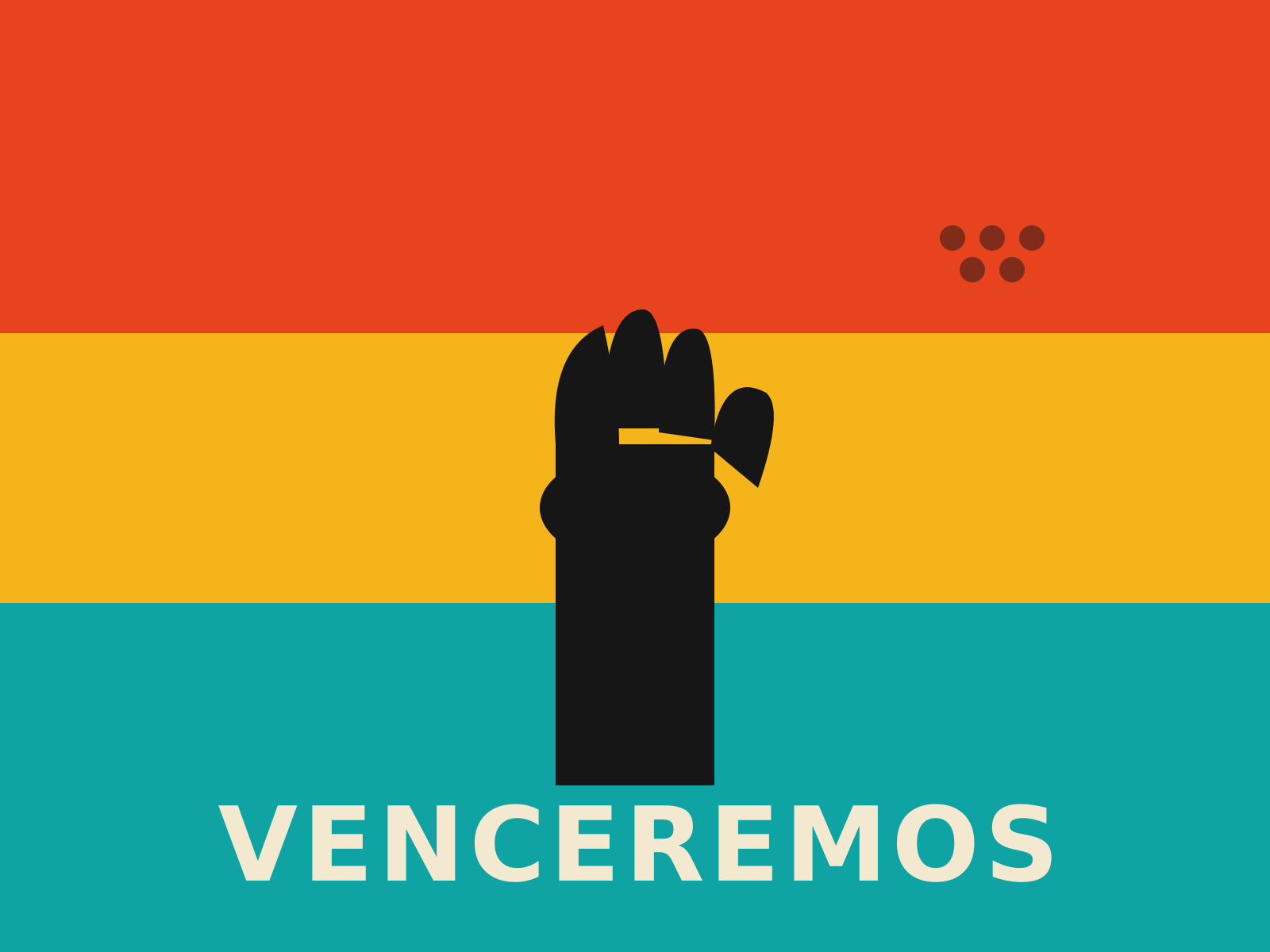
Original specimen, not a historical artifactOriginal specimen in the Cuban Revolutionary Poster style. Owned; source: Design Style Book (original).
About the style
The Cuban poster flowered after the 1959 revolution, when state institutions — chiefly OSPAAAL, the Organization of Solidarity with the peoples of Africa, Asia and Latin America, and ICAIC, the Cuban film institute — commissioned posters for international solidarity and for Cuban and foreign cinema. Cut off from commercial pressures and Western advertising norms, designers like Félix Beltrán, Alfredo Rostgaard, René Mederos, and Eduardo Muñoz Bachs developed a vivid, economical idiom built on silkscreen printing: flat saturated color, simplified iconic forms, photographic stencils, and a Pop-art playfulness leavened with humor and surreal touches. Solidarity posters distilled global liberation struggles into a single arresting symbol, while film posters showed remarkable graphic invention on tiny budgets. The result was a poster culture admired worldwide for its boldness and freedom from cliché. It matters as a high point of politically engaged graphic design and of the silkscreen aesthetic.
Notable examples
- ▸Alfredo Rostgaard — Che Guevara 'Christ' poster (1969)
- ▸Félix Beltrán — '¿Y tú, qué has hecho por la revolución?' / efficiency campaign posters (1960s)
- ▸Eduardo Muñoz Bachs — ICAIC film posters (1960s–1970s)
Anatomy of Cuban Revolutionary Poster
The numbered markers call out the design elements that define this style. Hover or tap a marker to see its breakdown.
Original specimen, not a historical artifactOriginal specimen in the Cuban Revolutionary Poster style. Owned; source: Design Style Book (original).
Large areas of unmixed, intense ink are printed by silkscreen, giving the poster its punchy, poster-paint flatness.
A complex struggle is compressed into one bold emblem — a rifle, a dove, a fist — instantly legible across languages.
A high-contrast photo, often of a revolutionary figure, is silkscreened in flat tones and fused with graphic color fields.
Titles are hand-drawn or set with Pop-era flair, woven into the image rather than confined to a tidy caption.
How Cuban Revolutionary Poster connects
Styles form a network, not a tree. Explore the direct neighbours below — click any to travel the map one hop at a time.
- Influenced by
- Reaction against
Hover or tap a style to preview it.
Influenced by Polish Poster School
Influenced by Psychedelic Poster Art — absorbed psychedelic colour into revolutionary silkscreen
Reaction against Socialist Realist Graphic Design
Describe it like this
Prompt-ready vocabulary for describing or re-creating the Cuban Revolutionary Poster look. Tap a word to collect it in Designdeas.
Get copy-ready Cuban Revolutionary Poster AI prompts →