1990s · United Kingdom, Japan, Europe
Techno / Cyber Graphic
Also known as Cyber Futurism, Designers Republic Style
Clean, vector-sharp 1990s techno futurism—sci-fi corporate logos, faux-Japanese branding, and a sleek corporate-dystopian gloss pioneered by The Designers Republic.
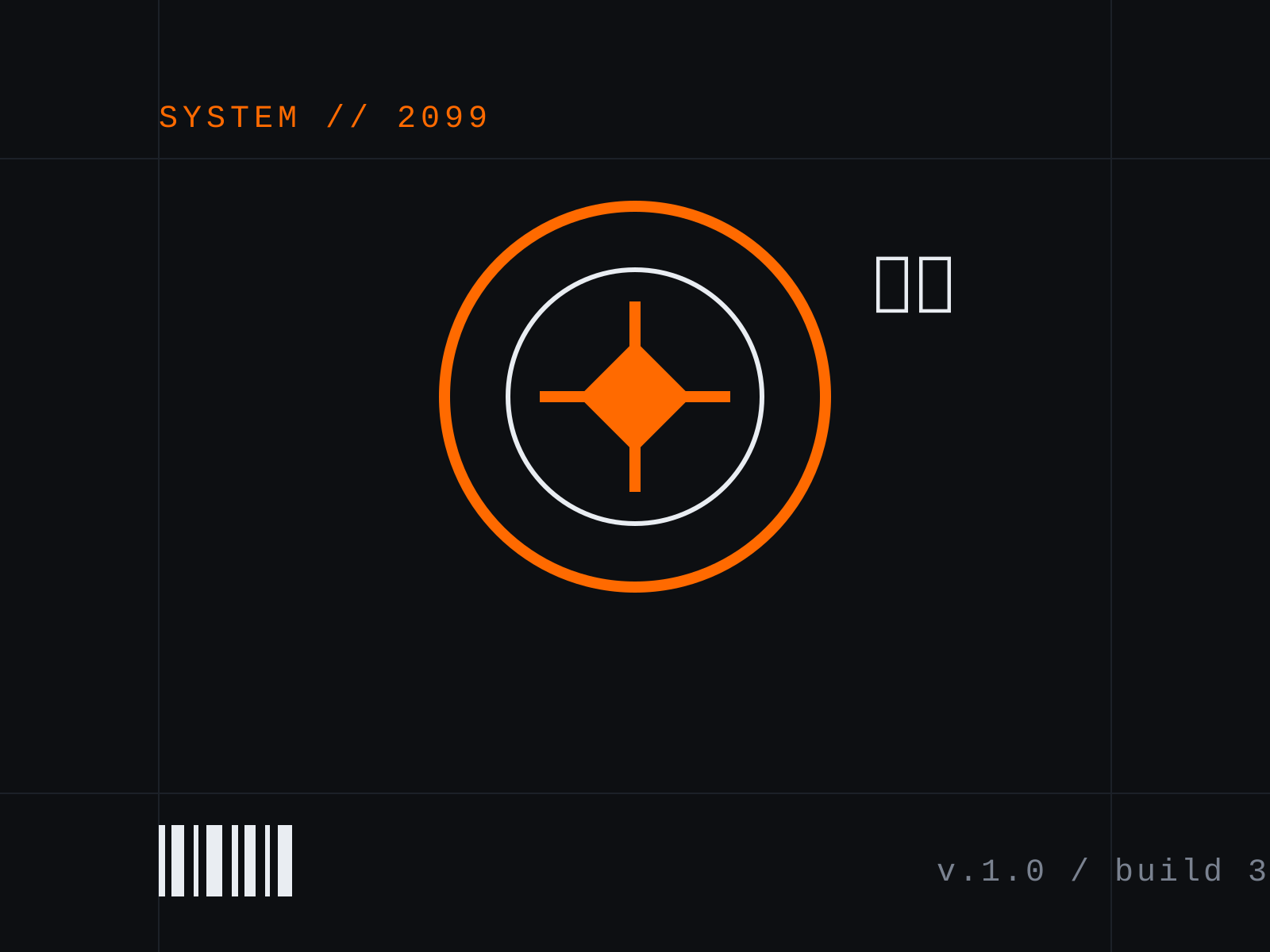
Original specimen, not a historical artifactOriginal specimen in the Techno / Cyber Graphic style. Owned; source: Design Style Book (original).
About the style
The techno/cyber graphic style crystallized in 1990s electronic-music and video-game culture, most influentially through Sheffield studio The Designers Republic (tDR), founded by Ian Anderson. Working for labels like Warp Records and on the WipEout game series, tDR fused crisp vector geometry, hyper-clean grids, mock-corporate logotypes, warning symbols, and faux-Japanese and consumerist iconography into a knowing, ironic vision of a slick technological future. The look prized precision and flat color over texture, deploying fictional brands and pictograms to satirize corporate culture even as it looked irresistibly futuristic. It defined the visual identity of the rave-adjacent 'intelligent techno' scene and racing-game sci-fi alike. Its corporate-dystopian sheen still reads as the canonical image of how the late twentieth century imagined the digital tomorrow.
Notable examples
- ▸The Designers Republic — WipEout game graphics (1995)
- ▸The Designers Republic — Warp Records sleeve identities (1990s)
- ▸Pop Will Eat Itself — tDR album art (1989–1994)
Anatomy of Techno / Cyber Graphic
The numbered markers call out the design elements that define this style. Hover or tap a marker to see its breakdown.
Original specimen, not a historical artifactOriginal specimen in the Techno / Cyber Graphic style. Owned; source: Design Style Book (original).
tDR invented slick fictional brands and logotypes to satirize consumer culture while looking convincingly futuristic.
Hard-edged flat shapes and precise curves replace texture, evoking digital cleanliness and machine perfection.
Pseudo-Japanese characters and katakana-style marks signalled a globalized, high-tech near-future.
Hazard icons and system pictograms borrow the language of interfaces and signage for a controlled, clinical feel.
How Techno / Cyber Graphic connects
Styles form a network, not a tree. Explore the direct neighbours below — click any to travel the map one hop at a time.
- Influenced by
- Parallel / cross-current
- Reaction against
Hover or tap a style to preview it.
Influenced by Rave Graphics
Influenced by Swiss Style
Parallel / cross-current Vaporwave
Solarpunk Graphic reaction against Techno / Cyber Graphic — answers dystopian cyberpunk gloom with a sunlit green future
Describe it like this
Prompt-ready vocabulary for describing or re-creating the Techno / Cyber Graphic look. Tap a word to collect it in Designdeas.
Get copy-ready Techno / Cyber Graphic AI prompts →