1950s–1970s · Switzerland, Germany, International
Swiss Style
Also known as International Typographic Style, Die neue Grafik
The mid-century gospel of objective design — mathematical grids, flush-left ragged-right sans-serif type (Helvetica, Akzidenz-Grotesk), generous white space, and photography in place of illustration.
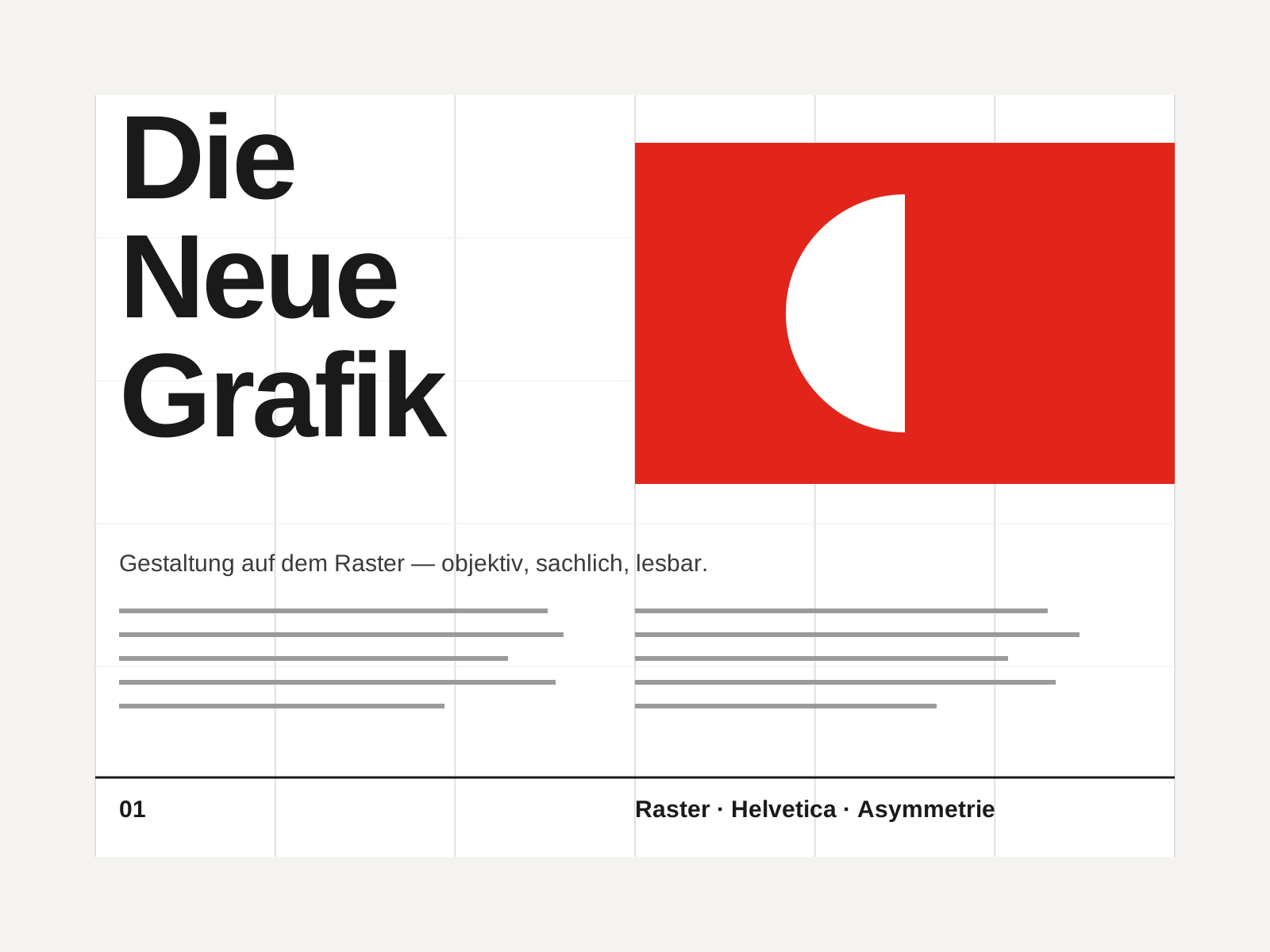
Original specimen, not a historical artifactOriginal specimen in the Swiss / International Typographic Style. Owned; source: Design Style Book (original).
Across disciplines
- Architecture: International Style
- Typography: Helvetica
- Typography: Univers
About the style
Emerging from Zurich and Basel, the Swiss Style sought a neutral, universal visual language stripped of persuasion and ornament. Designers like Josef Müller-Brockmann, Armin Hofmann, and Emil Ruder built every page on a mathematical modular grid, set text flush-left/ragged-right in a single neo-grotesque sans-serif, and trusted asymmetry and empty space to create order. Objective photography replaced drawn illustration, and the designer's personality was meant to disappear behind the information. Carried abroad through the journal Neue Grafik and corporate identity work, it became the default look of postwar institutions, signage, and multinationals — and the establishment that later movements rebelled against.
Notable examples
- ▸Josef Müller-Brockmann — Zürich Tonhalle concert posters
- ▸Neue Grafik / New Graphic Design journal (1958–65)
- ▸Armin Hofmann — Basel Stadttheater poster
Anatomy of Swiss Style
The numbered markers call out the design elements that define this style. Hover or tap a marker to see its breakdown.
Original specimen, not a historical artifactOriginal specimen in the Swiss / International Typographic Style. Owned; source: Design Style Book (original).
A mathematical grid of columns and baselines underlies everything — the invisible structure that every headline, text block, and image snaps to.
The headline is set in a single neo-grotesque sans-serif, flush-left and tightly tracked — no serifs, no decoration, type as pure information.
A flat, hard-edged geometric block of colour sits on the grid in place of illustration — objective form rather than ornament or hand-drawing.
Body copy is set flush-left, ragged-right with even word spacing — legibility is prioritized over the justified block of traditional typography.
A single hairline rule and a small folio align to the same grid — restrained, functional wayfinding rather than decorative framing.
How Swiss Style connects
Styles form a network, not a tree. Explore the direct neighbours below — click any to travel the map one hop at a time.
- Evolved from
- Influenced by
- Parallel / cross-current
- Reaction against
Hover or tap a style to preview it.
Evolved from The New Typography — carried Tschichold's New Typography forward into a rigorous, total grid system
Influenced by Bauhaus Graphic Design — built on the Bauhaus programme of functional, asymmetric, sans-serif design
Parallel / cross-current International Style — the graphic parallel to the architectural International Style — grids, neutrality, 'less is more'
Reaction against Art Nouveau (Graphic) — rejected decorative line and hand-lettering for objective, ornament-free order
Psychedelic Poster Art reaction against Swiss Style — rejected Swiss legibility and neutrality for immersive, subjective sensation
Punk Graphic Design reaction against Swiss Style — an anti-professional revolt against slick corporate modernism
Postmodern Graphic Design reaction against Swiss Style — broke the Swiss grid it grew out of — 'Swiss Punk'
Memphis Graphic Style reaction against Swiss Style — answered Swiss restraint with deliberately tasteless, decorative excess
Grunge Graphic Design reaction against Swiss Style — the antithesis of Swiss legibility — readability treated as optional
Flat Design influenced by Swiss Style — revived the Swiss grid, sans-serif type, and minimalism for the screen
Material Design influenced by Swiss Style — kept the Swiss baseline grid, bold colour, and clean sans-serif type
Japanese Postwar Graphic influenced by Swiss Style
Pop Art Graphic Design reaction against Swiss Style — embraced commercial imagery the modernists shunned
Push Pin Studios Style reaction against Swiss Style — warm eclectic illustration against cold Swiss order
Blue Note Jazz Album Art evolved from Swiss Style — Swiss type discipline applied to the jazz LP sleeve
Supergraphics influenced by Swiss Style — hard-edged Swiss form blown up to architectural scale
Pictogram & Wayfinding Systems influenced by Swiss Style
Modernist Logo Design influenced by Swiss Style
Modernist Magazine Art Direction parallel / cross-current Swiss Style
Skate Graphics reaction against Swiss Style
Risograph influenced by Swiss Style
Techno / Cyber Graphic influenced by Swiss Style
Helvetica parallel / cross-current Swiss Style — the literal voice of the Swiss style
Univers parallel / cross-current Swiss Style
Concrete Poetry influenced by Swiss Style — adopts the clean sans-serif grid and structural white space
Infographic Design influenced by Swiss Style — diagrammatic clarity drew on the Swiss grid and objective typography
Describe it like this
Prompt-ready vocabulary for describing or re-creating the Swiss Style look. Tap a word to collect it in Designdeas.
Get copy-ready Swiss Style AI prompts →