1990s–present · United States, Western Europe, Global
Industrial Loft
Also known as Loft Style, Warehouse Conversion, Urban Industrial
An aesthetic of converted factories and warehouses that celebrates raw structure — exposed brick, ductwork, concrete, and steel — as finished decor. It turns the bones of post-industrial buildings into the look itself.
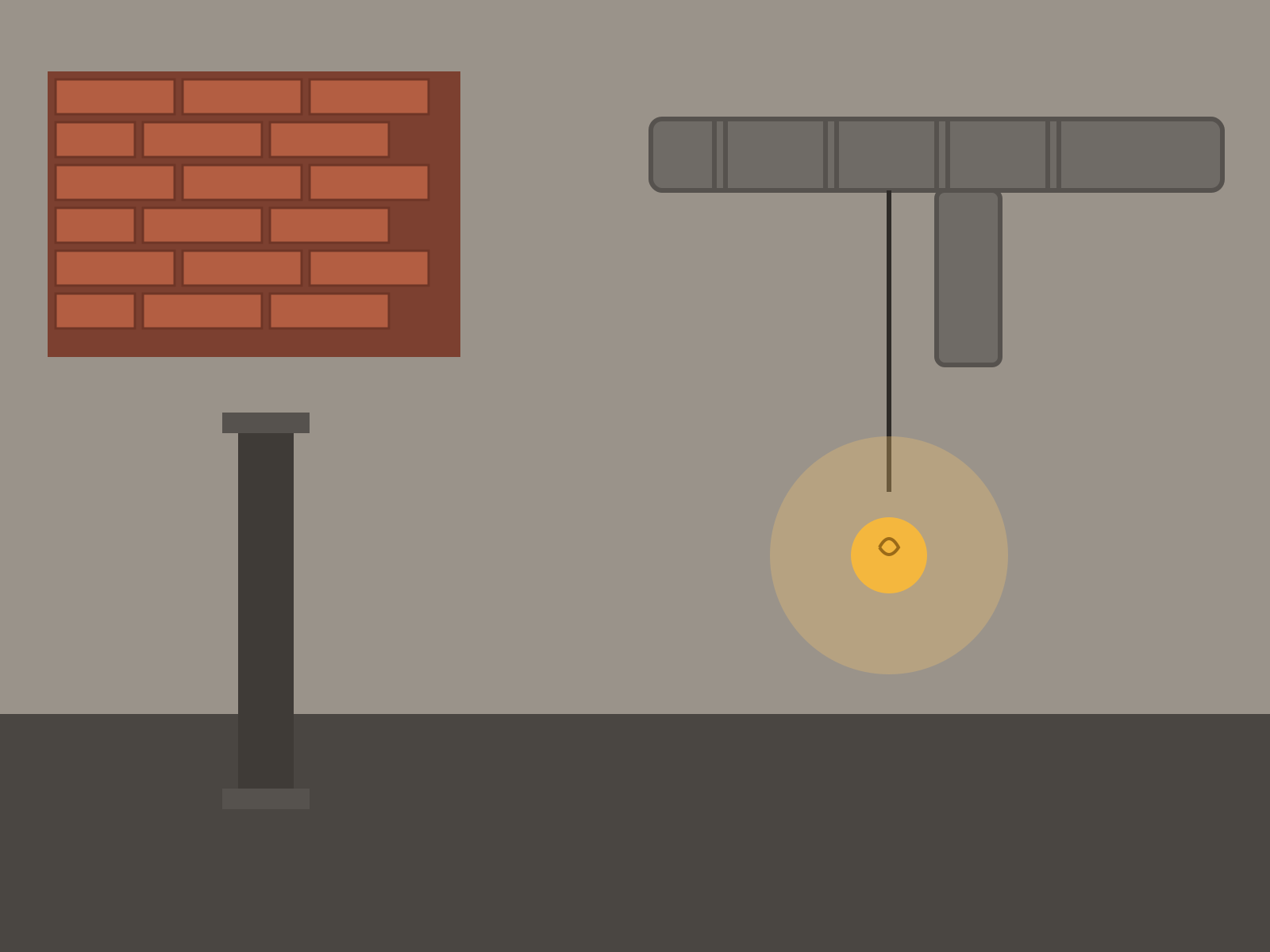
Original specimen, not a historical artifactOriginal specimen in the Industrial Loft style. Owned; source: Design Style Book (original).
Across disciplines
- Architecture: Brutalism
About the style
Industrial loft style grew out of the artist-led conversions of vacant factories and warehouses in cities like New York's SoHo from the 1960s onward, but it crystallised into a mainstream interior look during the 1990s real-estate and design boom. Rather than concealing a building's structure, it exposes it: weathered brick walls, riveted steel columns, overhead ductwork and pipes, and polished or sealed concrete floors are left visible and treated as the decoration. The palette is muted and material-driven — charcoal, rust, oxidised metal, raw timber, and the grey of concrete — softened with leather, vintage furniture, and Edison-bulb lighting. Open-plan volumes with tall ceilings and oversized factory windows give the look its airy, double-height drama. Culturally it fuses bohemian creative-class living with a nostalgia for manufacturing, and it remains a dominant template for apartments, cafes, breweries, and co-working spaces worldwide.
Notable examples
- ▸SoHo cast-iron loft conversions, New York (artist lofts from the 1960s–70s)
- ▸The Wythe Hotel, Brooklyn (former 1901 cooperage)
- ▸Soho House members' clubs (Shoreditch House, London)
Anatomy of Industrial Loft
The numbered markers call out the design elements that define this style. Hover or tap a marker to see its breakdown.
Original specimen, not a historical artifactOriginal specimen in the Industrial Loft style. Owned; source: Design Style Book (original).
An unplastered, often reclaimed brick wall is left raw as the room's main feature, signalling the building's industrial past.
HVAC ducts, conduit, and pipes run openly across the ceiling rather than being hidden behind drywall.
A polished or sealed concrete slab serves as the finished floor, durable and deliberately utilitarian.
Bare filament bulbs in metal cages or on pendant cords supply warm, deliberately vintage industrial light.
How Industrial Loft connects
Styles form a network, not a tree. Explore the direct neighbours below — click any to travel the map one hop at a time.
- Evolved from
- Influenced by
- Parallel / cross-current
Hover or tap a style to preview it.
Evolved from Brutalist Interior — both celebrate raw, unfinished structure as finish
Influenced by High-Tech Interior — shares the exposure of structure and services as aesthetic
Parallel / cross-current Brutalism — architectural raw-material honesty carried indoors
Brutalist Interior parallel / cross-current Industrial Loft — an allied raw-material, exposed-structure domestic idiom
High-Tech Interior influenced by Industrial Loft — shares the repurposed-industrial-fittings aesthetic
Describe it like this
Prompt-ready vocabulary for describing or re-creating the Industrial Loft look. Tap a word to collect it in Designdeas.
Get copy-ready Industrial Loft AI prompts →