1922–present · United States, Global
Cooper Black
An ultra-heavy soft-serif display face from 1922, all rounded bulges and softly blurred terminals, as if its letters were drawn with a fat marker. The cuddly heavyweight of countless logos and album covers.
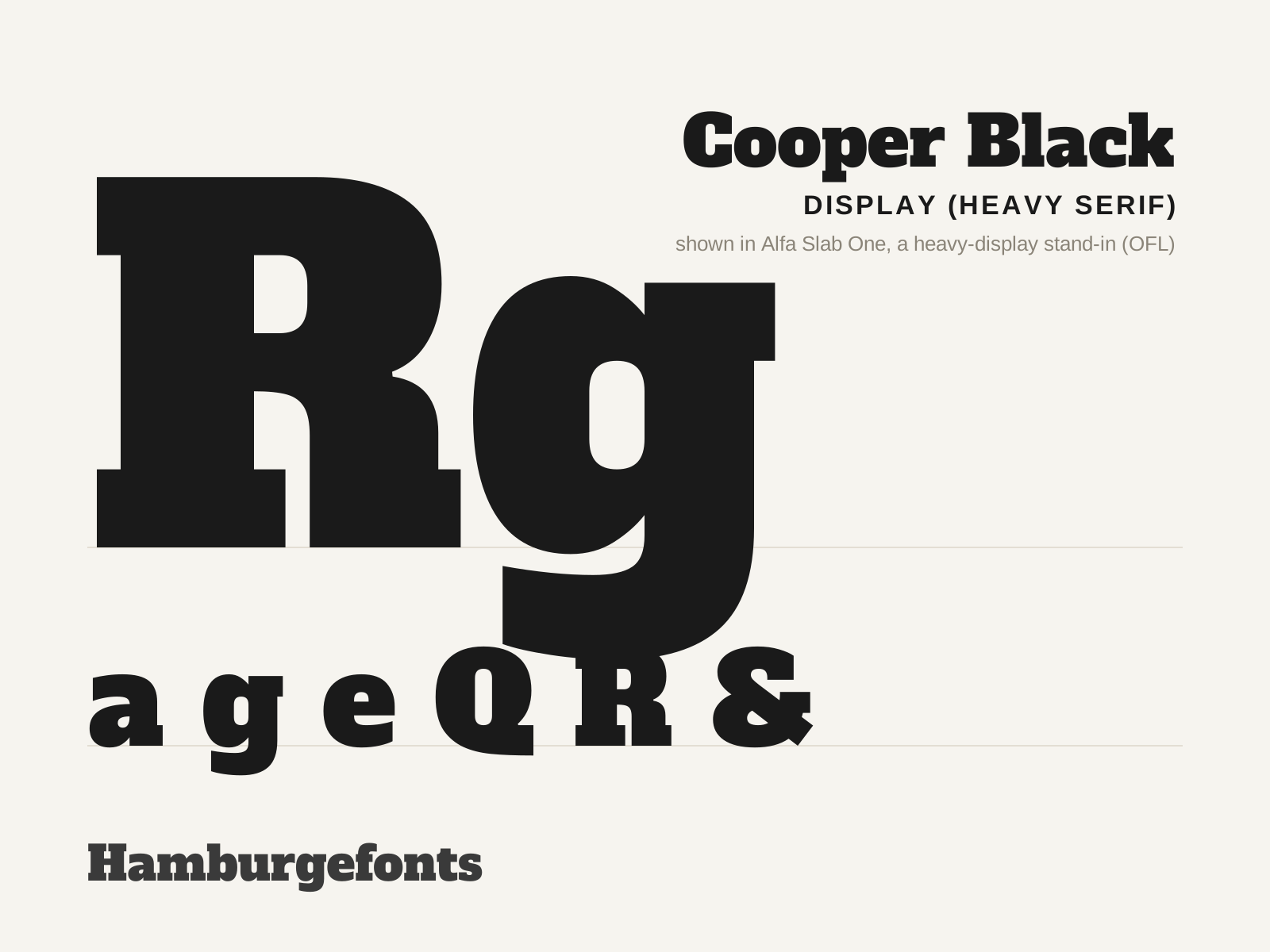
Original specimen, not a historical artifactType specimen — Cooper Black (Display (heavy serif)); shown in Alfa Slab One, a heavy-display stand-in (OFL). Owned; source: Design Style Book (original specimen).
About the style
Cooper Black is the extra-bold soft-serif display typeface designed by Oswald Bruce Cooper for the Barnhart Brothers & Spindler foundry in 1922, an exaggerated 'black' weight extension of his earlier Cooper Old Style. Its defining quality is softness: every stroke swells into rounded, pillowy forms, and its serifs are gentle bulges rather than sharp brackets, with terminals that appear slightly out of focus. The face favors generous, dark forms with small counters and rounded ball terminals, projecting warmth and friendliness despite its sheer heaviness. Hugely popular in advertising from the 1920s onward, it enjoyed a major revival in the 1960s and 1970s and has appeared on countless album covers, signs, and logos — from the Beach Boys' Pet Sounds to the Garfield comic lockup and Tootsie Roll branding. Cooper himself reputedly described it as designed 'for far-sighted printers with near-sighted customers,' a wink at its bold legibility.
Notable examples
- ▸Cooper Black (Oswald Bruce Cooper, 1922)
- ▸The Beach Boys, Pet Sounds album cover (1966)
- ▸Garfield comic strip logo lettering
Anatomy of Cooper Black
The numbered markers call out the design elements that define this style. Hover or tap a marker to see its breakdown.
Original specimen, not a historical artifactType specimen — Cooper Black (Display (heavy serif)); shown in Alfa Slab One, a heavy-display stand-in (OFL). Owned; source: Design Style Book (original specimen).
Cooper Black's capital R is enormously heavy with a softly rounded bowl and a curved, swelling leg. Its serifs melt into gentle bulges rather than crisp points.
The lowercase g is a chunky double-story form with tiny counters squeezed by the heavy strokes and a rounded ear. Everything reads soft and slightly blurred at the edges.
The lowercase a is a fat double-story shape whose small counter nearly closes under the weight of the strokes. Its terminals bulge softly, giving the warm, cuddly feel.
Cooper Black reads as warm, bold, and nostalgic — a go-to for logos, album covers, and signage wanting substantial, approachable character, near-useless for body text.
How Cooper Black connects
Styles form a network, not a tree. Explore the direct neighbours below — click any to travel the map one hop at a time.
- Evolved from
Hover or tap a style to preview it.
Evolved from Display — a soft-serif display heavyweight
Compare side by side
Describe it like this
Prompt-ready vocabulary for describing or re-creating the Cooper Black look. Tap a word to collect it in Designdeas.
Get copy-ready Cooper Black AI prompts →