c. 1810–present · England, United States, Global
Display
Also known as Decorative Type, Headline Type, Titling Type
The broad family of typefaces built for impact at large sizes — posters, headlines, logos — rather than readability in running text. Fat faces, slabs, condensed grotesques, and novelty designs all compete to grab the eye.
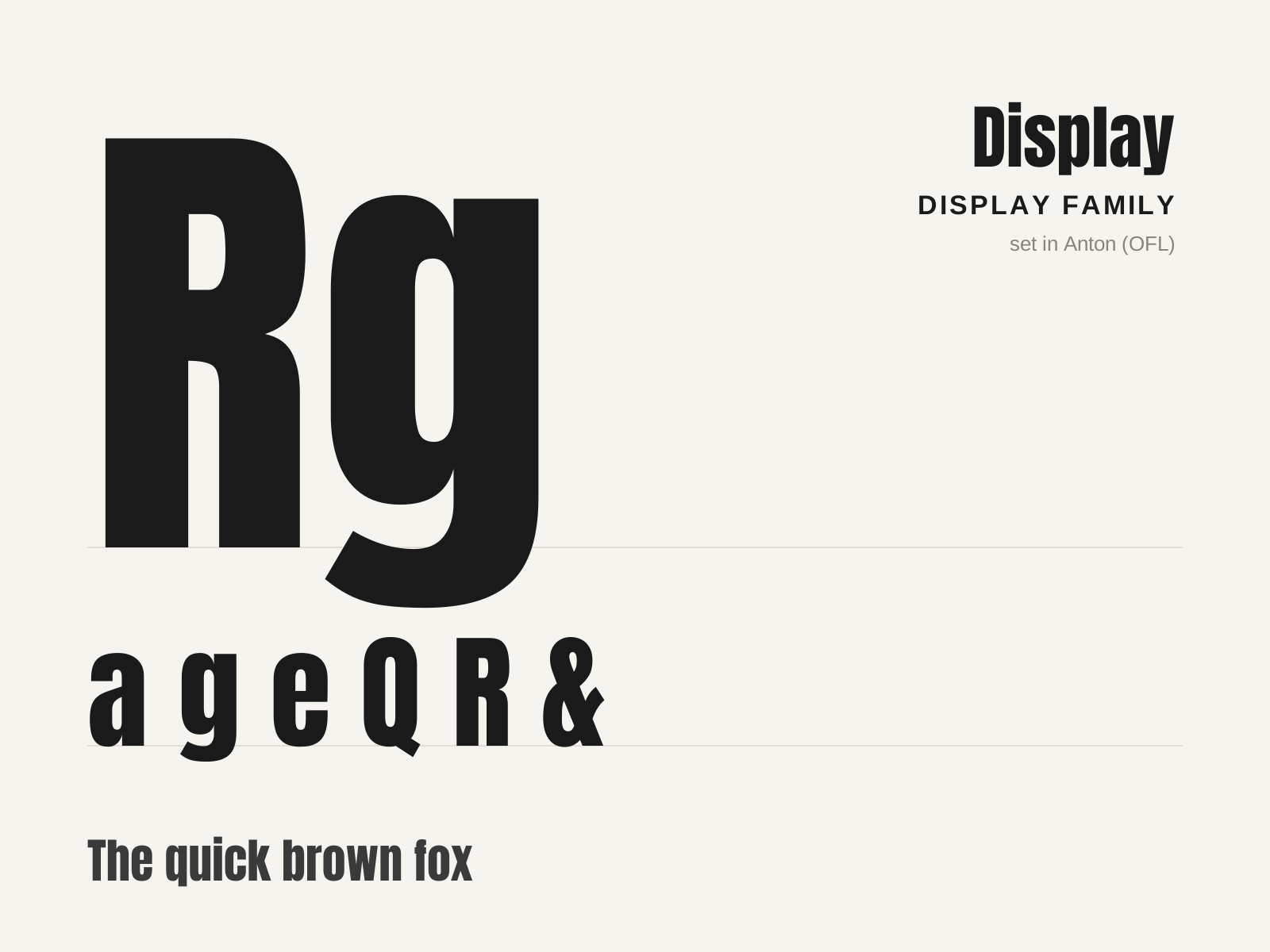
Original specimen, not a historical artifactType specimen — Display (Display family); set in Anton (OFL). Owned; source: Design Style Book (original specimen).
Across disciplines
- Graphic Design: Victorian Graphic Design
- Graphic Design: Wood-Type Poster
About the style
Display type is the classification for typefaces designed to attract attention at large sizes — on posters, packaging, headlines, and logos — where expressive impact matters more than the comfortable legibility demanded of body text. The genre exploded in early-nineteenth-century England with the rise of advertising, producing the first fat faces, bold slab serifs (Egyptians), and extreme condensed and expanded grotesques cut expressly to shout across a crowded street. Freed from the constraints of running text, display faces push weight, width, contrast, and ornament to extremes, and the category embraces everything from heavy soft serifs to brutal condensed sans, stencil, inline, shadowed, and outright novelty designs. Their defining job is presence: arresting silhouette, strong color on the page, and a distinctive personality that sets a tone in an instant. From Victorian wood type to modern variable headline fonts, the display family remains the most visually adventurous corner of typography.
Notable examples
- ▸Cooper Black (Oswald Bruce Cooper, 1922)
- ▸Impact (Geoffrey Lee, 1965)
- ▸Lobster (Pablo Impallari, 2010)
Anatomy of Display
The numbered markers call out the design elements that define this style. Hover or tap a marker to see its breakdown.
Original specimen, not a historical artifactType specimen — Display (Display family); set in Anton (OFL). Owned; source: Design Style Book (original specimen).
In display faces the capital R becomes a vehicle for personality — exaggerated leg, dramatic weight, or decorative treatment — engineered to read boldly at poster scale. Its silhouette carries the face's character.
The lowercase g is often the most idiosyncratic glyph in a display face, its bowl and loop pushed toward signature shapes. Display contexts reward this distinctiveness rather than penalizing it.
The lowercase a is drawn for impact, with heavy strokes or unusual proportions that stand out in a headline. Subtlety yields to presence at the large sizes display faces inhabit.
Display type is meant for headlines, posters, and logos, not paragraphs — its exaggerated forms grab attention in a word but would tire the eye across running text.
How Display connects
Styles form a network, not a tree. Explore the direct neighbours below — click any to travel the map one hop at a time.
- Evolved from
- Parallel / cross-current
Hover or tap a style to preview it.
Evolved from Didone (Modern) Serif — the fat-face and Egyptian display explosion of 19th-century advertising
Parallel / cross-current Victorian Graphic Design — the loud Victorian display voice
Wood-Type Poster parallel / cross-current Display — the wood-type display letterforms of the same 19th-century jobbing trade
Cooper Black evolved from Display — a soft-serif display heavyweight
Impact evolved from Display — a condensed display sans
Lobster evolved from Display
Comic Sans evolved from Display — a casual comic-lettering display sans
Peignot evolved from Display — an Art Deco display alphabet never meant for text
Describe it like this
Prompt-ready vocabulary for describing or re-creating the Display look. Tap a word to collect it in Designdeas.
Get copy-ready Display AI prompts →