1971–1979 · United States
Blaxploitation
Also known as Blaxploitation cinema, Black action cinema, 1970s Black exploitation film
An early-1970s cycle of Black-led American action films with gritty urban location shooting, warm naturalistic 70s color, funk-driven energy, bold fashion, and streetwise swagger.
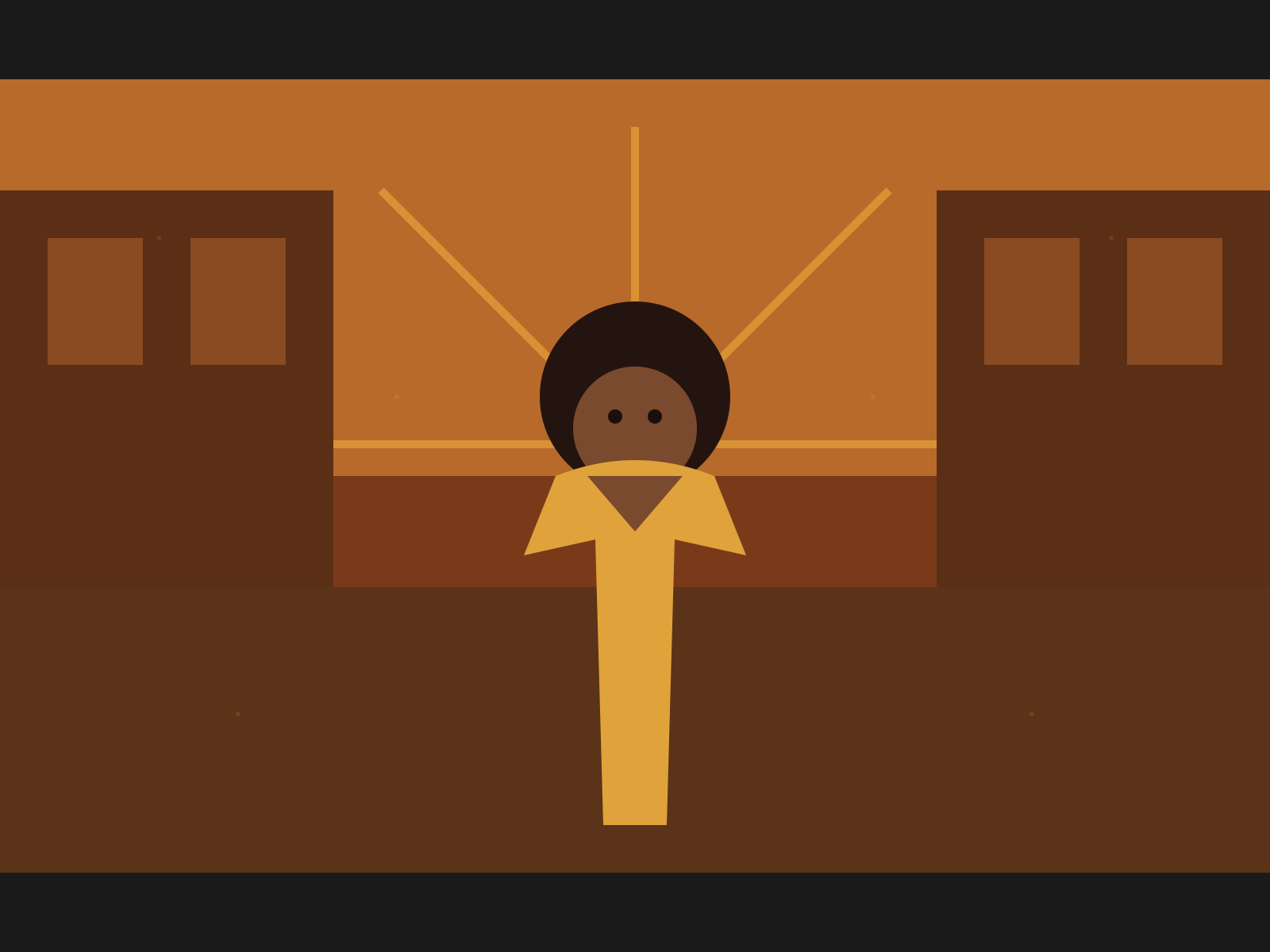
Original specimen, not a historical artifactOriginal specimen evoking the Blaxploitation look. Owned; source: Design Style Book (original).
Across disciplines
- Graphic Design: Psychedelic Poster Art
About the style
Blaxploitation is the cycle of low-budget, Black-led American films that boomed from 1971 to roughly 1979, beginning with Sweet Sweetback's Baadasssss Song and the hit Shaft. Marketed to Black urban audiences, these crime, action, and detective pictures put Black protagonists at the center as empowered heroes and antiheroes. Visually they carry the gritty New Hollywood grammar applied to the inner city: real location shooting on Harlem and Los Angeles streets, available and motivated light, fast grainy 1970s stock, and a warm, earthy, slightly muted period palette of browns, oranges, and golds. The energy is kinetic and streetwise—handheld pursuit, zoom punches, freeze frames—set to landmark funk and soul scores. Bold fashion is central to the look: wide collars, leather coats, platform shoes, and Afros styled with iconic flair. Often crude and controversial, the cycle nonetheless created a vivid, influential urban aesthetic of color, music, and cool.
Notable examples
- ▸Shaft (Gordon Parks, 1971)
- ▸Super Fly (Gordon Parks Jr., 1972)
- ▸Coffy (Jack Hill, 1973)
Anatomy of Blaxploitation
The numbered markers call out the design elements that define this style. Hover or tap a marker to see its breakdown.
Original specimen, not a historical artifactOriginal specimen evoking the Blaxploitation look. Owned; source: Design Style Book (original).
Action plays on actual 1970s inner-city blocks with real storefronts and crowds, grounding the film in gritty urban authenticity.
The palette leans into period browns, oranges, golds, and muted tones, the deglamorized warm look of 1970s film stock.
Wide collars, leather, platforms, and styled Afros are a defining visual element, costuming as statement of cool and identity.
Snap zoom-ins and visible film grain give the kinetic, low-budget energy that marks the cycle's streetwise camerawork.
How Blaxploitation connects
Styles form a network, not a tree. Explore the direct neighbours below — click any to travel the map one hop at a time.
- Evolved from
- Parallel / cross-current
Hover or tap a style to preview it.
Evolved from New Hollywood — applies 1970s location naturalism and grain to Black-led urban action
Parallel / cross-current Psychedelic Poster Art — shares the funk-era saturated graphic energy
Compare side by side
Describe it like this
Prompt-ready vocabulary for describing or re-creating the Blaxploitation look. Tap a word to collect it in Designdeas.
Get copy-ready Blaxploitation AI prompts →