c. 1966–1971 · United States
Psychedelic Poster Art
Also known as Acid Rock Posters, Fillmore Posters
The hallucinatory concert-poster style of 1960s San Francisco, built on vibrating complementary colors, melting hand-lettering you can barely read, and swirling Art Nouveau revival forms.
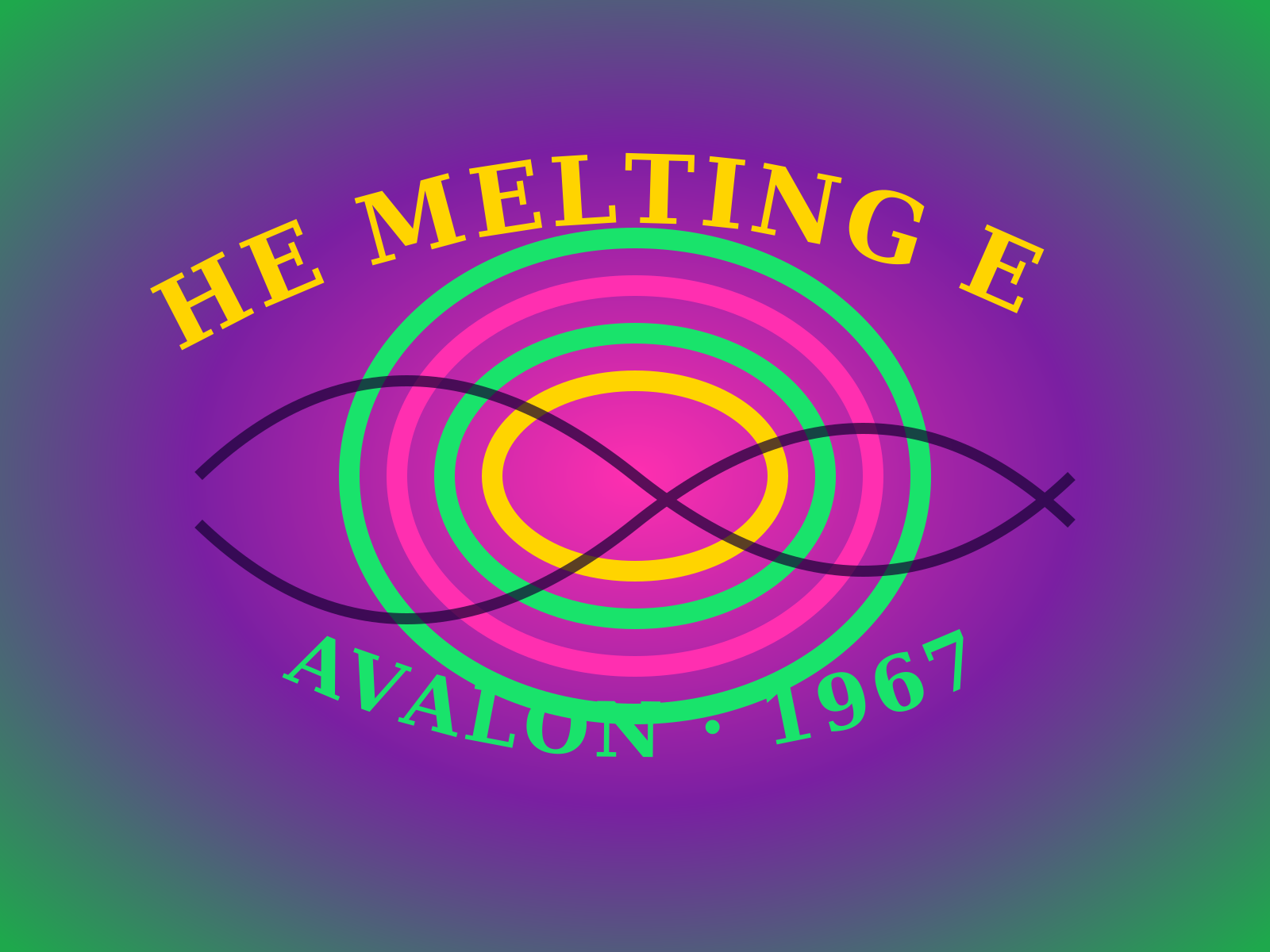
Original specimen, not a historical artifactOriginal specimen in the 1960s psychedelic poster style. Owned; source: Design Style Book (original).
Across disciplines
- Cinematography: Blaxploitation
- Cinematography: Giallo
About the style
Psychedelic poster art exploded out of San Francisco's Haight-Ashbury counterculture, advertising concerts at the Fillmore and Avalon ballrooms and visually translating the experience of LSD. Artists such as Wes Wilson, Victor Moscoso, Stanley Mouse, Alton Kelley, and Rick Griffin revived the sinuous curves of Art Nouveau and the lettering of Vienna Secession designer Alfred Roller, then pushed color to a deliberately disorienting extreme. Moscoso, trained under Josef Albers, knowingly placed intense complementary colors of equal value side by side so the edges seemed to vibrate and shimmer. Lettering became part of the image itself — stretched, melted, and bent to fill every contour so that reading the poster required effort and reward. The work was densely packed, often nearly illegible by design, prizing immersive sensation over instant communication, and it remains shorthand for the 1960s counterculture.
Notable examples
- ▸Wes Wilson — Fillmore Auditorium concert posters (1966–67)
- ▸Victor Moscoso — Neon Rose posters for the Matrix (1967)
- ▸Mouse & Kelley — Grateful Dead 'Skull and Roses' poster (1966)
Anatomy of Psychedelic Poster Art
The numbered markers call out the design elements that define this style. Hover or tap a marker to see its breakdown.
Original specimen, not a historical artifactOriginal specimen in the 1960s psychedelic poster style. Owned; source: Design Style Book (original).
Adjacent complementary colors of the same brightness make the boundary between them appear to shimmer and move.
Letterforms are stretched and warped to flow around shapes, prioritizing mood over easy legibility.
Flowing whiplash lines revive Art Nouveau, framing figures in organic, plantlike contours.
Every inch of the poster is filled, creating an immersive field with no resting white space.
How Psychedelic Poster Art connects
Styles form a network, not a tree. Explore the direct neighbours below — click any to travel the map one hop at a time.
- Evolved from
- Influenced by
- Reaction against
- Parallel / cross-current
Hover or tap a style to preview it.
Evolved from Art Nouveau (Graphic) — revived Art Nouveau's whiplash curves and integrated lettering, sixty years on
Influenced by Vienna Secession Graphics — borrowed Alfred Roller's squeezed, space-filling Secession lettering
Reaction against Swiss Style — rejected Swiss legibility and neutrality for immersive, subjective sensation
Japanese Postwar Graphic influenced by Psychedelic Poster Art
Cuban Revolutionary Poster influenced by Psychedelic Poster Art — absorbed psychedelic colour into revolutionary silkscreen
Rave Graphics influenced by Psychedelic Poster Art
Skate Graphics influenced by Psychedelic Poster Art
Graffiti Wildstyle influenced by Psychedelic Poster Art
Acid Graphics influenced by Psychedelic Poster Art
Blaxploitation parallel / cross-current Psychedelic Poster Art — shares the funk-era saturated graphic energy
Giallo parallel / cross-current Psychedelic Poster Art — saturated, unmotivated colour washes
Describe it like this
Prompt-ready vocabulary for describing or re-creating the Psychedelic Poster Art look. Tap a word to collect it in Designdeas.
Get copy-ready Psychedelic Poster Art AI prompts →