1967–1980 · United States
New Hollywood
Also known as American New Wave, Post-Classical Hollywood, Hollywood Renaissance
A late-1960s–70s American movement of auteur-driven films using naturalistic location shooting, available light, long lenses, and grainy realism to portray a darker, ambiguous America.
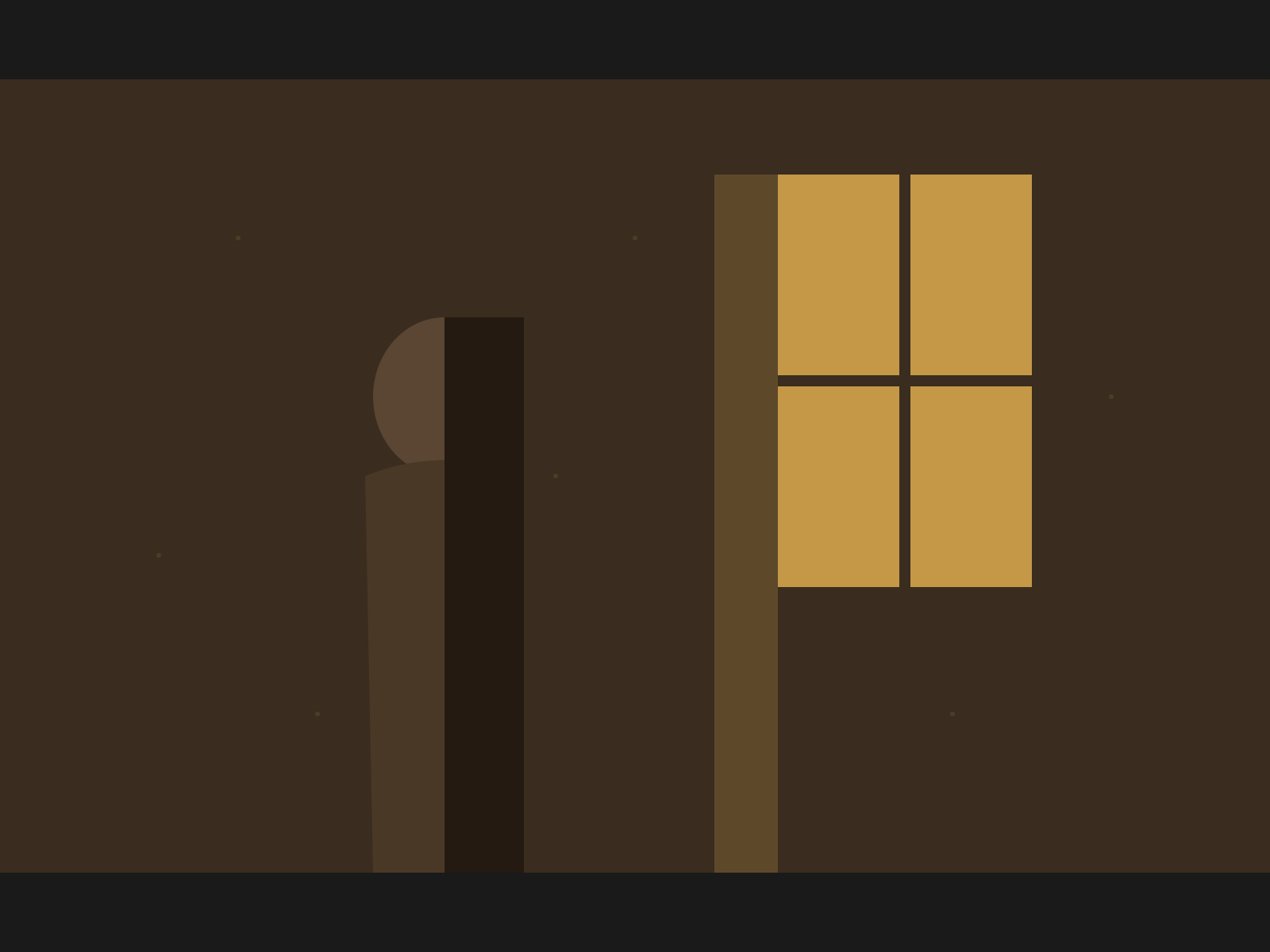
Original specimen, not a historical artifactOriginal specimen evoking the New Hollywood look. Owned; source: Design Style Book (original).
About the style
New Hollywood describes the auteur-driven American cinema of roughly 1967 to 1980, when a film-school generation—Coppola, Scorsese, Altman, Friedkin, and others—seized creative control as the studio system faltered. Influenced by European art cinema and emboldened by a loosened ratings code, they made morally ambiguous, character-led films with a new naturalism. Cinematographers like Gordon Willis and Vilmos Zsigmond favored location shooting, available and motivated light (including the deliberately underexposed 'Prince of Darkness' look of The Godfather), long telephoto lenses, zooms, and grainy, sometimes flashed film for a documentary muted palette. Handheld immediacy, deep ambivalent shadow, and earthy 1970s color replaced glossy classicism. The era produced Bonnie and Clyde, The Godfather, and Taxi Driver before the blockbuster economics of the late 1970s reasserted studio control and closed the window.
Notable examples
- ▸The Godfather (Francis Ford Coppola, 1972)
- ▸Taxi Driver (Martin Scorsese, 1976)
- ▸Chinatown (Roman Polanski, 1974)
Anatomy of New Hollywood
The numbered markers call out the design elements that define this style. Hover or tap a marker to see its breakdown.
Original specimen, not a historical artifactOriginal specimen evoking the New Hollywood look. Owned; source: Design Style Book (original).
Faces fall partly into shadow under low, motivated light, a deliberately dark look (Willis's 'Prince of Darkness') that breaks classical fill conventions.
Browns, ambers, and desaturated greens dominate, the period's deglamorized palette often achieved by flashing or pushing the stock.
A long lens compresses a busy street or room into stacked planes, giving an observational, eavesdropping documentary feel.
Fast or flashed stock leaves a gritty grain structure that signals realism and distances the image from glossy studio gloss.
How New Hollywood connects
Styles form a network, not a tree. Explore the direct neighbours below — click any to travel the map one hop at a time.
- Influenced by
- Evolved from
- Reaction against
- Parallel / cross-current
Hover or tap a style to preview it.
Influenced by French New Wave — borrowed handheld realism, jump cuts, and auteur control
Influenced by Italian Neorealism — location naturalism and unglamorous realism
A24 Arthouse influenced by New Hollywood — revives auteur-driven naturalism, location realism, and filmic grain
Blaxploitation evolved from New Hollywood — applies 1970s location naturalism and grain to Black-led urban action
Spaghetti Western reaction against New Hollywood — European antihero revisionism paralleling US genre subversion
Neo-Noir parallel / cross-current New Hollywood — 1970s naturalism reshaped early neo-noir like Chinatown
Describe it like this
Prompt-ready vocabulary for describing or re-creating the New Hollywood look. Tap a word to collect it in Designdeas.
Get copy-ready New Hollywood AI prompts →