1958–1968 · France
French New Wave
Also known as Nouvelle Vague, La Nouvelle Vague
A late-1950s French movement of young critic-directors who shot fast and cheap with lightweight cameras on real streets, embracing jump cuts, handheld energy, and self-aware play.
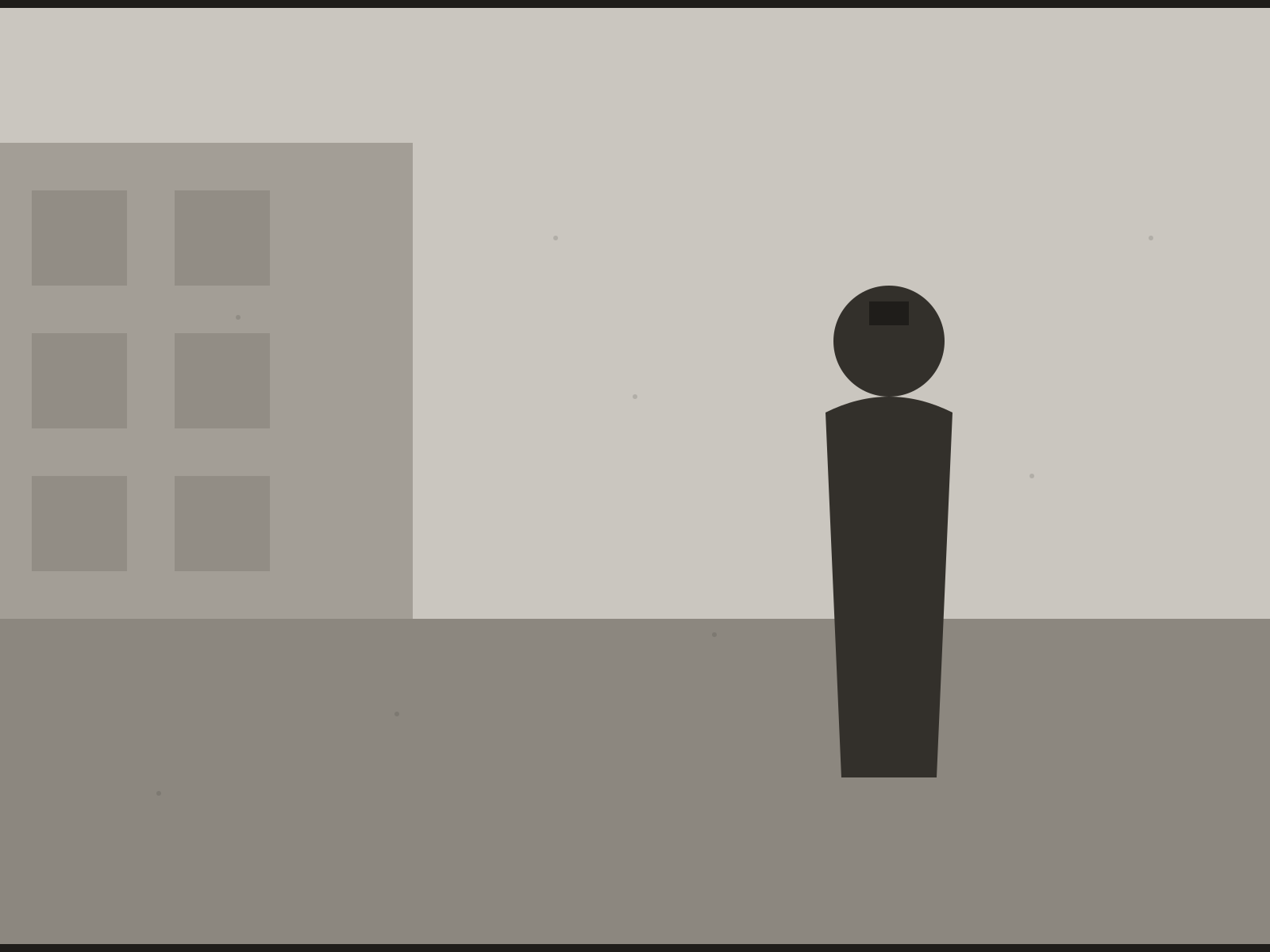
Original specimen, not a historical artifactOriginal specimen evoking the French New Wave look. Owned; source: Design Style Book (original).
About the style
The French New Wave broke out around 1958–1960 as Cahiers du Cinéma critics—Godard, Truffaut, Chabrol, Rivette, Rohmer—began directing on shoestring budgets. New lightweight 16mm and Nouvelle Vague-friendly cameras plus fast film freed them from the studio: they shot in real Paris apartments and streets, in natural light, with handheld mobility and improvisation. The style is restless and self-conscious—Godard's Breathless flaunted jarring jump cuts that broke continuity, direct address, and playful nods to Hollywood genre. Long location takes, available-light grain, and on-the-fly framing gave the films a documentary immediacy fused with essayistic freedom. Politically and formally radical, the movement championed the auteur and treated cinema as personal expression. Its first explosive phase faded by the late 1960s, but its grammar of the jump cut and handheld realism permanently reshaped world cinema.
Notable examples
- ▸Breathless (Jean-Luc Godard, 1960)
- ▸The 400 Blows (François Truffaut, 1959)
- ▸Cléo from 5 to 7 (Agnès Varda, 1962)
Anatomy of French New Wave
The numbered markers call out the design elements that define this style. Hover or tap a marker to see its breakdown.
Original specimen, not a historical artifactOriginal specimen evoking the French New Wave look. Owned; source: Design Style Book (original).
A continuous shot is chopped so the subject leaps position against a fixed background, flaunting the edit instead of hiding it.
The frame breathes and sways with a shoulder-held camera, trading classical stability for restless, present-tense energy.
Action plays out among actual pedestrians and traffic, captured run-and-gun with available light for documentary texture.
Casual, slightly off-center compositions and abrupt reframes signal improvisation and the director's visible, personal hand.
How French New Wave connects
Styles form a network, not a tree. Explore the direct neighbours below — click any to travel the map one hop at a time.
- Influenced by
- Reaction against
- Evolved from
Hover or tap a style to preview it.
Influenced by Italian Neorealism — adopted location shooting, natural light, and non-actors
Reaction against Technicolor Musical — repudiated polished studio classicism for handheld freedom
Mockumentary influenced by French New Wave — inherits the self-aware, lens-acknowledging playfulness
New Hollywood influenced by French New Wave — borrowed handheld realism, jump cuts, and auteur control
Dogme 95 evolved from French New Wave — radicalizes the handheld, location, natural-light ethic
Describe it like this
Prompt-ready vocabulary for describing or re-creating the French New Wave look. Tap a word to collect it in Designdeas.
Get copy-ready French New Wave AI prompts →