French New Wave vs New Hollywood
New Hollywood was influenced by French New Wave — borrowed handheld realism, jump cuts, and auteur control.

French New Wave
A late-1950s French movement of young critic-directors who shot fast and cheap with lightweight cameras on real streets, embracing jump cuts, handheld energy, and self-aware play.
- Handheld, mobile camerawork using lightweight cameras for location freedom
- Discontinuous jump cuts that deliberately break classical continuity
- Natural light and fast stock yielding a grainy, on-the-street immediacy
- Real Paris locations—cafés, apartments, boulevards—over studio sets
- Self-aware devices: direct address, freeze frames, genre quotation
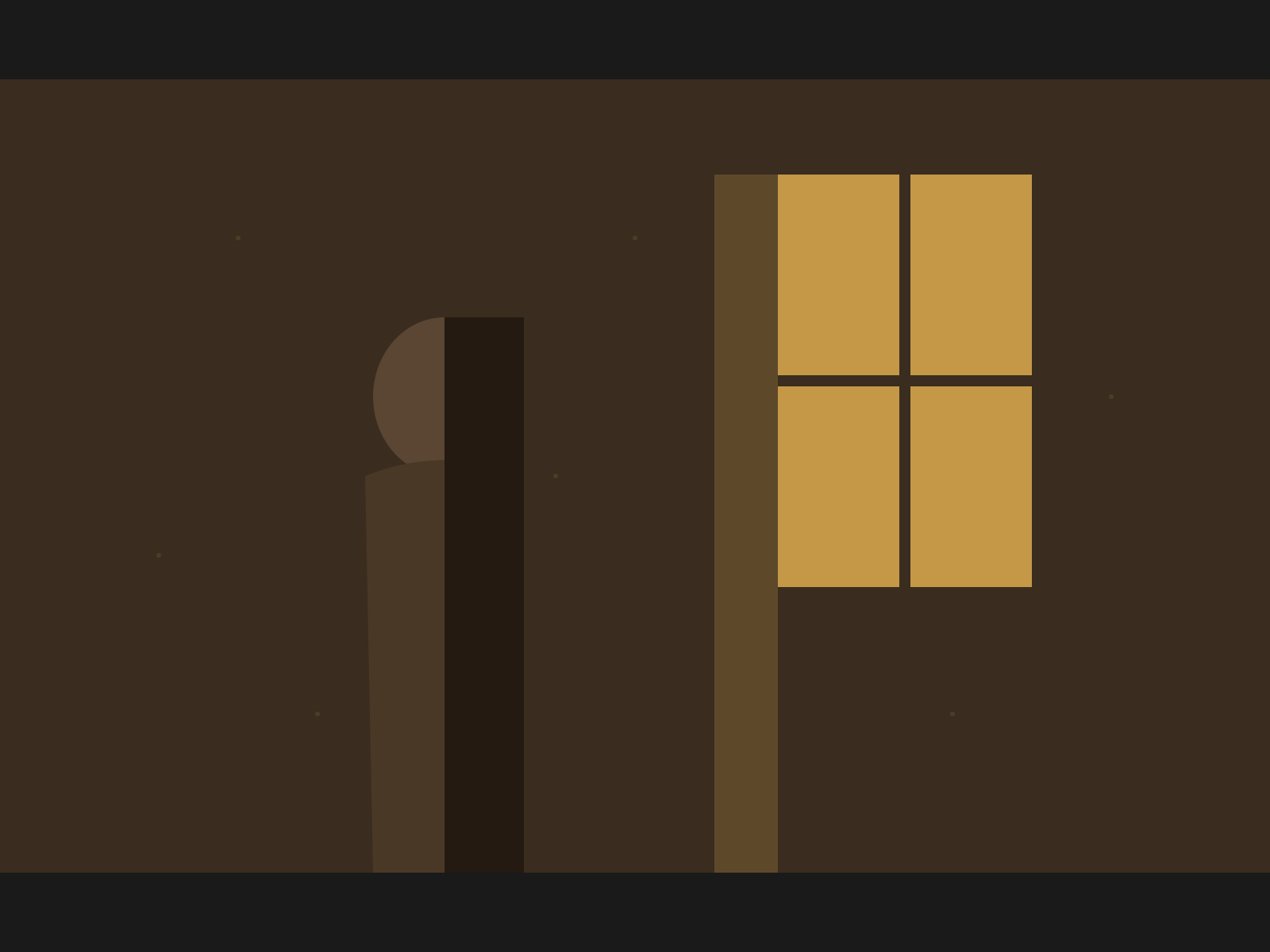
New Hollywood
A late-1960s–70s American movement of auteur-driven films using naturalistic location shooting, available light, long lenses, and grainy realism to portray a darker, ambiguous America.
- Naturalistic location shooting over studio polish
- Available and motivated light, including bold underexposed low-key interiors
- Long telephoto lenses and zooms compressing crowded, observational space
- Grainy, sometimes flashed film stock with a muted, earthy 1970s palette
- Handheld and documentary-style camerawork for ambiguous realism
At a glance
| French New Wave | New Hollywood | |
|---|---|---|
| Era | 1958–1968 | 1967–1980 |
| Discipline | Cinematography | Cinematography |
| Region | France | United States |
| Family | Modernist, New Wave | Modernist, New Wave |
| Formal traits | handheld, jump-cut, natural-light, location-shot | available-light, telephoto, muted-palette, handheld |
More comparisons
Advertisement