Brutalist Web Design vs Flat Design
Brutalist Web Design arose as a reaction against Flat Design — a revolt against the templated, drop-shadowed smoothness of mainstream UX.
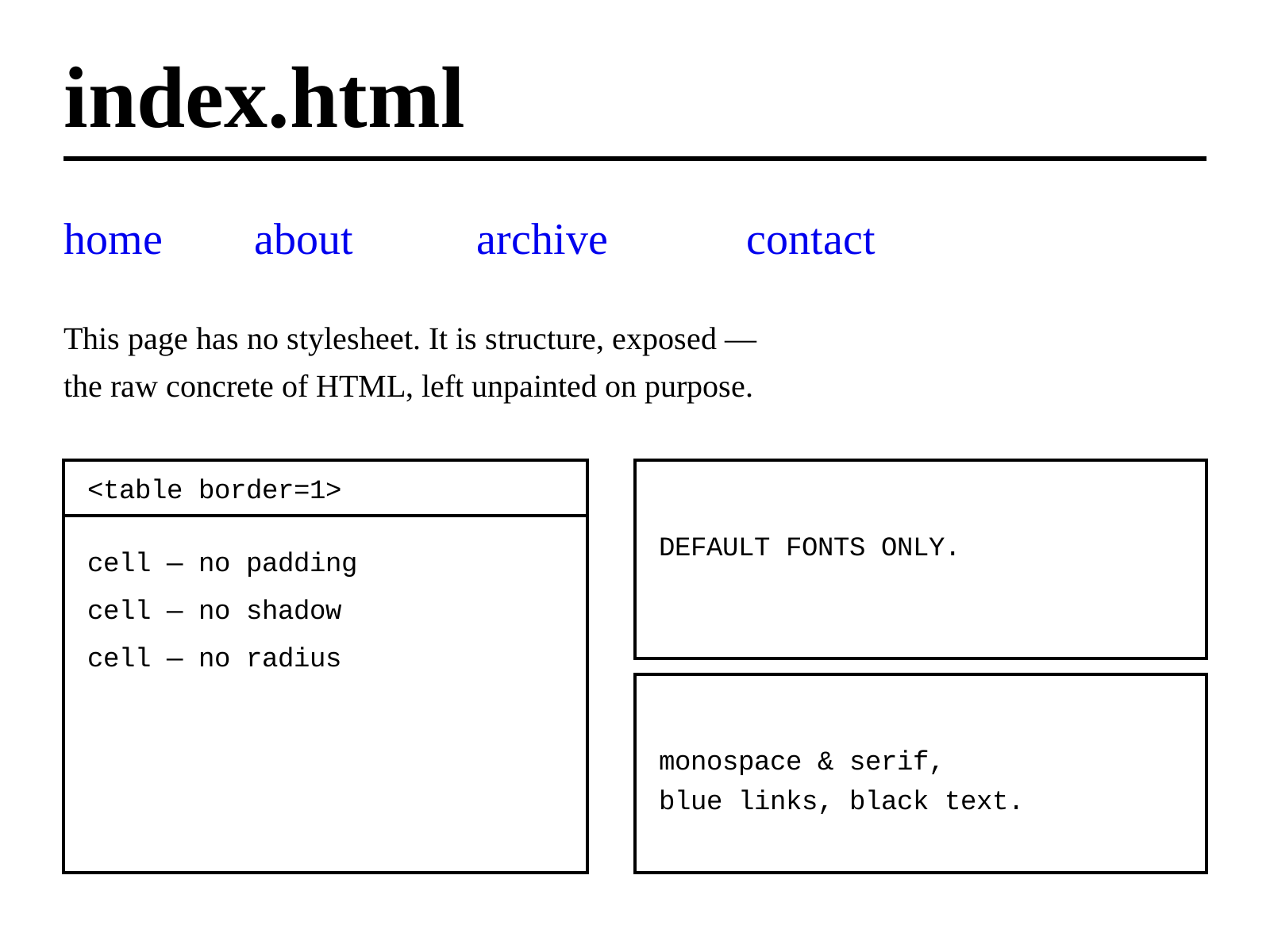
Brutalist Web Design
A web aesthetic that strips sites back to raw, unstyled HTML — default fonts, blue underlined links, naked structure — rejecting the polished sameness of mainstream UX design.
- Raw, unstyled HTML with exposed default browser styling
- System default fonts like Times New Roman and monospace
- Plain blue underlined hyperlinks and stark black-on-white text
- Visible borders, hard edges, and absent decorative polish
- Deliberately confrontational or anti-conventional layouts

Flat Design
The deliberately two-dimensional interface style that stripped away skeuomorphic shadows, gradients, and textures in favor of solid color, crisp icons, and clean typography.
- Solid, unshaded blocks of color with no gradients
- Removal of drop shadows, bevels, and skeuomorphic texture
- Simple geometric icons reduced to essential forms
- Clean sans-serif typography and generous whitespace
- Bright, often pastel or saturated flat color palettes
At a glance
| Brutalist Web Design | Flat Design | |
|---|---|---|
| Era | c. 2014–present | c. 2010–2017 |
| Discipline | Graphic Design | Graphic Design |
| Region | Internet, Global | Global |
| Family | Digital, Postmodern | Digital, Corporate Modern |
| Formal traits | raw-html, monospace, default-styling, anti-design | flat-color, minimal, sans-serif, iconographic |
More comparisons
Advertisement