Flat Design vs Swiss Style
Flat Design was influenced by Swiss Style — revived the Swiss grid, sans-serif type, and minimalism for the screen.

Flat Design
The deliberately two-dimensional interface style that stripped away skeuomorphic shadows, gradients, and textures in favor of solid color, crisp icons, and clean typography.
- Solid, unshaded blocks of color with no gradients
- Removal of drop shadows, bevels, and skeuomorphic texture
- Simple geometric icons reduced to essential forms
- Clean sans-serif typography and generous whitespace
- Bright, often pastel or saturated flat color palettes
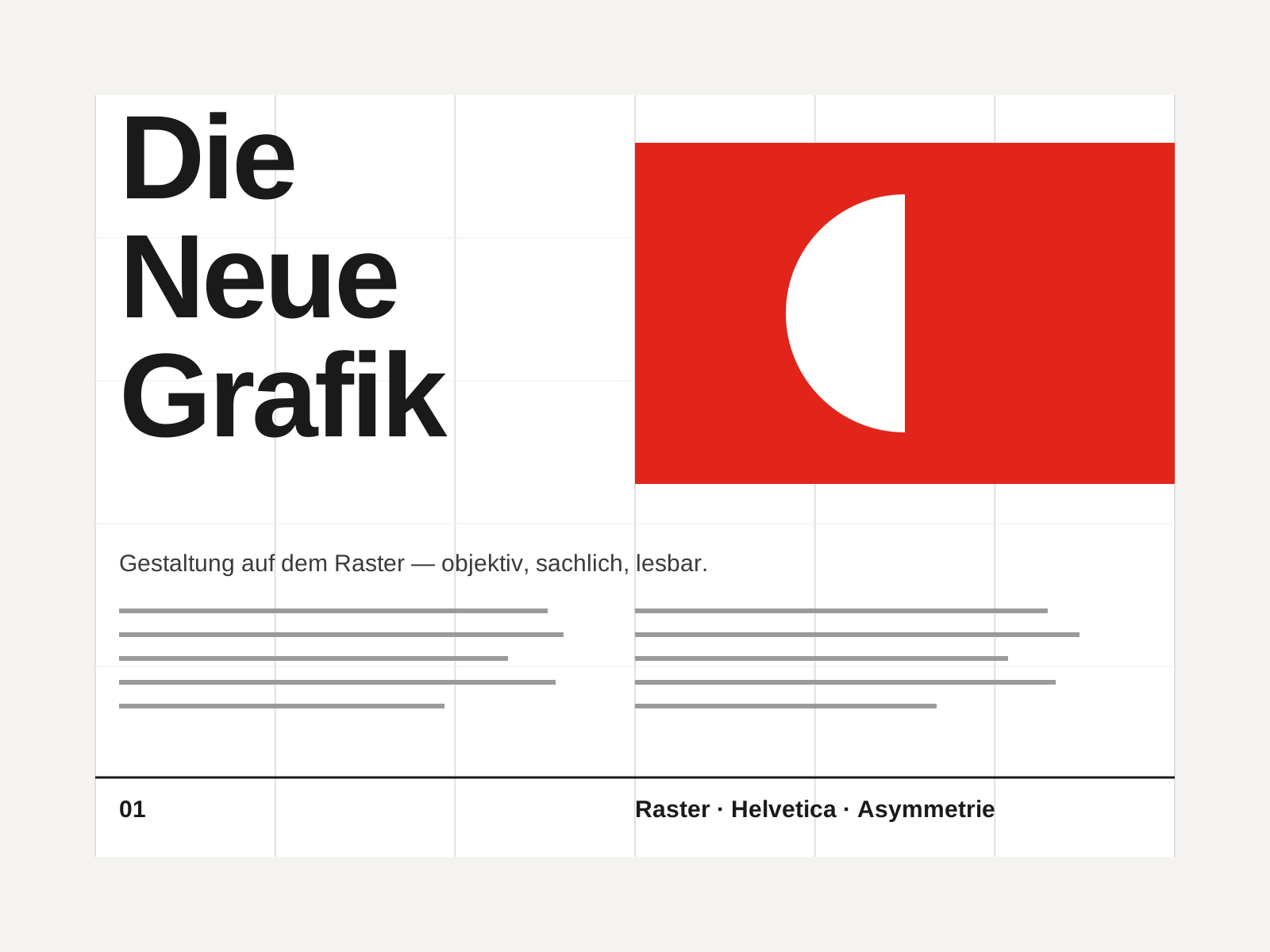
Swiss Style
The mid-century gospel of objective design — mathematical grids, flush-left ragged-right sans-serif type (Helvetica, Akzidenz-Grotesk), generous white space, and photography in place of illustration.
- Mathematical modular grid underlying every element
- Neo-grotesque sans-serif type (Helvetica, Akzidenz-Grotesk)
- Flush-left, ragged-right text setting
- Asymmetric layout balanced by generous white space
- Objective photography instead of illustration
At a glance
| Flat Design | Swiss Style | |
|---|---|---|
| Era | c. 2010–2017 | 1950s–1970s |
| Discipline | Graphic Design | Graphic Design |
| Region | Global | Switzerland, Germany, International |
| Family | Digital, Corporate Modern | Modernist, International |
| Formal traits | flat-color, minimal, sans-serif, iconographic | grid-based, sans-serif, asymmetric, minimal |
More comparisons
Advertisement