Heraldry vs Illuminated Manuscript
Heraldry was influenced by Illuminated Manuscript — shares the medieval illuminator's flat colour and emblematic clarity.
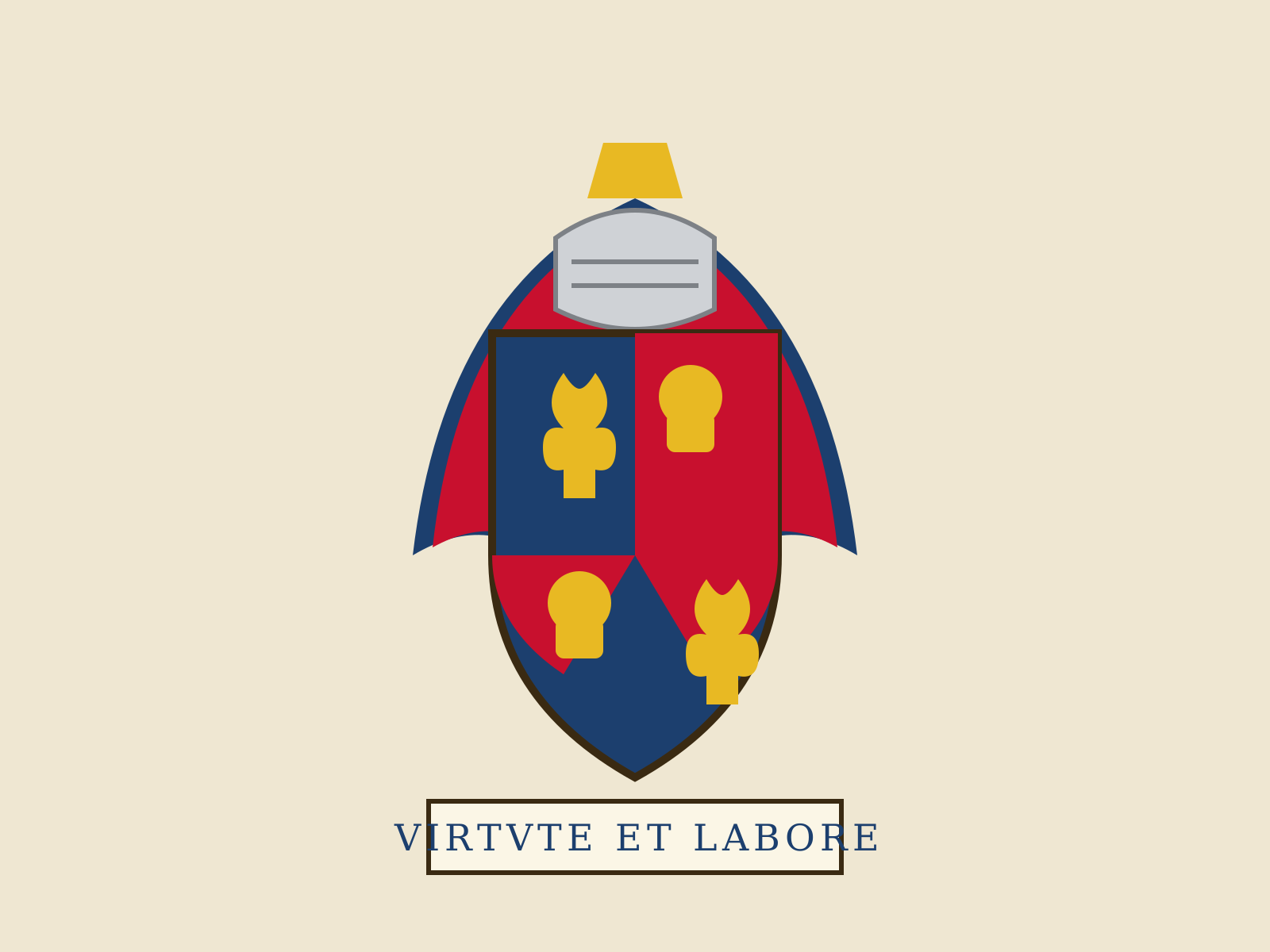
Heraldry
A rigorous medieval system of identity-by-emblem, in which shields are divided and charged according to strict rules and described in a specialized verbal language called blazon. It is design as grammar: a finite vocabulary of tinctures and charges combined into endless unique marks.
- Limited tincture palette of metals and colors
- Rule of tincture forbidding color-on-color
- Stylized charges (lions, eagles, fleurs-de-lis)
- Geometric field divisions and ordinaries
- Verbal blazon that fully specifies each design

Illuminated Manuscript
Hand-written medieval books in which the text is enriched with burnished gold leaf, jewel-toned miniatures, and inhabited initials. Every page is a labor of monastic or workshop craft, where word and image are bound into a single luminous object.
- Burnished gold leaf over raised gesso grounds
- Historiated and decorated initials opening sections
- Jewel-toned mineral pigments (lapis ultramarine, vermilion)
- Miniature narrative paintings set within ruled text blocks
- Marginalia of vines, grotesques, and drôleries
At a glance
| Heraldry | Illuminated Manuscript | |
|---|---|---|
| Era | c. 1150–present | c. 800–1500 |
| Discipline | Graphic Design | Graphic Design |
| Region | Western Europe, British Isles | Western Europe, British Isles, Byzantium |
| Family | Pre-modern, Symbolic | Pre-modern, Manuscript |
| Formal traits | flat-color, emblematic, ornamental, high-contrast | gold-leaf, hand-lettered, ornamental, illustrated-initial |
More comparisons
Advertisement