c. 1150–present · Western Europe, British Isles
Heraldry
Also known as Armory, Coats of Arms
A rigorous medieval system of identity-by-emblem, in which shields are divided and charged according to strict rules and described in a specialized verbal language called blazon. It is design as grammar: a finite vocabulary of tinctures and charges combined into endless unique marks.
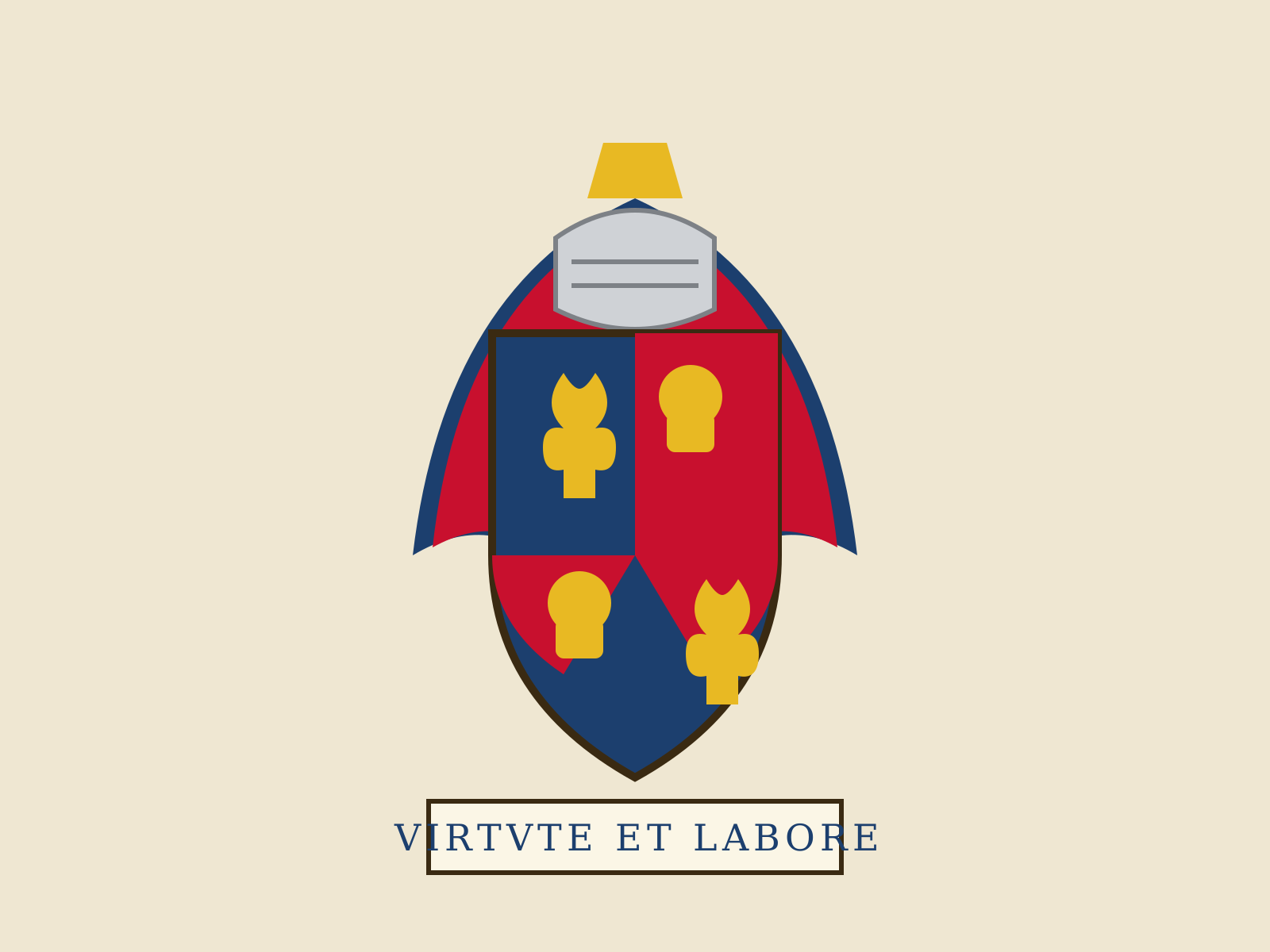
Original specimen, not a historical artifactOriginal specimen in the Heraldry style. Owned; source: Design Style Book (original).
Across disciplines
- Architecture: Gothic Architecture
About the style
Heraldry emerged in 12th-century Europe from the practical need to identify armored knights in battle and tournament, quickly hardening into a hereditary system regulated by heralds. Its core is a constrained design language: a small palette of tinctures (the metals or and argent, the colors gules, azure, sable, vert, and purpure) and a repertoire of charges (lions, eagles, fleurs-de-lis, geometric ordinaries) arranged on a shield. The famous 'rule of tincture' forbids placing color on color or metal on metal, ensuring high contrast and legibility at a distance. Every coat of arms can be precisely specified in blazon, a terse Norman-French verbal formula from which any artist can reconstruct the design. Heraldry matters as the first systematic European visual-identity system, a direct ancestor of the modern logo, trademark, and brand mark.
Notable examples
- ▸Royal Arms of England — three gold lions passant guardant (established c. 1198)
- ▸Dering Roll (c. 1270–1280), earliest surviving English roll of arms
- ▸Konrad Grünenberg — Wappenbuch armorial (1483)
Anatomy of Heraldry
The numbered markers call out the design elements that define this style. Hover or tap a marker to see its breakdown.
Original specimen, not a historical artifactOriginal specimen in the Heraldry style. Owned; source: Design Style Book (original).
Charges and field obey the metal-on-color rule, so a gold lion sits on red or blue but never on another metal, guaranteeing contrast.
The lion is drawn in a fixed stylized attitude, reared on one hind leg with claws bared, a standardized pose rather than a naturalistic animal.
The shield is split by geometric lines (per pale, per fess, quarterly) into zones of contrasting tincture that organize the composition.
Beyond the shield, a crest, helm, mantling, and supporters build outward into the complete heraldic 'achievement' surrounding the central escutcheon.
How Heraldry connects
Styles form a network, not a tree. Explore the direct neighbours below — click any to travel the map one hop at a time.
- Influenced by
- Parallel / cross-current
Hover or tap a style to preview it.
Influenced by Illuminated Manuscript — shares the medieval illuminator's flat colour and emblematic clarity
Parallel / cross-current Gothic Architecture
Incunabula Printing influenced by Heraldry
Antique Cartography parallel / cross-current Heraldry
Describe it like this
Prompt-ready vocabulary for describing or re-creating the Heraldry look. Tap a word to collect it in Designdeas.
Get copy-ready Heraldry AI prompts →