1950s–1960s · United States
Blue Note Jazz Album Art
Also known as Reid Miles Album Design, Mid-Century Jazz LP Covers
The cool, modern look of Blue Note jazz LP sleeves: duotone photographs, tightly cropped, set against bold sans-serif type and confident asymmetry. Restrained, sophisticated design that looked as modern as the music sounded.
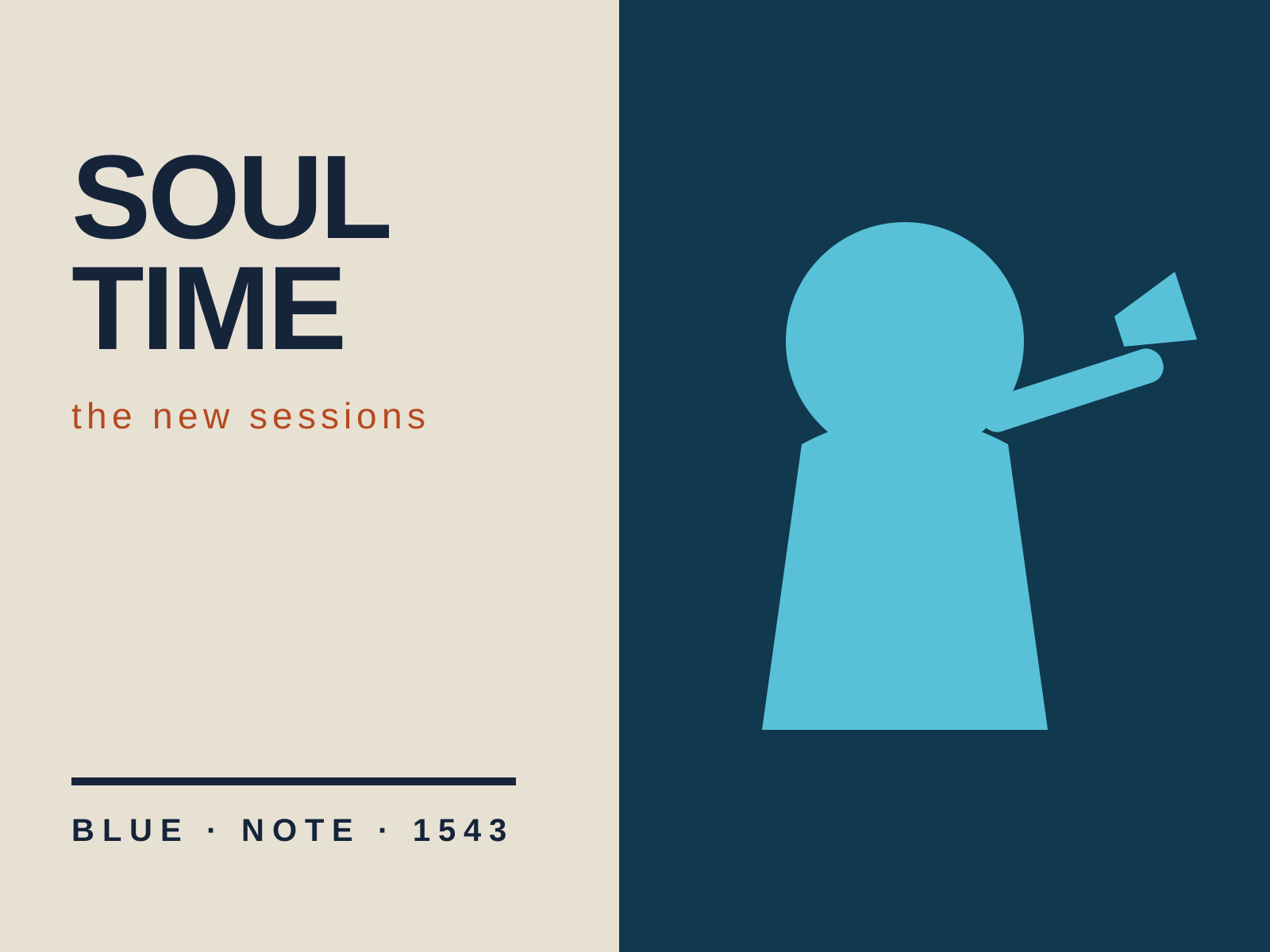
Original specimen, not a historical artifactOriginal specimen in the Blue Note Jazz Album Art style. Owned; source: Design Style Book (original).
Across disciplines
- Architecture: Mid-Century Modern
About the style
Blue Note Records' album covers, art-directed largely by Reid Miles from the mid-1950s, defined the visual sophistication of modern jazz. Miles paired Francis Wolff's intimate studio photographs of musicians — often tinted as duotones or printed in a single accent color — with assertive sans-serif typography drawn from European modernism. Layouts exploited asymmetry, dramatic cropping, generous negative space, and inventive type treatments that echoed the rhythm of the music, sometimes letting words run, repeat, or bleed off the edge. The palette was disciplined, frequently restricted to two or three colors for both economy and cool effect. Spanning landmark sessions by artists like Sonny Rollins and Hank Mobley, the Blue Note look became a benchmark for album design and a lasting model of restrained, type-led mid-century graphics.
Notable examples
- ▸Reid Miles — Sonny Rollins, Newk's Time (1957)
- ▸Reid Miles — Hank Mobley, Soul Station (1960)
- ▸Reid Miles — Eric Dolphy, Out to Lunch! (1964)
Anatomy of Blue Note Jazz Album Art
The numbered markers call out the design elements that define this style. Hover or tap a marker to see its breakdown.
Original specimen, not a historical artifactOriginal specimen in the Blue Note Jazz Album Art style. Owned; source: Design Style Book (original).
An intimate studio portrait is printed in two tones or a single accent color, lending the cover cool, modern restraint.
Heavy modernist sans-serif lettering, often oversized, carries the artist and title with confident clarity.
Image and type are pushed off-center with generous empty space, creating dynamic, sophisticated balance.
Words are cropped, repeated, or run to the edge so the typography visually echoes the rhythm of the music.
How Blue Note Jazz Album Art connects
Styles form a network, not a tree. Explore the direct neighbours below — click any to travel the map one hop at a time.
- Evolved from
- Influenced by
- Parallel / cross-current
Hover or tap a style to preview it.
Evolved from Swiss Style — Swiss type discipline applied to the jazz LP sleeve
Influenced by Bauhaus Graphic Design
Influenced by Modernist Magazine Art Direction
Mid-Century Modern parallel / cross-current Blue Note Jazz Album Art — the same cool mid-century modernism in the house and on the LP sleeve
Describe it like this
Prompt-ready vocabulary for describing or re-creating the Blue Note Jazz Album Art look. Tap a word to collect it in Designdeas.
Get copy-ready Blue Note Jazz Album Art AI prompts →