1845 · England, London
Clarendon
Also known as Ionic, English slab serif
Robert Besley's 1845 bracketed slab serif — a sturdy, friendly 'Ionic' with curved brackets and ball terminals, designed to bold-face and emphasize text. The first registered typeface design.
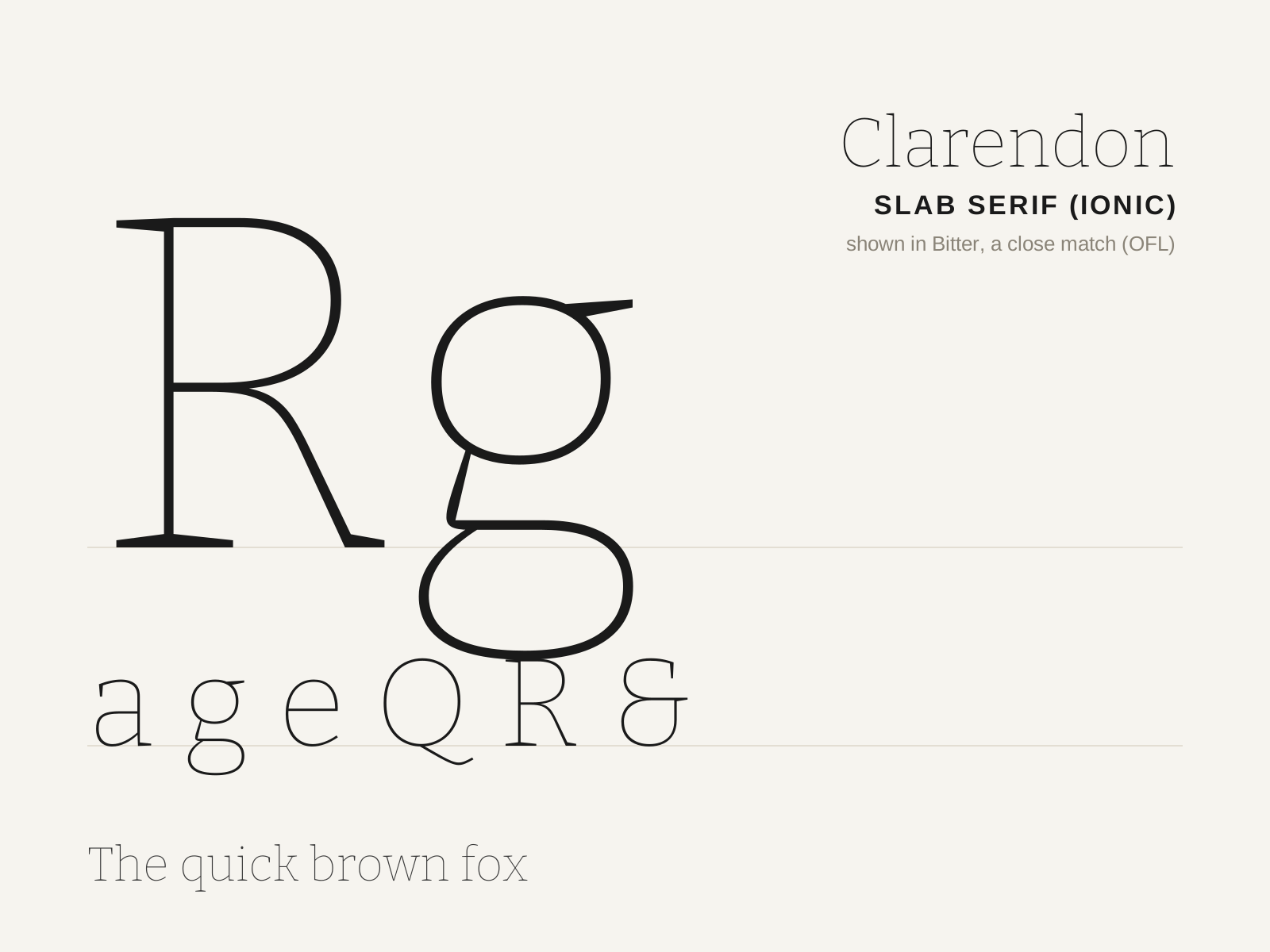
Original specimen, not a historical artifactType specimen — Clarendon (Slab serif (Ionic)); shown in Bitter, a close match (OFL). Owned; source: Design Style Book (original specimen).
About the style
Clarendon was designed by Robert Besley and cut by Benjamin Fox at London's Fann Street Foundry in 1845, the inaugural face of the bracketed-slab (Ionic) genre and famous as the first typeface protected by Britain's Ornamental Designs Act registration. Unlike the blunt, unbracketed Egyptians, Clarendon softens the slab with curved brackets joining serif to stem, giving it warmth and strength at once; it has heavy slab serifs, low contrast, a large x-height, ball terminals, and sturdy, even proportions. Besley conceived it expressly as a companion bold to emphasize words within roman text, and its robust legibility later made it ubiquitous on wanted posters, national-park signage, and packaging. Clarendon matters as the archetype of the bracketed slab — the sub-genre that married the Egyptian's strength to the serif's readability, and a perennial favorite for display and signage.
Notable examples
- ▸Robert Besley / Benjamin Fox — Clarendon (Fann Street Foundry, 1845)
- ▸First typeface registered under the UK Ornamental Designs Act (1845)
- ▸U.S. National Park Service signage (modern Clarendon usage)
Anatomy of Clarendon
The numbered markers call out the design elements that define this style. Hover or tap a marker to see its breakdown.
Original specimen, not a historical artifactType specimen — Clarendon (Slab serif (Ionic)); shown in Bitter, a close match (OFL). Owned; source: Design Style Book (original specimen).
Clarendon's capital R rests on heavy slab serifs joined by curved brackets, with a sturdy, slightly curved leg — strong but softened, not blunt.
The lowercase g is two-storey with heavy, sturdy strokes and a clear ear, its slab finishes gently bracketed.
The lowercase a is two-storey, broad, and sturdy with a ball terminal at the top and a generous x-height.
Running text reads dark, even, and robust — bracketed slabs give warmth as well as strength, ideal for emphasis, signage, and packaging.
How Clarendon connects
Styles form a network, not a tree. Explore the direct neighbours below — click any to travel the map one hop at a time.
- Evolved from
- Influenced by
Hover or tap a style to preview it.
Evolved from Slab Serif — the bracketed (Ionic) slab
Rockwell influenced by Clarendon
Compare side by side
Describe it like this
Prompt-ready vocabulary for describing or re-creating the Clarendon look. Tap a word to collect it in Designdeas.
Get copy-ready Clarendon AI prompts →