1810s–1840s · England, United States
Slab Serif
Also known as Egyptian, Mechanistic serif, Antique
Heavy, blocky serifs as thick as the stems, born for the bold demands of nineteenth-century advertising. Low contrast and squared-off, it shouts where the Didone whispers.
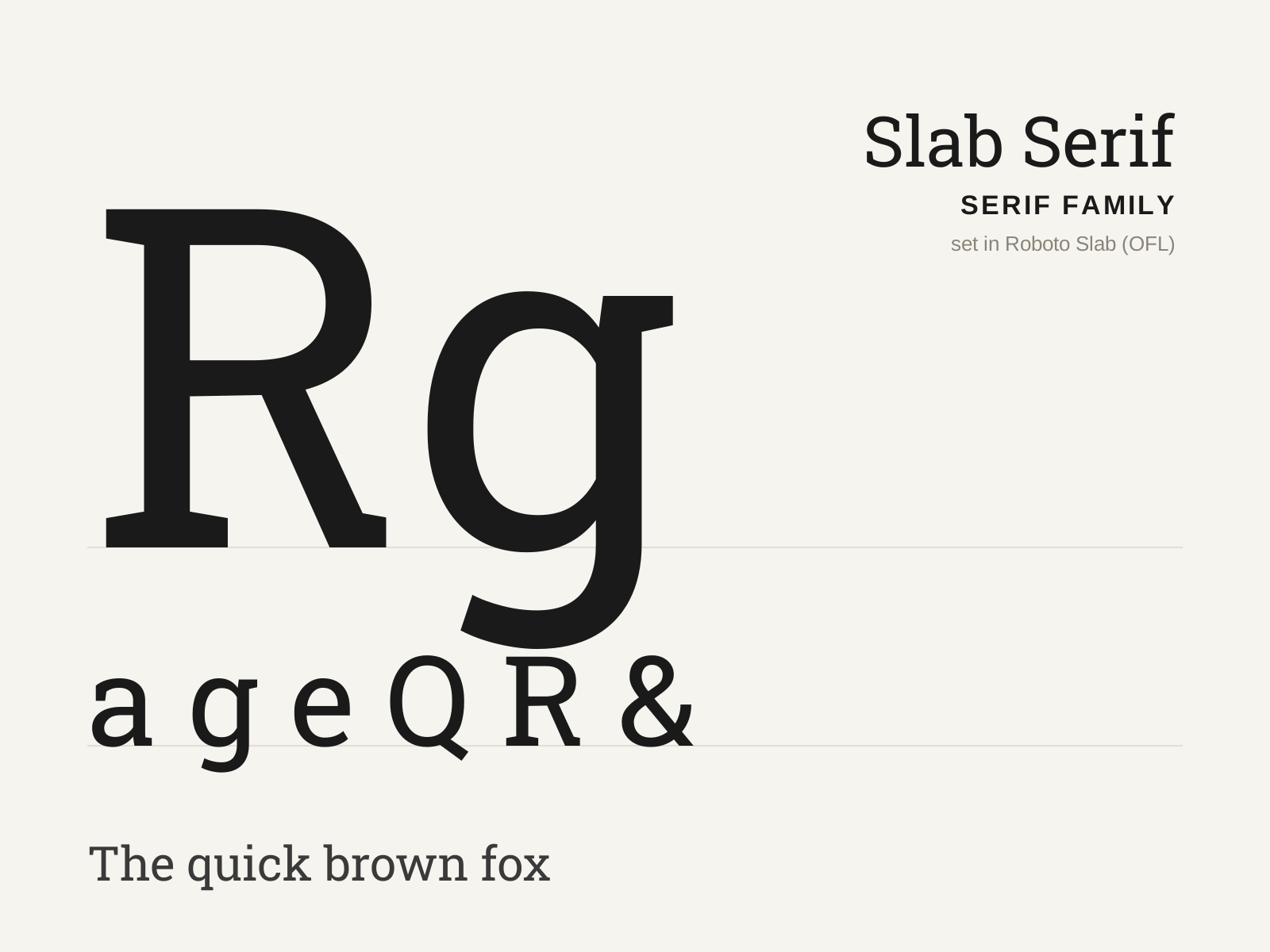
Original specimen, not a historical artifactType specimen — Slab Serif (Serif family); set in Roboto Slab (OFL). Owned; source: Design Style Book (original specimen).
About the style
Slab serifs — first marketed as 'Egyptians' or 'Antiques' amid Regency England's craze for all things Nilotic — appeared around 1817 as the Industrial Revolution created demand for type loud enough to sell goods on a poster. They are defined by thick, square-cut serifs roughly the same weight as the main strokes, low overall contrast, and a sturdy, mechanical evenness; sub-genres range from the bracketed, gently modulated Clarendons (Ionics) to the unbracketed, geometric monoline 'Egyptiennes' like Rockwell, to the wood-type Antiques of the American West. Where the Didone refined type into a hairline, the slab bulked it up into a blunt instrument for display and emphasis. The family matters as the first type genus conceived primarily for advertising and large-scale display, and it returned in the twentieth century as a workhorse for everything from typewriters to modern editorial and brand identities.
Notable examples
- ▸Vincent Figgins — Antique / Egyptian specimen (London, 1817)
- ▸Robert Besley — Clarendon (Fann Street Foundry, 1845)
- ▸Monotype — Rockwell (1934)
Anatomy of Slab Serif
The numbered markers call out the design elements that define this style. Hover or tap a marker to see its breakdown.
Original specimen, not a historical artifactType specimen — Slab Serif (Serif family); set in Roboto Slab (OFL). Owned; source: Design Style Book (original specimen).
The capital R carries thick, square-cut serifs as heavy as its stem, with a sturdy straight or gently curved leg — built for impact at large sizes.
The lowercase g is usually two-storey with heavy, blocky strokes and slab finials, though geometric slabs may run monoline and tightly drawn.
The lowercase a is two-storey, broad, and sturdy, its generous x-height giving the face a bold, even presence.
Running text reads dark and even with little contrast — strong and emphatic, originally for advertising and now for editorial and brand display.
How Slab Serif connects
Styles form a network, not a tree. Explore the direct neighbours below — click any to travel the map one hop at a time.
- Evolved from
- Influenced by
Hover or tap a style to preview it.
Evolved from Didone (Modern) Serif — the fattened, slab-serifed 'Egyptian' descendants of the modern face
Grotesque Sans-serif influenced by Slab Serif — the early sans read as an Egyptian slab stripped of its serifs
Monospace influenced by Slab Serif — Courier and kin pad narrow letters with slab serifs to fill the fixed cell
Clarendon evolved from Slab Serif — the bracketed (Ionic) slab
Rockwell evolved from Slab Serif — the geometric, unbracketed slab
Courier influenced by Slab Serif — a slab-serifed fixed-width design
American Typewriter evolved from Slab Serif — a proportionally-spaced slab serif evoking typewriter type
Describe it like this
Prompt-ready vocabulary for describing or re-creating the Slab Serif look. Tap a word to collect it in Designdeas.
Get copy-ready Slab Serif AI prompts →