c. 1513–present · Germany, Austria, German-speaking Europe
Fraktur
Also known as German Broken Script, Deutsche Schrift
The quintessential German blackletter, a broken script whose name comes from the Latin for 'fractured' — its curves literally broken into angular strokes. For four centuries it was simply how German was printed.
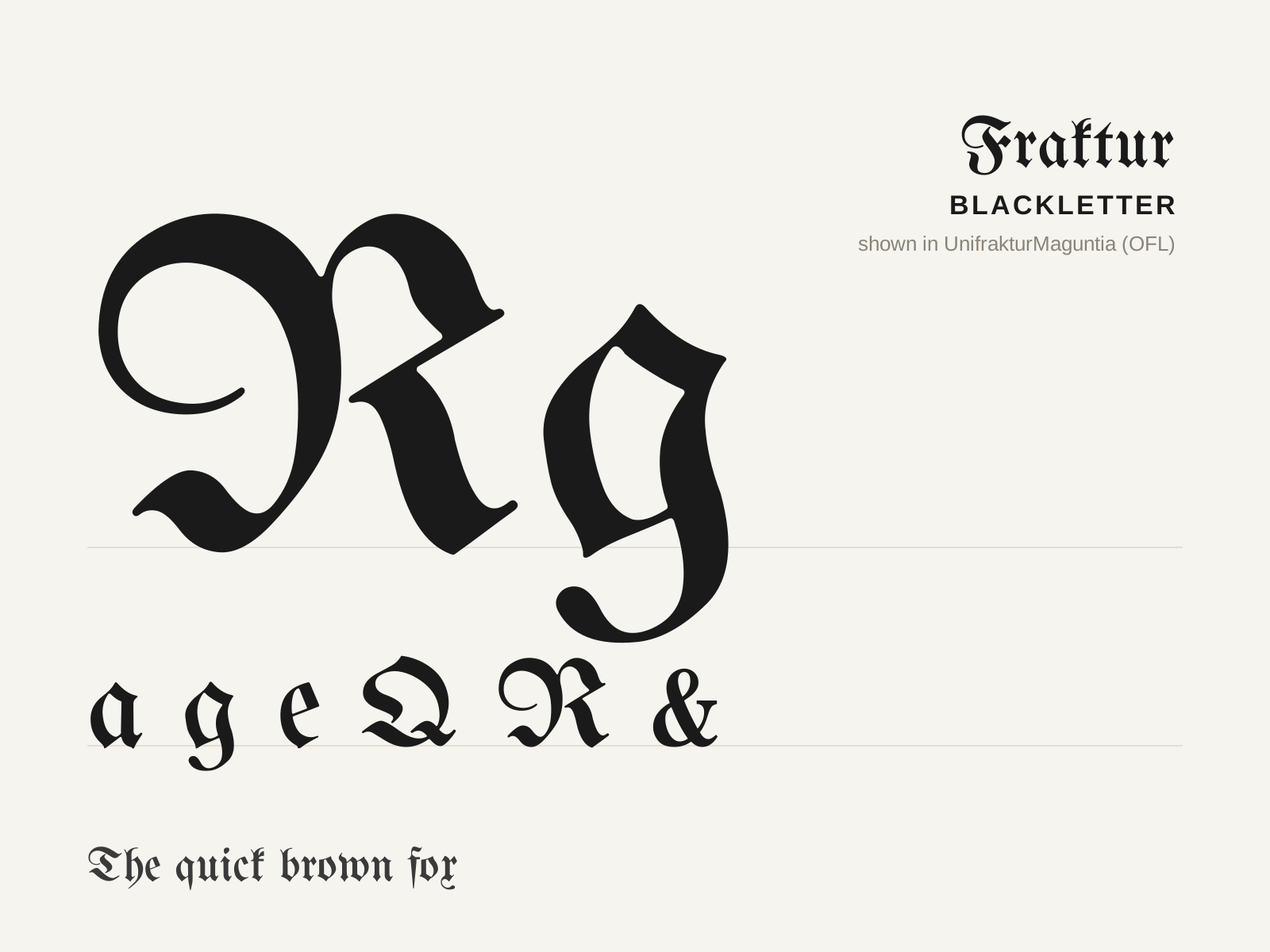
Original specimen, not a historical artifactType specimen — Fraktur (Blackletter); shown in UnifrakturMaguntia (OFL). Owned; source: Design Style Book (original specimen).
Across disciplines
- Architecture: Gothic Architecture
About the style
Fraktur is the specific blackletter form that became the standard print face of the German-speaking world from the early sixteenth century until the mid-twentieth, its name derived from the Latin frangere, to break, describing curves snapped into angular segments. The first fraktur types were cut around 1513–1517 for Emperor Maximilian I, designed by Hieronymus Andreae after the calligraphy of Leonhard Wagner, and the style quickly eclipsed schwabacher as Germany's dominant printing hand. Compared with rigid textura, fraktur is more fluid and decorative: its capitals sprout curved 'elephant-trunk' flourishes, and the lowercase mixes broken curves with the distinctive bulb-and-hairline strokes of the broad pen. It carried German letters, newspapers, and Bibles for over four hundred years, becoming so identified with national identity that a 1941 Nazi decree paradoxically banned it as a supposed 'un-German' script, hastening the switch to roman type. Today fraktur survives in mastheads, certificates, traditional signage, and beer labels, where its dense angularity still reads as emphatically, historically German.
Notable examples
- ▸Maximilian fraktur types (Hieronymus Andreae, c. 1513–17)
- ▸Luther Bible printings in fraktur (16th–19th c.)
- ▸Fette Fraktur (Johann Christian Bauer, 1850)
Anatomy of Fraktur
The numbered markers call out the design elements that define this style. Hover or tap a marker to see its breakdown.
Original specimen, not a historical artifactType specimen — Fraktur (Blackletter); shown in UnifrakturMaguntia (OFL). Owned; source: Design Style Book (original specimen).
The capital R carries a curling elephant-trunk stroke that sweeps off its top or bowl, a hallmark distinguishing fraktur capitals from rigid textura. The leg kicks out in a sharp angular flick.
The lowercase g breaks its bowls into faceted segments joined at hard corners, with a narrow closed lower loop. Bulbed terminals mark where the broad pen lifts.
The lowercase a fractures its single-story bowl into straight diagonal strokes meeting at angles. It sits tightly against neighbors in the characteristic dark fraktur color.
In running text fraktur reads dense and historical, long the default for German books and newspapers; now reserved for tradition-signaling mastheads, diplomas, and labels.
How Fraktur connects
Styles form a network, not a tree. Explore the direct neighbours below — click any to travel the map one hop at a time.
- Evolved from
- Parallel / cross-current
Hover or tap a style to preview it.
Evolved from Blackletter — the quintessential German blackletter
Parallel / cross-current Gothic Architecture
Compare side by side
Describe it like this
Prompt-ready vocabulary for describing or re-creating the Fraktur look. Tap a word to collect it in Designdeas.
Get copy-ready Fraktur AI prompts →