1530s–1540s · France, Paris
Garamond
Also known as Garalde, Garamont
Claude Garamond's sixteenth-century French old-style — the most refined Garalde of all and arguably the most enduring book type in the Latin alphabet. Pen-warm, even-colored, and effortlessly readable.
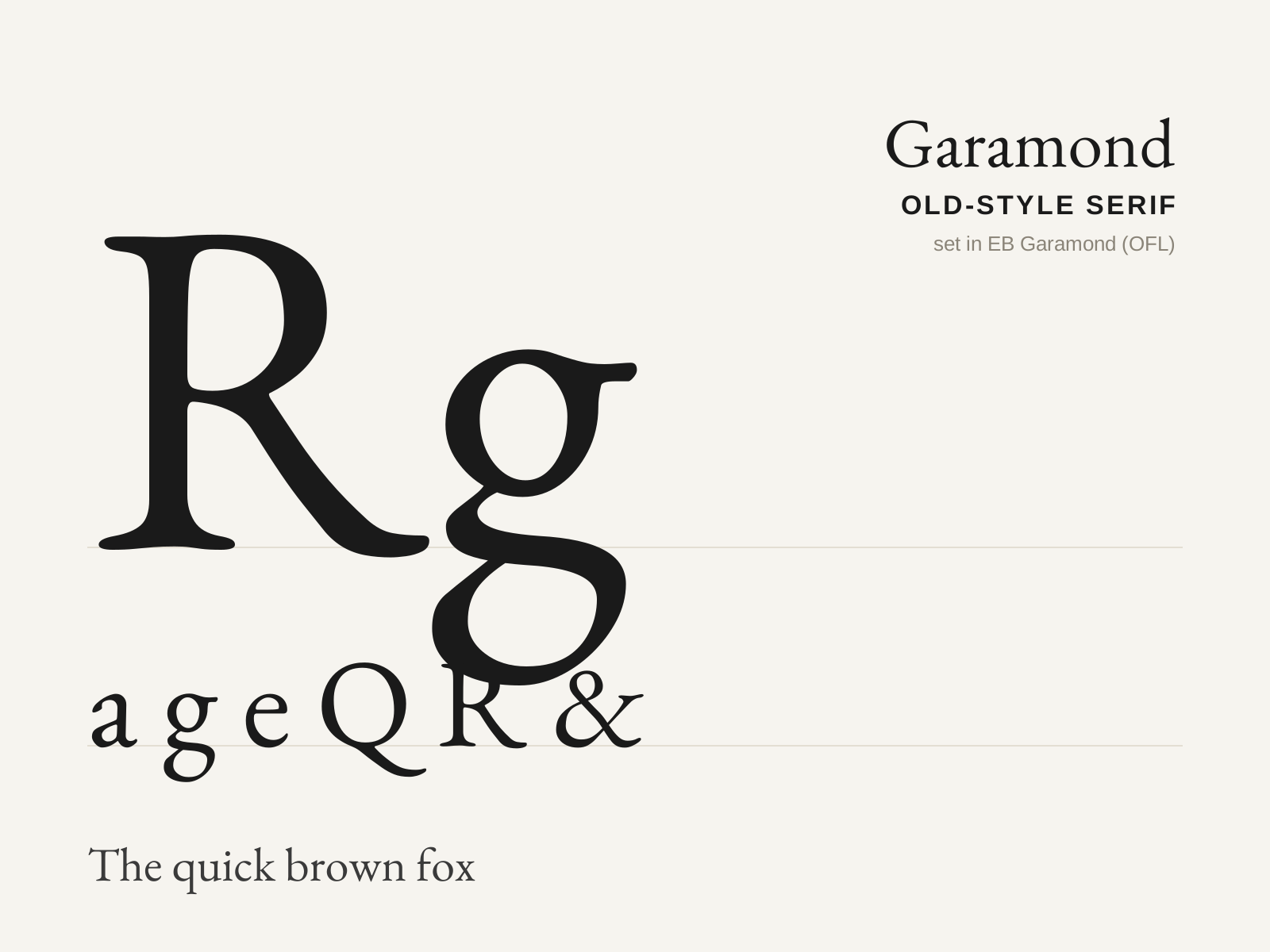
Original specimen, not a historical artifactType specimen — Garamond (Old-style serif); set in EB Garamond (OFL). Owned; source: Design Style Book (original specimen).
About the style
Cut in Paris in the 1530s and 1540s by Claude Garamond, the Garamond romans perfected the Aldine model of Griffo and Bembo into the definitive old-style, and gave the entire genre its name (Garalde = Garamond + Aldus). They are marked by a moderate, gently modulated contrast, an inclined stress descending from the broad-nib pen, beautifully bracketed serifs, small slanted serifs atop the ascenders, and a small but characterful eye in the lowercase 'e'. Their even, warm color and quiet legibility made them the European book standard for two centuries. A historical wrinkle complicates revivals: many 'Garamonds' (notably the American Type Founders version) actually derive from Jean Jannon's 1621 types, while truly Garamond-based revivals like Adobe Garamond and Sabon trace to Garamond's own punches. Garamond matters as the benchmark of readable serif text — the face every later book type is implicitly compared against.
Notable examples
- ▸Claude Garamond — French old-style romans (Paris, 1530s–1540s)
- ▸Robert Slimbach — Adobe Garamond (1989, from Garamond's punches)
- ▸Jan Tschichold — Sabon (1967, a Garamond-based revival)
Anatomy of Garamond
The numbered markers call out the design elements that define this style. Hover or tap a marker to see its breakdown.
Original specimen, not a historical artifactType specimen — Garamond (Old-style serif); set in EB Garamond (OFL). Owned; source: Design Style Book (original specimen).
Garamond's capital R has a small bowl and a long, gracefully splayed leg ending in a fine bracketed serif — refined and pen-rooted.
The lowercase g is two-storey with a neat upper bowl, an open lower loop, a slender link, and a distinctive small ear.
The lowercase a is two-storey with an open aperture and a small pen-formed terminal, sitting on the inclined humanist axis.
In running text Garamond's moderate contrast and generous spacing give a calm, warm, even color — the gold standard for long-form book typography.
How Garamond connects
Styles form a network, not a tree. Explore the direct neighbours below — click any to travel the map one hop at a time.
- Evolved from
- Influenced by
Hover or tap a style to preview it.
Evolved from Garalde (Old-style) — the defining old-style face
Influenced by Bembo — drew on the Aldine model
Sabon evolved from Garamond — a refined revival of Claude Garamond's sixteenth-century romans
Minion influenced by Garamond — draws on sixteenth-century French old-style models
Compare side by side
Describe it like this
Prompt-ready vocabulary for describing or re-creating the Garamond look. Tap a word to collect it in Designdeas.
Get copy-ready Garamond AI prompts →