1490s–1700s · Italy, France
Garalde (Old-style)
Also known as Old-style serif, Aldine
The classic old-style serif — humanist roots refined by Aldus Manutius and the French punchcutters, with moderate stroke contrast, bracketed serifs, and an inclined stress that recalls the broad-nib pen.
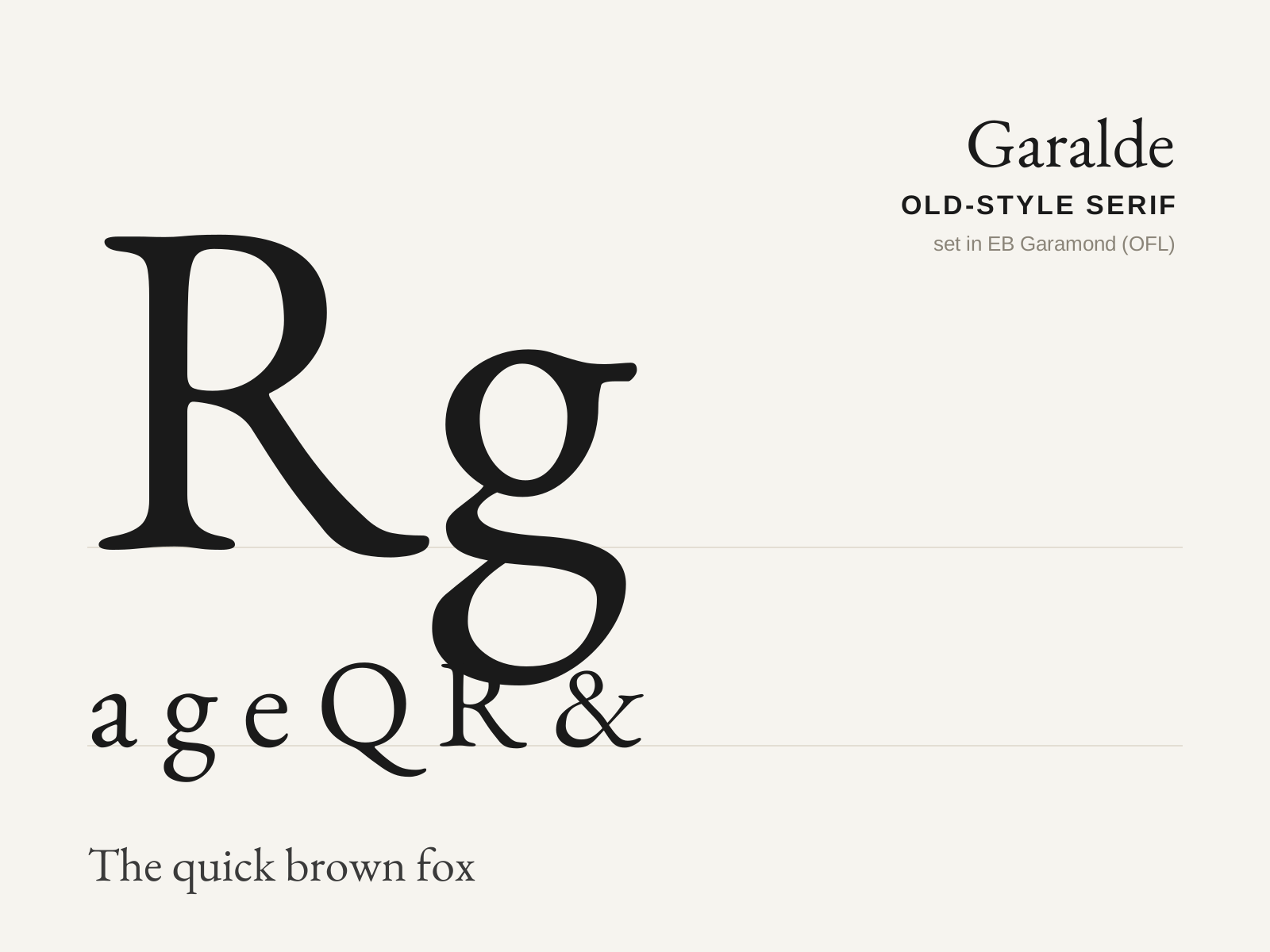
Original specimen, not a historical artifactType specimen — Garalde (Old-style) (Old-style serif); set in EB Garamond (OFL). Owned; source: Design Style Book (original specimen).
Across disciplines
- Graphic Design: Arts & Crafts Book Design
About the style
Garalde (a portmanteau of Garamond and Aldus) names the mature old-style serif that defined book typography from the late fifteenth century onward. Building on the humanist faces cut for Aldus Manutius in Venice, the great French punchcutters — Claude Garamond and later Jean Jannon — refined the model into faces of warm, even color and easy readability. Its tells are a moderate contrast between thick and thin strokes, fully bracketed serifs that flow smoothly into the stems, an angled (oblique) stress inherited from the broad-nib pen, and a small, slanted serif on the ascenders. Calmer and more even than the earlier Venetian humanist types yet far warmer than the later rationalist Didones, the Garalde remains the default for long-form reading and the benchmark every later serif is measured against.
Notable examples
- ▸Claude Garamond — Garamond roman types (1530s–1540s)
- ▸Aldus Manutius / Francesco Griffo — Aldine roman (1495)
- ▸Jean Jannon — types later mislabelled 'Garamond' (1621)
Anatomy of Garalde (Old-style)
The numbered markers call out the design elements that define this style. Hover or tap a marker to see its breakdown.
Original specimen, not a historical artifactType specimen — Garalde (Old-style) (Old-style serif); set in EB Garamond (OFL). Owned; source: Design Style Book (original specimen).
The serifs curve smoothly into the stem on a bracket rather than meeting at a sharp angle — the warm, pen-rooted signature of old-style type.
The lowercase g has two counters — an upper bowl and a lower loop joined by a link — the traditional book-type construction.
The lowercase a's thinnest points sit on a diagonal axis, echoing a broad nib held at an angle — not the vertical stress of later Didones.
Set as running text the moderate contrast and generous proportions produce a calm, even grey — why old-style still rules book typography.
How Garalde (Old-style) connects
Styles form a network, not a tree. Explore the direct neighbours below — click any to travel the map one hop at a time.
- Evolved from
- Parallel / cross-current
- Reaction against
- Influenced by
Hover or tap a style to preview it.
Evolved from Humanist (Venetian) Serif — the calmer, more even refinement of the first humanist romans
Parallel / cross-current Arts & Crafts Book Design
Transitional Serif evolved from Garalde (Old-style) — sharpened contrast and a more vertical stress than the old-style
Garamond evolved from Garalde (Old-style) — the defining old-style face
Caslon evolved from Garalde (Old-style) — the English old-style standard
Helvetica reaction against Garalde (Old-style) — neutral sans set against old-style calligraphic warmth
Futura reaction against Garalde (Old-style) — geometric construction set against the pen-formed serif
Palatino evolved from Garalde (Old-style) — a calligraphic old-style serif in the Renaissance humanist tradition
Sabon influenced by Garalde (Old-style) — carries the warm old-style colour of the garalde class
Minion evolved from Garalde (Old-style) — a digital old-style serif in the late-Renaissance roman tradition
Describe it like this
Prompt-ready vocabulary for describing or re-creating the Garalde (Old-style) look. Tap a word to collect it in Designdeas.
Get copy-ready Garalde (Old-style) AI prompts →