1920s–1930s · Germany, Europe
Geometric Sans-serif
Also known as Geometric grotesque
Sans-serifs built from compass-and-straightedge primitives — circles, triangles, and straight lines — the Bauhaus dream of a rational, elemental alphabet. Futura is its founding monument.
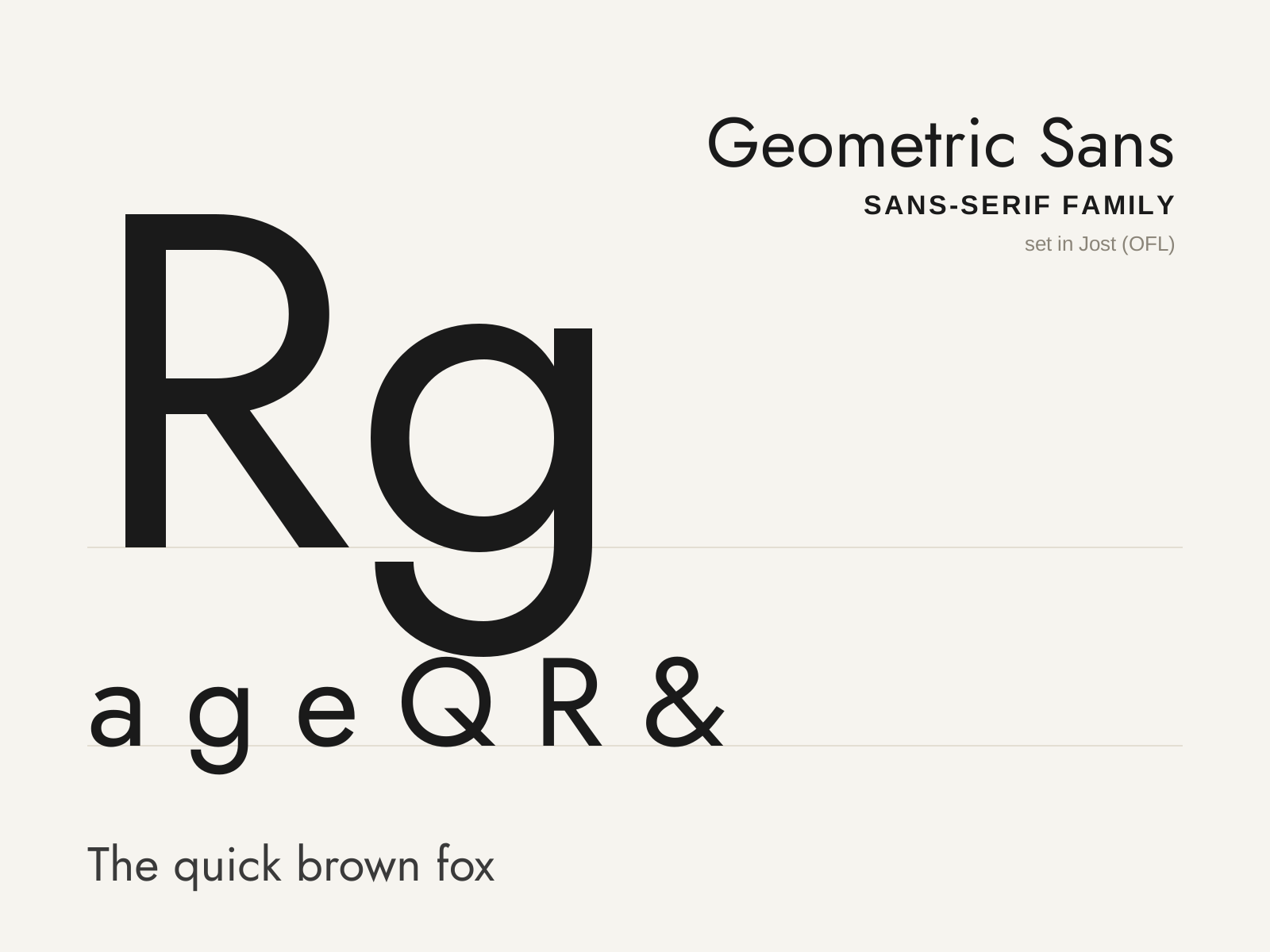
Original specimen, not a historical artifactType specimen — Geometric Sans-serif (Sans-serif family); set in Jost (OFL). Owned; source: Design Style Book (original specimen).
Across disciplines
- Graphic Design: Bauhaus Graphic Design
About the style
The geometric sans abstracts the letter into pure geometry, reducing each form to circles, triangles, and straight lines in pursuit of a rational, modern alphabet. Born of the 1920s avant-garde and the Bauhaus ideal — Herbert Bayer's universal alphabet, then Paul Renner's Futura (1927) — these faces favor circular bowls (o, b, d, p, q), a single-story a, a single-story g, and sharply pointed apexes on A, M, and N. Strokes are near-monoline and contrast is minimal, lending an austere, forward-looking authority well suited to display and branding. The classical proportions beneath the geometry keep them legible, though the perfectly round forms and identical bowls can tire the eye over long passages. The genre reads as confident modernity, equally at home on Cold-War advertising and contemporary logotypes.
Notable examples
- ▸Paul Renner — Futura (Bauer, 1927)
- ▸Herbert Bayer — universal alphabet (Bauhaus, 1925)
- ▸Rudolf Koch — Kabel (1927)
Anatomy of Geometric Sans-serif
The numbered markers call out the design elements that define this style. Hover or tap a marker to see its breakdown.
Original specimen, not a historical artifactType specimen — Geometric Sans-serif (Sans-serif family); set in Jost (OFL). Owned; source: Design Style Book (original specimen).
The geometric R sets a clean circular bowl against a straight, angled leg with no curve — letterform as construction diagram rather than calligraphic gesture.
The geometric sans favors a single-story g — one circular bowl with a simple tail — replacing the serif tradition's double-story loop.
The lowercase a is single-story, typically a near-perfect circle joined to a straight stem; this is the clearest tell of the geometric genre.
In text the repeated circles and even strokes produce a clean, geometric beat — striking in display, but less cozy than a humanist sans for long reading.
How Geometric Sans-serif connects
Styles form a network, not a tree. Explore the direct neighbours below — click any to travel the map one hop at a time.
- Evolved from
- Parallel / cross-current
Hover or tap a style to preview it.
Evolved from Grotesque Sans-serif — abstracted the sans into pure compass-and-straightedge geometry
Parallel / cross-current Bauhaus Graphic Design — the Bauhaus geometric-alphabet ideal
Futura evolved from Geometric Sans-serif — the founding monument of the geometric sans
ITC Avant Garde Gothic evolved from Geometric Sans-serif
Century Gothic evolved from Geometric Sans-serif
Gotham evolved from Geometric Sans-serif — a broad, grounded American geometric sans
Proxima Nova evolved from Geometric Sans-serif — geometric circular bowls on a text-friendly frame
Describe it like this
Prompt-ready vocabulary for describing or re-creating the Geometric Sans-serif look. Tap a word to collect it in Designdeas.
Get copy-ready Geometric Sans-serif AI prompts →