1810s–1900s · England, Germany, United States
Grotesque Sans-serif
Also known as Grotesque, Gothic
The first family of sans-serif type — the blunt, slightly irregular nineteenth-century 'grotesques' that gave Victorian advertising its loud display voice. Sturdy and a touch awkward, they are the ancestral stock from which every later sans descends.
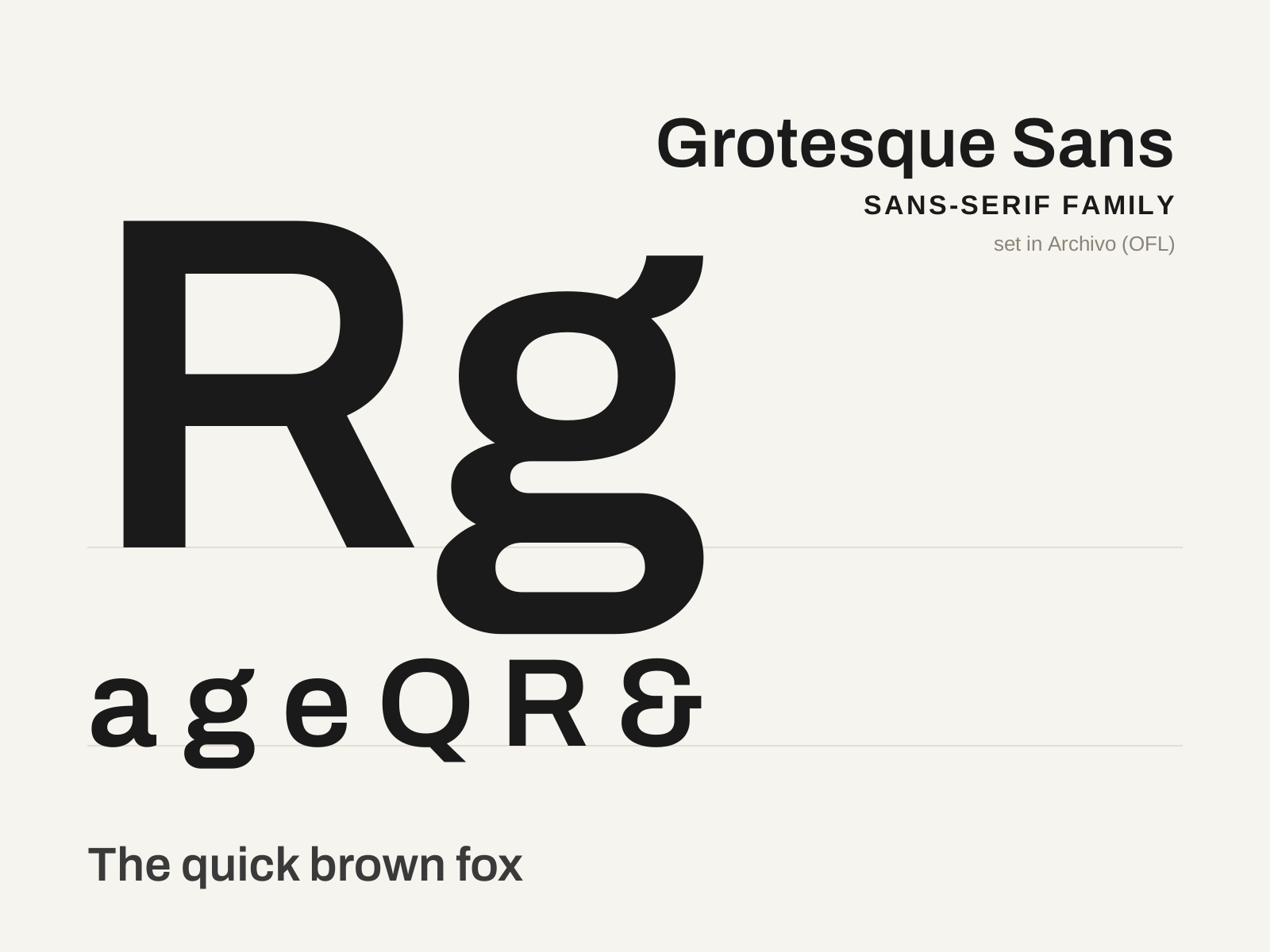
Original specimen, not a historical artifactType specimen — Grotesque Sans-serif (Sans-serif family); set in Archivo (OFL). Owned; source: Design Style Book (original specimen).
About the style
The grotesque is the original sans-serif classification, emerging in English type foundries in the early nineteenth century (William Caslon IV cut the first in 1816) and christened 'grotesque' for its strange, unornamented bluntness. These faces carry a modest stroke contrast and a faintly irregular, hand-built quality — squarish curves, a slightly closed aperture, and capitals of uneven width that betray their commercial, display origins. They were forged for posters, headlines, and jobbing work rather than book text, prizing impact over refinement. The German foundries developed their own robust strain (Akzidenz-Grotesk chief among them), and American foundries answered with the 'Gothics' such as Franklin Gothic and Trade Gothic. The grotesque is the trunk of the sans-serif family tree, later disciplined into the neo-grotesque and abstracted into the geometric and humanist branches.
Notable examples
- ▸William Caslon IV — first sans-serif (Caslon, 1816)
- ▸Berthold — Akzidenz-Grotesk (1896)
- ▸Morris Fuller Benton — Franklin Gothic (ATF, 1902)
Anatomy of Grotesque Sans-serif
The numbered markers call out the design elements that define this style. Hover or tap a marker to see its breakdown.
Original specimen, not a historical artifactType specimen — Grotesque Sans-serif (Sans-serif family); set in Archivo (OFL). Owned; source: Design Style Book (original specimen).
The grotesque capital R typically carries a sturdy, slightly curved leg that bends out from the bowl junction — robust rather than refined, a holdover from display-cut origins.
Most grotesques retain a double-story g with an upper bowl and lower loop, inherited from text-type convention rather than the geometric single-story form.
The lowercase a is double-story with a fairly closed aperture, the bowl pulled tight against the stem in the dense Victorian manner.
In running text the grotesque reads dark and sturdy with a faintly irregular rhythm; it was built for arresting headlines and jobbing work, not extended reading.
How Grotesque Sans-serif connects
Styles form a network, not a tree. Explore the direct neighbours below — click any to travel the map one hop at a time.
- Influenced by
- Evolved from
Hover or tap a style to preview it.
Influenced by Slab Serif — the early sans read as an Egyptian slab stripped of its serifs
Neo-grotesque Sans-serif evolved from Grotesque Sans-serif — the mid-century rationalization of the Victorian grotesque
Geometric Sans-serif evolved from Grotesque Sans-serif — abstracted the sans into pure compass-and-straightedge geometry
Humanist Sans-serif evolved from Grotesque Sans-serif
Akzidenz-Grotesk evolved from Grotesque Sans-serif — the sober German grotesque that bridged to the neo-grotesque
Franklin Gothic evolved from Grotesque Sans-serif — the definitive American 'Gothic'
Trade Gothic evolved from Grotesque Sans-serif
Arial influenced by Grotesque Sans-serif — its skeleton borrows from Monotype Grotesque
Impact influenced by Grotesque Sans-serif
Proxima Nova influenced by Grotesque Sans-serif — borrows the even, text-comfortable proportions of the grotesque
Describe it like this
Prompt-ready vocabulary for describing or re-creating the Grotesque Sans-serif look. Tap a word to collect it in Designdeas.
Get copy-ready Grotesque Sans-serif AI prompts →