1993 · United States
Georgia
Also known as Screen serif
Matthew Carter's 1993 serif designed for the low-resolution screen — a sturdy, large-x-height transitional face with old-style figures, engineered to stay legible where Times New Roman crumbled.
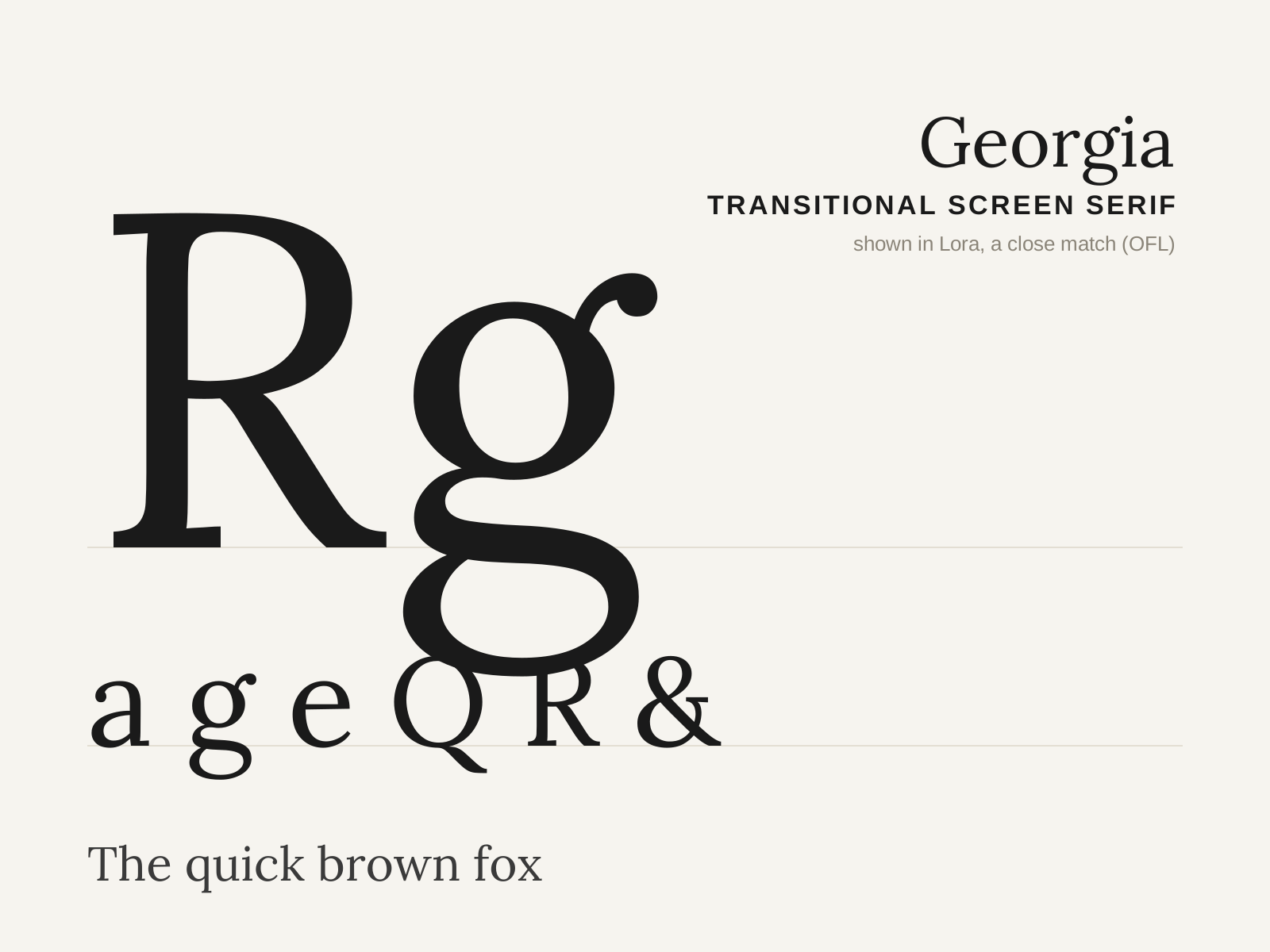
Original specimen, not a historical artifactType specimen — Georgia (Transitional screen serif); shown in Lora, a close match (OFL). Owned; source: Design Style Book (original specimen).
About the style
Georgia was designed by Matthew Carter in 1993 (hinted by Tom Rickner) and released by Microsoft in 1996 as a serif built specifically for the coarse pixel grids of 1990s monitors. Where Times New Roman grew brittle on screen, Georgia compensated with a large x-height, open spacing, sturdy bracketed serifs, and moderate contrast that survived aggressive pixel hinting. It is broadly transitional in flavor but warmer and more robust, and it characteristically uses old-style (text/'hanging') figures that dip below the baseline, giving body text a humane, bookish rhythm even on a display. Pairing it with the sans Verdana, Carter created the two most successful web text faces of the era. Georgia matters as a landmark of screen typography — proof that a face engineered for the medium's worst-case rendering could still feel elegant and traditional.
Notable examples
- ▸Matthew Carter — Georgia (Microsoft, 1996; designed 1993)
- ▸Core Web font alongside Verdana (Carter, 1996)
- ▸Widely used for web and editorial body text (2000s)
Anatomy of Georgia
The numbered markers call out the design elements that define this style. Hover or tap a marker to see its breakdown.
Original specimen, not a historical artifactType specimen — Georgia (Transitional screen serif); shown in Lora, a close match (OFL). Owned; source: Design Style Book (original specimen).
The capital R has a robust bowl and a firm, slightly curved leg on solid bracketed serifs, drawn heavy enough to hold up on a coarse pixel grid.
The lowercase g is two-storey with a sturdy, well-spaced loop and a clear ear, sized for legibility at small screen sizes.
The lowercase a is two-storey with an open aperture and a notably large x-height — a key reason Georgia stays readable on screen.
Running text reads warm and sturdy, its hanging old-style figures lending a humane rhythm — elegant body type even on low-resolution displays.
How Georgia connects
Styles form a network, not a tree. Explore the direct neighbours below — click any to travel the map one hop at a time.
- Evolved from
- Influenced by
Hover or tap a style to preview it.
Evolved from Transitional Serif — a screen-tuned transitional serif
Influenced by Baskerville
Compare side by side
Describe it like this
Prompt-ready vocabulary for describing or re-creating the Georgia look. Tap a word to collect it in Designdeas.
Get copy-ready Georgia AI prompts →