c. 1550–present · France, England, United States, Global
Script
Also known as Cursive Type, Joining Scripts
The family of typefaces that imitate handwriting, from the disciplined loops of engraved formal scripts to the relaxed strokes of casual brush and pen hands. Letters lean, swell, and — in most scripts — physically join.
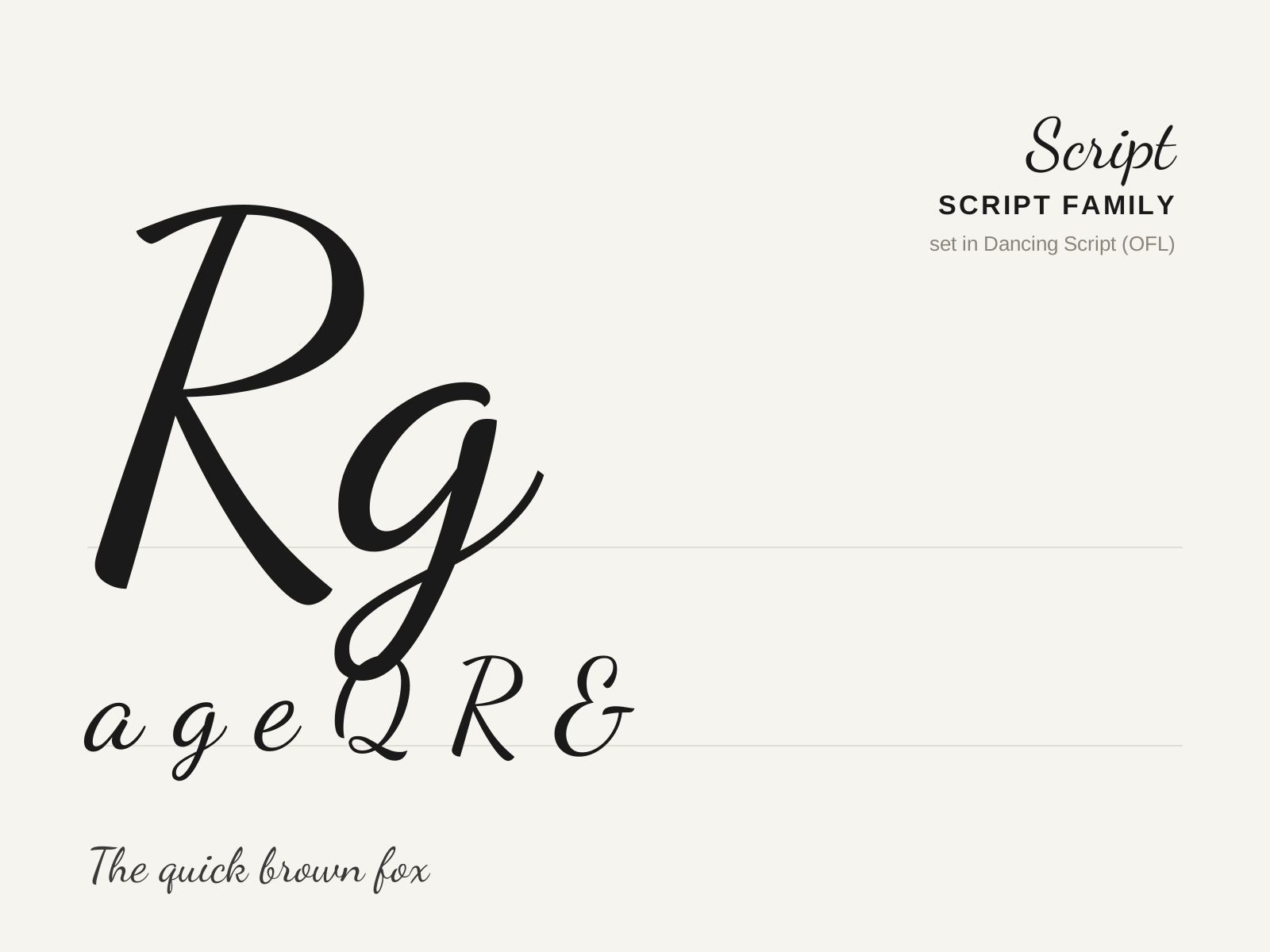
Original specimen, not a historical artifactType specimen — Script (Script family); set in Dancing Script (OFL). Owned; source: Design Style Book (original specimen).
Across disciplines
- Graphic Design: Art Nouveau (Graphic)
About the style
Script type is the classification covering all typefaces modeled on handwriting, traditionally split into formal and casual branches. Formal scripts descend from the pointed-pen engraving and penmanship of the seventeenth and eighteenth centuries — copperplate, Spencerian, and roundhand — characterized by high contrast, delicate hairline connectors, and elaborate swash capitals suited to invitations, certificates, and luxury branding. Casual scripts, by contrast, evolved in the twentieth century to mimic a quick brush or marker, with monoline or brush-modulated strokes, an informal bounce, and a friendly, advertising-friendly tone. Across both branches the defining trait is connection: most scripts join letters along a flowing baseline, demanding carefully designed entry and exit strokes so that glyphs link convincingly. Slope, swelling weight, and looping ascenders and descenders give scripts their human, gestural quality, while flourished capitals and alternate ligatures lend formal scripts their ceremony.
Notable examples
- ▸Snell Roundhand (Matthew Carter, 1965)
- ▸Brush Script (Robert E. Smith, ATF, 1942)
- ▸Bickham Script (Richard Lipton, 1997)
Anatomy of Script
The numbered markers call out the design elements that define this style. Hover or tap a marker to see its breakdown.
Original specimen, not a historical artifactType specimen — Script (Script family); set in Dancing Script (OFL). Owned; source: Design Style Book (original specimen).
The capital R in scripts typically opens with a decorative entry flourish and trails an extended swash, far more ornamental than its roman counterpart. Formal scripts exaggerate the loop and tail.
The lowercase g sweeps a generous looping descender below the baseline, often the most expressive flourish in the lowercase. Its loop is shaped to connect cleanly into the following letter.
The lowercase a carries an entry stroke on the left and an exit stroke on the right so it links to its neighbors along the flowing baseline. The bowl tilts with the script's overall slope.
Scripts read as flowing handwriting, evoking elegance or friendliness; used for invitations, branding, and signage but rarely for body text where joining and legibility break down.
How Script connects
Styles form a network, not a tree. Explore the direct neighbours below — click any to travel the map one hop at a time.
- Parallel / cross-current
- Evolved from
Hover or tap a style to preview it.
Parallel / cross-current Art Nouveau (Graphic) — kindred celebration of the flourished, hand-drawn line
Brush Script evolved from Script — the casual brush branch of the script family
Copperplate Script evolved from Script — the formal, engraved branch of the script family
Describe it like this
Prompt-ready vocabulary for describing or re-creating the Script look. Tap a word to collect it in Designdeas.
Get copy-ready Script AI prompts →