1942–present · United States, Global
Brush Script
Also known as Casual Script
An informal connected script that imitates quick, confident strokes of a paint or ink brush, full of swelling weight and a relaxed bounce. The 1942 ATF original defined the casual, hand-lettered look of mid-century advertising.
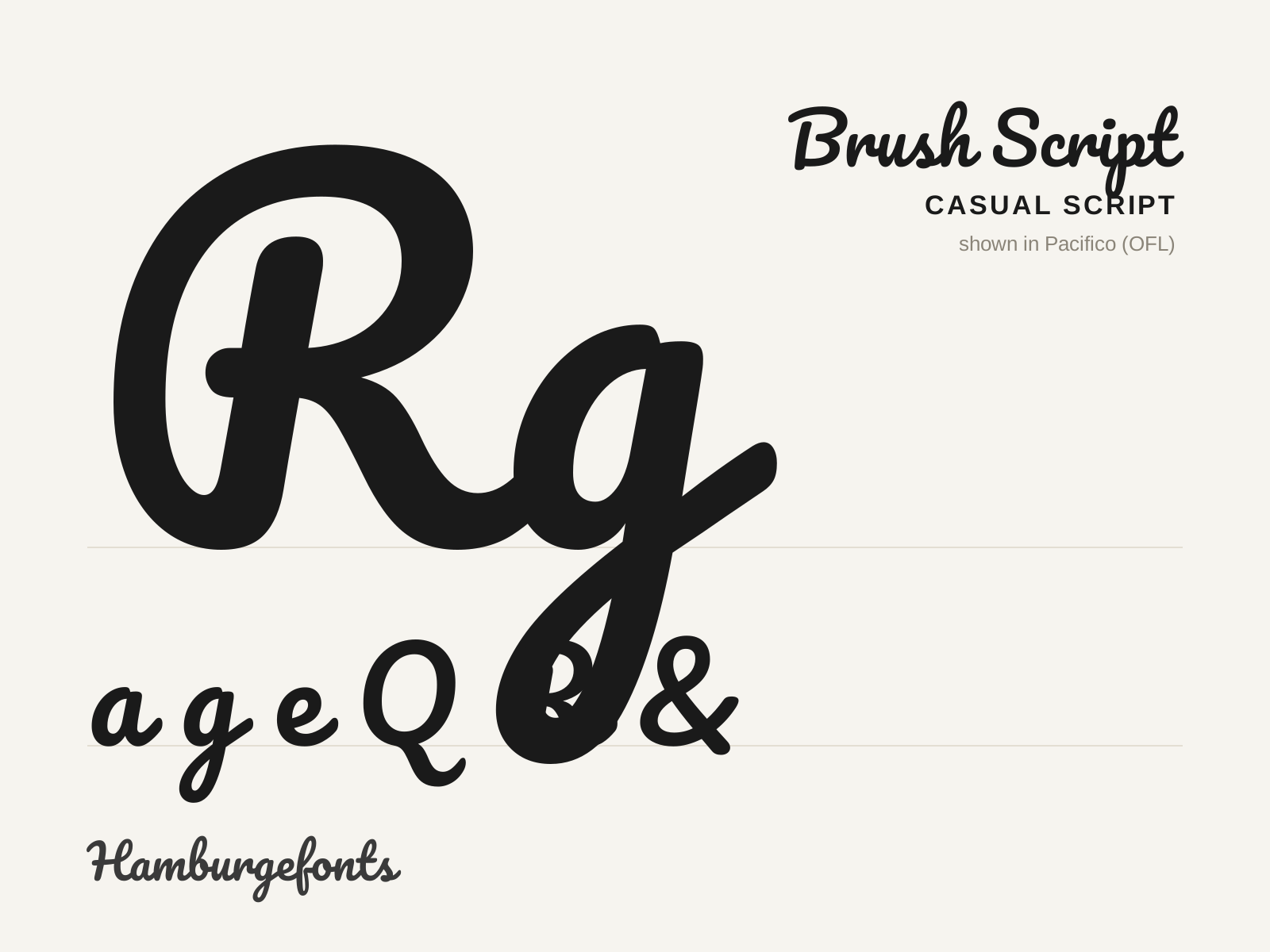
Original specimen, not a historical artifactType specimen — Brush Script (Casual script); shown in Pacifico (OFL). Owned; source: Design Style Book (original specimen).
Across disciplines
- Tattoo: Script & Lettering
About the style
Brush Script names both a specific 1942 typeface and the casual-script genre it epitomizes, designed by Robert E. Smith for American Type Founders to capture the look of confident hand-lettering done with a pointed brush. Its strokes swell and taper as a loaded brush would, the modulation reading as energetic and spontaneous rather than the controlled high contrast of formal engraved scripts. Letters connect along a lively, slightly bouncing baseline, with informal single-story forms and rough, painterly terminals that suggest the bristle's drag. Wildly popular through the 1940s and 1950s for advertising, packaging, and signage, Brush Script came to define a friendly, approachable mid-century commercial voice. Its ubiquity in default font menus later made it a byword for amateur design, much like Comic Sans, yet the brush-script idiom remains central to lettering for diners, sports lockup logos, and anything seeking casual warmth.
Notable examples
- ▸Brush Script (Robert E. Smith, ATF, 1942)
- ▸Mistral (Roger Excoffon, 1953)
- ▸Kaufmann (Max R. Kaufmann, 1936)
Anatomy of Brush Script
The numbered markers call out the design elements that define this style. Hover or tap a marker to see its breakdown.
Original specimen, not a historical artifactType specimen — Brush Script (Casual script); shown in Pacifico (OFL). Owned; source: Design Style Book (original specimen).
The capital R is drawn as a single confident brush gesture, its leg trailing into a tapering stroke. Weight swells through the bowl as a loaded brush would deposit ink.
The lowercase g loops its descender loosely below the baseline with a brush-tapered tail. The form stays single-story and informal rather than precisely constructed.
The lowercase a joins on both sides with brushy entry and exit strokes so it links into running words. Its bowl shows the characteristic swell-and-taper of the brush.
Brush script reads as relaxed, confident hand-lettering — beloved for diner signage, packaging, and retro ads, but overexposed enough to read as default-menu casual.
How Brush Script connects
Styles form a network, not a tree. Explore the direct neighbours below — click any to travel the map one hop at a time.
- Evolved from
- Influenced by
- Parallel / cross-current
Hover or tap a style to preview it.
Evolved from Script — the casual brush branch of the script family
Lobster influenced by Brush Script — a connected display script in the signpainting tradition
Script & Lettering parallel / cross-current Brush Script — shares the flowing connected calligraphic letterforms of script type
Compare side by side
Describe it like this
Prompt-ready vocabulary for describing or re-creating the Brush Script look. Tap a word to collect it in Designdeas.
Get copy-ready Brush Script AI prompts →