1996 · United States, United Kingdom
Verdana
Matthew Carter's 1996 humanist sans, engineered pixel-by-pixel for Microsoft to stay legible at tiny sizes on low-resolution screens — generously wide, loosely spaced, and built for the early Web.
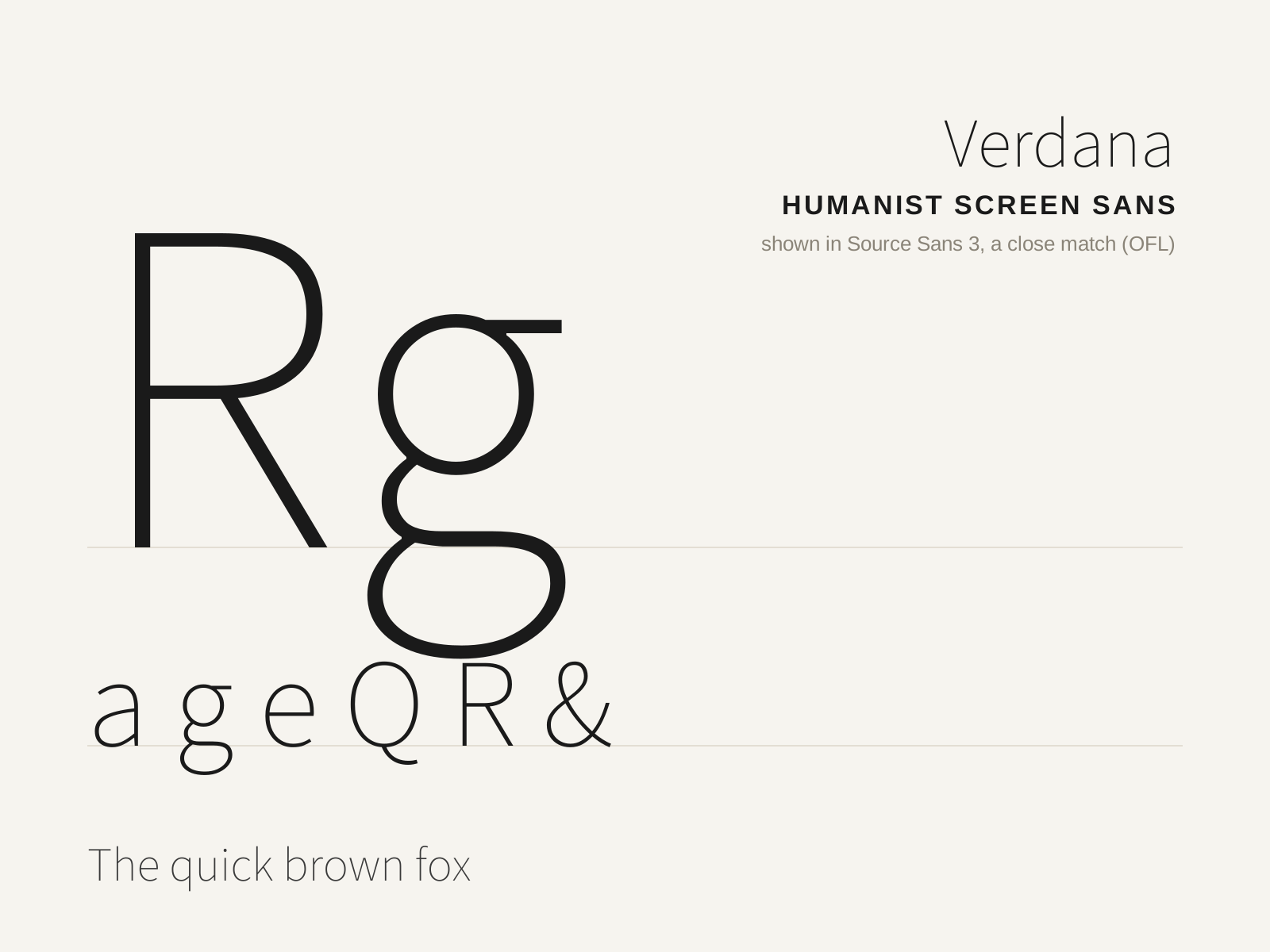
Original specimen, not a historical artifactType specimen — Verdana (Humanist screen sans); shown in Source Sans 3, a close match (OFL). Owned; source: Design Style Book (original specimen).
About the style
Verdana was designed by Matthew Carter for Microsoft in 1996 (hinted by Tom Rickner), conceived from first principles for legibility on the coarse, low-resolution screens of the era rather than for print. Carter drew it generously wide, with a very high x-height, loose spacing, open apertures, and unambiguous forms — a clearly differentiated 1, l, and I — so that characters never collided or blurred at eight or nine pixels tall. The result is a humanist sans of exceptional screen clarity that, alongside its serif companion Georgia, became a backbone of early web typography and remains a reliable interface face. Its very width and looseness make it ungainly when scaled up for print, a reminder that it was optimized for the screen grid above all.
Notable examples
- ▸Matthew Carter — Verdana (Microsoft, 1996)
- ▸Microsoft Core fonts for the Web (with Georgia)
- ▸Ubiquitous early-2000s website body text
Anatomy of Verdana
The numbered markers call out the design elements that define this style. Hover or tap a marker to see its breakdown.
Original specimen, not a historical artifactType specimen — Verdana (Humanist screen sans); shown in Source Sans 3, a close match (OFL). Owned; source: Design Style Book (original specimen).
Verdana's R has a sturdy, gently curved leg drawn wide and clear so it stays unambiguous even at tiny screen sizes.
It uses an open double-story g with roomy counters that survive low-resolution rendering without filling in.
The double-story a is wide with a very open aperture — part of Carter's strategy to keep every character distinct on a coarse pixel grid.
On screen Verdana reads remarkably clear and airy at small sizes thanks to its width and loose fit; scaled up for print, that same generosity looks ungainly.
How Verdana connects
Styles form a network, not a tree. Explore the direct neighbours below — click any to travel the map one hop at a time.
- Evolved from
- Influenced by
Hover or tap a style to preview it.
Evolved from Humanist Sans-serif — a humanist sans engineered for low-res screens
Influenced by Frutiger
Compare side by side
Describe it like this
Prompt-ready vocabulary for describing or re-creating the Verdana look. Tap a word to collect it in Designdeas.
Get copy-ready Verdana AI prompts →