1920s–present · England, Europe, United States
Humanist Sans-serif
Also known as Humanist grotesque
Sans-serifs that smuggle the proportions and pen-rhythm of classical roman type into a seriffless skeleton — warmer, more legible, and more individual than the grotesque. Gill Sans and Frutiger are its standard-bearers.
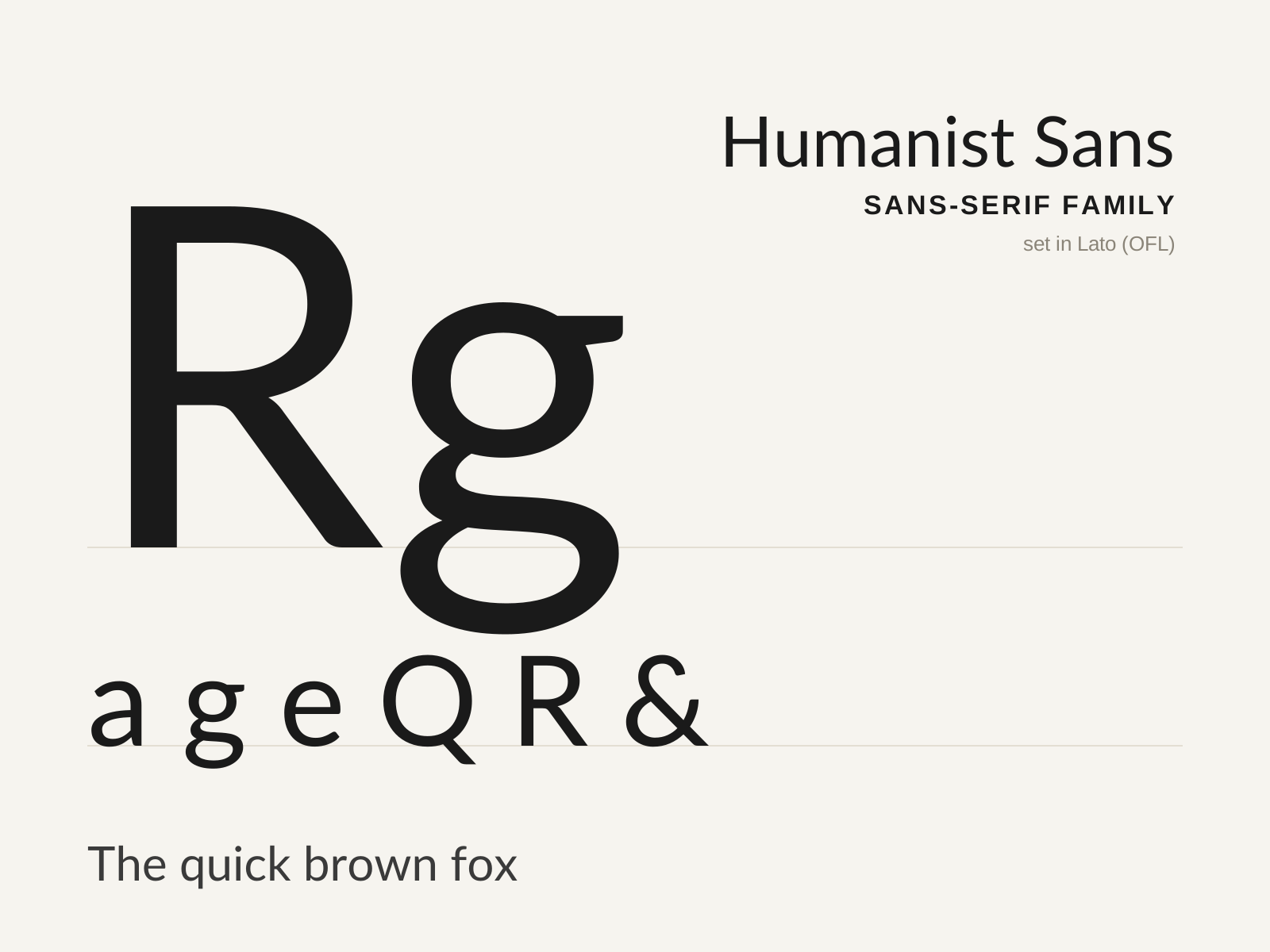
Original specimen, not a historical artifactType specimen — Humanist Sans-serif (Sans-serif family); set in Lato (OFL). Owned; source: Design Style Book (original specimen).
About the style
The humanist sans takes the seriffless alphabet and reinfuses it with the proportions, modulation, and calligraphic rhythm of classical roman and old-style type. Where grotesques are uniform and geometrics are mechanical, the humanist sans varies its letter widths in the Roman manner, opens its apertures, raises a generous x-height, and lets a faint stroke contrast and a calligraphic 'flick' enter the forms — Edward Johnston's 1916 Underground type and Eric Gill's 1928 Gill Sans set the model. The result reads with markedly better legibility at length and at distance, which is why the genre dominates wayfinding (Frutiger), screen interfaces (Verdana, Myriad), and the contemporary web (Lato). It is the most readable and most human-feeling of the sans-serif branches, trading neutrality for warmth and individuality.
Notable examples
- ▸Edward Johnston — Underground / Johnston (1916)
- ▸Eric Gill — Gill Sans (Monotype, 1928)
- ▸Adrian Frutiger — Frutiger (1976, Roissy Airport)
Anatomy of Humanist Sans-serif
The numbered markers call out the design elements that define this style. Hover or tap a marker to see its breakdown.
Original specimen, not a historical artifactType specimen — Humanist Sans-serif (Sans-serif family); set in Lato (OFL). Owned; source: Design Style Book (original specimen).
The humanist R often kicks out a graceful, slightly curved leg derived from the chiselled Roman capital — more gesture and stress than the grotesque or geometric leg.
Many humanist sans (notably Gill Sans) revive the true double-story g of book type, a calligraphic touch absent from the geometric genre.
A double-story a with a notably open aperture, the bowl tucked under in the Roman manner — a key driver of the genre's superior legibility.
In running text the varied widths and open forms create a warm, even, highly legible color — why humanist sans dominate signage, screens, and long-form reading.
How Humanist Sans-serif connects
Styles form a network, not a tree. Explore the direct neighbours below — click any to travel the map one hop at a time.
- Evolved from
- Influenced by
Hover or tap a style to preview it.
Evolved from Grotesque Sans-serif
Influenced by Humanist (Venetian) Serif — reinfused the sans with classical Roman proportions and pen-rhythm
Gill Sans evolved from Humanist Sans-serif — the canonical British humanist sans
Frutiger evolved from Humanist Sans-serif — the canonical wayfinding humanist sans
Verdana evolved from Humanist Sans-serif — a humanist sans engineered for low-res screens
Myriad evolved from Humanist Sans-serif
Lato evolved from Humanist Sans-serif — an open-source humanist sans of the web era
Optima evolved from Humanist Sans-serif — a serifless roman with humanist proportions and modulated stress
Describe it like this
Prompt-ready vocabulary for describing or re-creating the Humanist Sans-serif look. Tap a word to collect it in Designdeas.
Get copy-ready Humanist Sans-serif AI prompts →