Contemporary Minimalist vs Minimalist Interior
Contemporary Minimalist evolved from Minimalist Interior — mainstreams 'less is more' minimalism for contemporary homes.
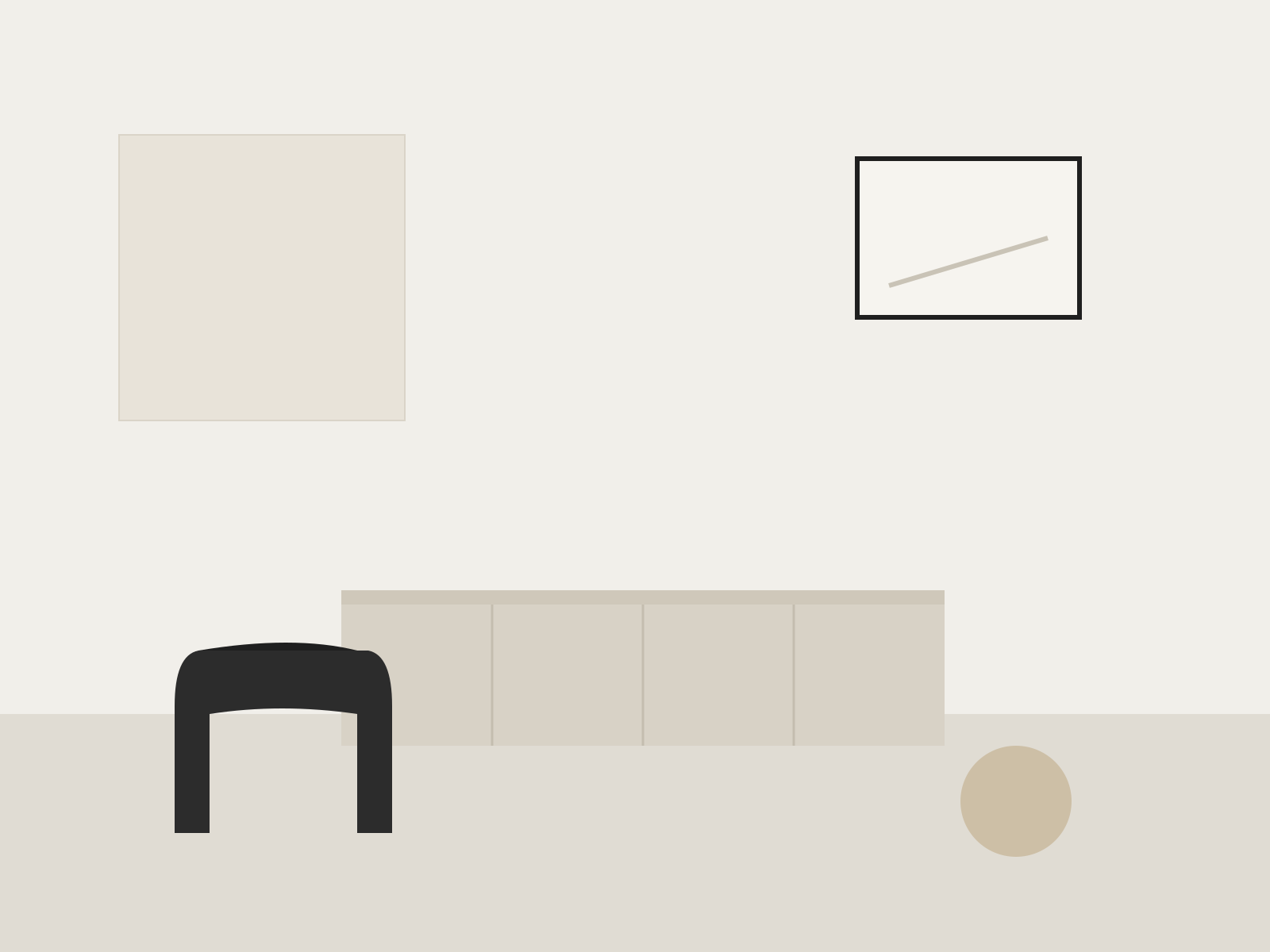
Contemporary Minimalist
A pared-back contemporary look built on the principle that 'less is more' — clean lines, neutral palettes, hidden storage, and uncluttered space. It strips interiors to essential form, light, and material.
- Clean uninterrupted lines and uncluttered open space
- Restrained neutral palette of white, grey, beige, and black
- Concealed storage behind seamless flush surfaces
- Few carefully chosen pieces and an absence of ornament
- Negative space and light treated as core design elements

Minimalist Interior
The reductive interior stripped to essentials — monochrome surfaces, empty volume, and hidden storage, where light, proportion, and a few precise objects carry the entire room.
- Reductive monochrome palette of white, grey, and natural tones
- Empty volume and negative space treated as a material
- Flush handleless cabinetry concealing all storage
- Sparse, precisely placed furniture as deliberate objects
- Detail moved to shadow gaps and concealed joints
At a glance
| Contemporary Minimalist | Minimalist Interior | |
|---|---|---|
| Era | 1990s–present | 1960s–1990s |
| Discipline | Interior Design | Interior Design |
| Region | Global | United States, Japan, Western Europe |
| Family | Minimalism, Contemporary | Modernism, Minimalism |
| Formal traits | clean, neutral, uncluttered, restrained | reductive, monochrome, spare, precise |
More comparisons
Advertisement