1990s–present · Global
Contemporary Minimalist
Also known as Modern Minimalism, Minimalist Interior, Less is More
A pared-back contemporary look built on the principle that 'less is more' — clean lines, neutral palettes, hidden storage, and uncluttered space. It strips interiors to essential form, light, and material.
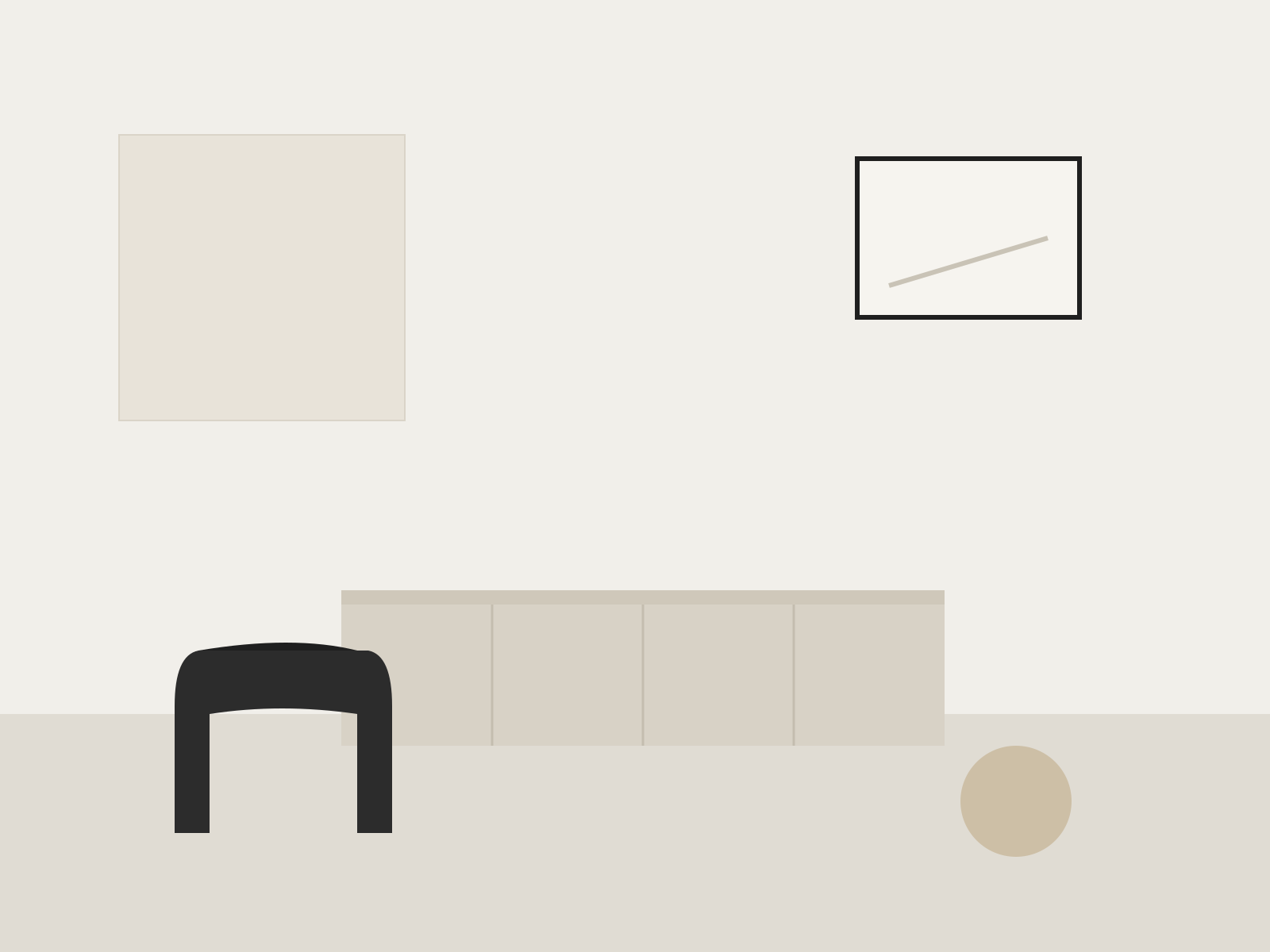
Original specimen, not a historical artifactOriginal specimen in the Contemporary Minimalist style. Owned; source: Design Style Book (original).
Across disciplines
- Architecture: Minimalist Architecture
- Industrial Design: Minimalist Product Design
About the style
Contemporary minimalism distils the modernist dictum 'less is more', associated with Mies van der Rohe, into a mainstream interior approach that became widely influential from the 1990s onward, reinforced by figures like John Pawson and the broader decluttering culture later crystallised by Marie Kondo. It reduces interiors to their essentials: clean uninterrupted lines, open uncluttered space, and a restrained, mostly neutral palette of white, grey, beige, and black. Ornament is stripped away, storage is concealed behind seamless flush surfaces, and a few carefully chosen pieces carry the room, letting light, proportion, and material quality do the work. Surfaces are smooth and high-quality — plaster, stone, glass, and pale wood — and negative space is treated as a positive design element. Calm, orderly, and disciplined, contemporary minimalism reads as both a luxury of restraint and an antidote to consumer clutter, distinct from warmer minimalisms like Japandi or wabi-sabi.
Notable examples
- ▸John Pawson's minimalist interiors
- ▸Apple Store / brand minimalism as a cultural reference
- ▸Mies van der Rohe's 'less is more' as a founding principle
Anatomy of Contemporary Minimalist
The numbered markers call out the design elements that define this style. Hover or tap a marker to see its breakdown.
Original specimen, not a historical artifactOriginal specimen in the Contemporary Minimalist style. Owned; source: Design Style Book (original).
Generous negative space and clear surfaces let proportion and light, not objects, define the room.
Flush, handleless cabinetry hides belongings behind seamless surfaces to keep the look pristine.
White, grey, and black tones keep the interior calm, disciplined, and visually quiet.
One carefully chosen chair or artwork carries the room, rewarded by the surrounding emptiness.
How Contemporary Minimalist connects
Styles form a network, not a tree. Explore the direct neighbours below — click any to travel the map one hop at a time.
- Evolved from
- Parallel / cross-current
- Reaction against
- Influenced by
Hover or tap a style to preview it.
Evolved from Minimalist Interior — mainstreams 'less is more' minimalism for contemporary homes
Parallel / cross-current Minimalist Architecture — carries minimalist architecture's reductive discipline indoors
Parallel / cross-current Minimalist Product Design — shares the reduced, essential, ornament-free object language
Wabi-Sabi Interior reaction against Contemporary Minimalist — counters glossy machined perfection with patina and wear
Bohemian Interior reaction against Contemporary Minimalist — embraces maximal layering against pared-back restraint
Cottagecore reaction against Contemporary Minimalist — a nostalgic, handmade escape from clean modern interiors
Transitional Interior influenced by Contemporary Minimalist — borrows clean lines and calm neutral restraint
Maximalist Interior reaction against Contemporary Minimalist — a 'more is more' revolt against pared-back grey minimalism
Dark Academia Interior reaction against Contemporary Minimalist — a nostalgic, ornamented antidote to bright minimal rooms
Grandmillennial reaction against Contemporary Minimalist — a knowing decorative reaction to cold minimal interiors
Describe it like this
Prompt-ready vocabulary for describing or re-creating the Contemporary Minimalist look. Tap a word to collect it in Designdeas.
Get copy-ready Contemporary Minimalist AI prompts →