1938–1970s · United States
Comic-Book Graphic Style
Also known as Golden & Silver Age Comics, Four-Color Comics
The bold-outlined, dot-shaded look of newsstand comic books: gridded panels, speech balloons, sound-effect lettering, and flat four-color heroes. A sequential graphic language built for cheap, vivid mass printing.
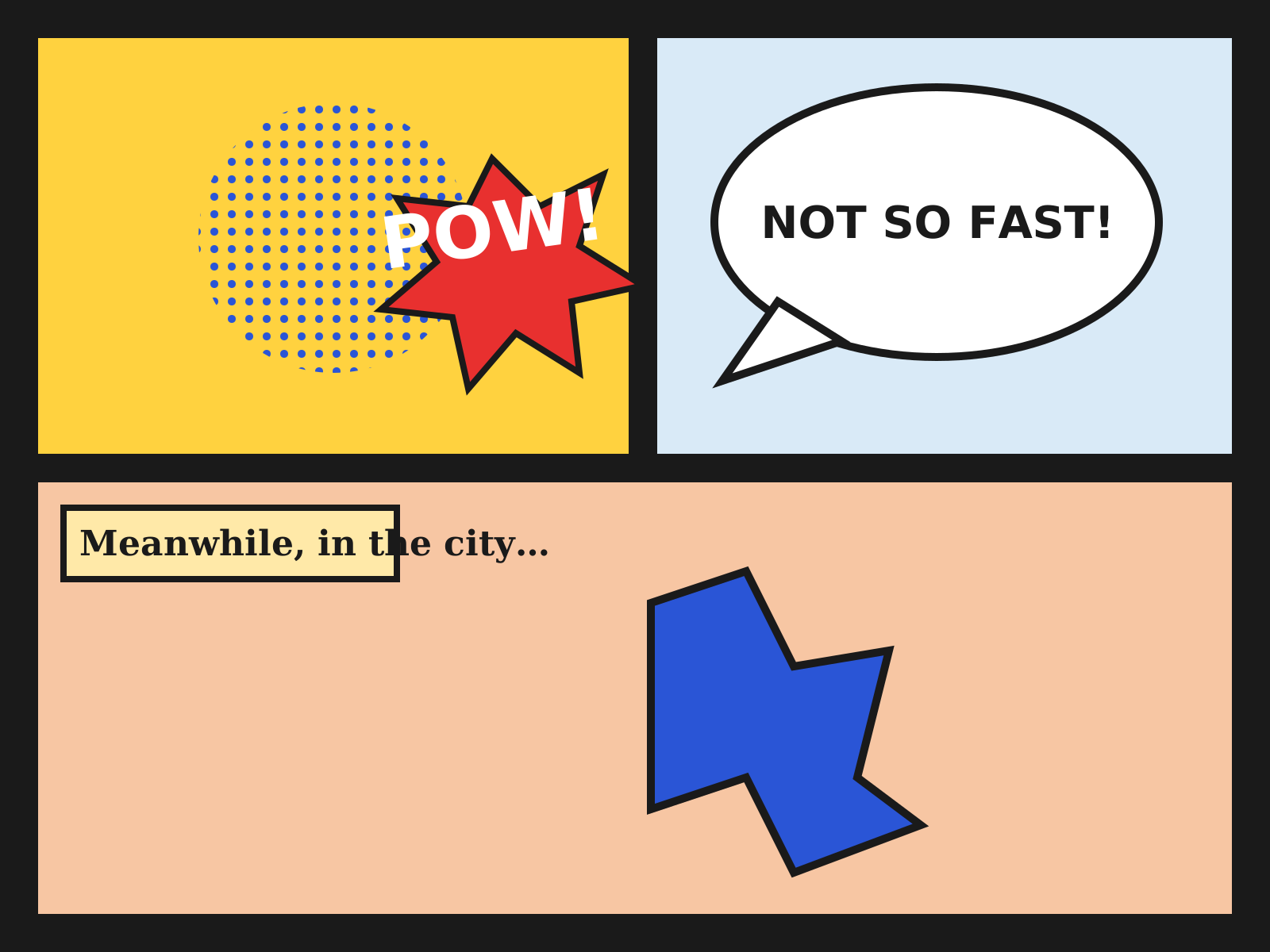
Original specimen, not a historical artifactOriginal specimen in the Comic-Book Graphic Style style. Owned; source: Design Style Book (original).
About the style
Comic-book graphic style emerged with the Golden Age superhero boom of the late 1930s and matured through the Silver Age, shaped by the constraints of cheap four-color newsprint. Artists drew bold black ink outlines filled with flat primary color, using mechanical Ben-Day dots to extend a limited palette and model form. The page was organized into a grid of panels with gutters, captions, speech and thought balloons, and onomatopoeic sound-effect lettering integrated into the art. Figures were dynamic and exaggerated, with foreshortened action poses and dramatic angles pioneered by artists like Jack Kirby and inked by hands such as Joe Sinnott. As a graphic style it supplied the visual grammar — panels, balloons, dots, and inked contour — that Pop Art would later appropriate and that still signals 'comics' at a glance.
Notable examples
- ▸Joe Shuster — Action Comics #1, Superman (1938)
- ▸Jack Kirby — Fantastic Four #1 (1961)
- ▸Steve Ditko — Amazing Fantasy #15, Spider-Man (1962)
Anatomy of Comic-Book Graphic Style
The numbered markers call out the design elements that define this style. Hover or tap a marker to see its breakdown.
Original specimen, not a historical artifactOriginal specimen in the Comic-Book Graphic Style style. Owned; source: Design Style Book (original).
Every figure is wrapped in a heavy black outline, the signature of pen-and-ink comic drawing built for cheap printing.
Mechanical dot patterns stretch a few primary inks into shaded tones and skin tones across the page.
The story is parceled into bordered panels separated by gutters that pace the reader through time.
Speech balloons, captions, and onomatopoeic 'POW' lettering sit inside the art as integral graphic elements.
How Comic-Book Graphic Style connects
Styles form a network, not a tree. Explore the direct neighbours below — click any to travel the map one hop at a time.
- Influenced by
Hover or tap a style to preview it.
Influenced by Pulp Magazine Art — carried newsstand melodrama into the four-colour comic
Pop Art Graphic Design influenced by Comic-Book Graphic Style — lifted Ben-Day dots and panels into fine art and back
Describe it like this
Prompt-ready vocabulary for describing or re-creating the Comic-Book Graphic Style look. Tap a word to collect it in Designdeas.
Get copy-ready Comic-Book Graphic Style AI prompts →